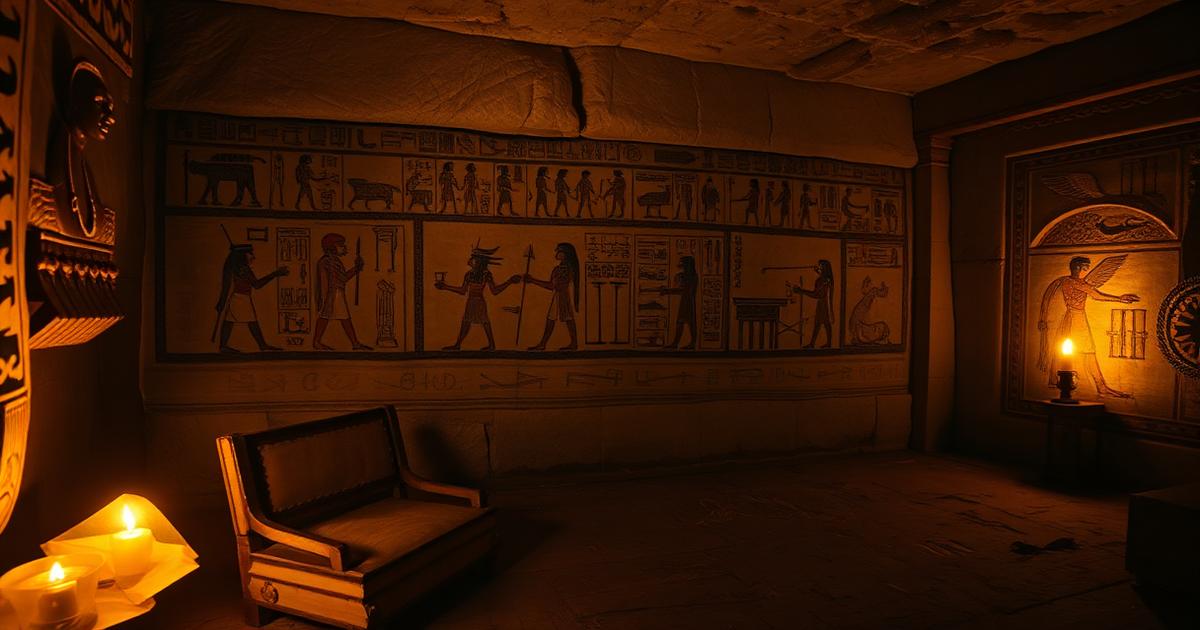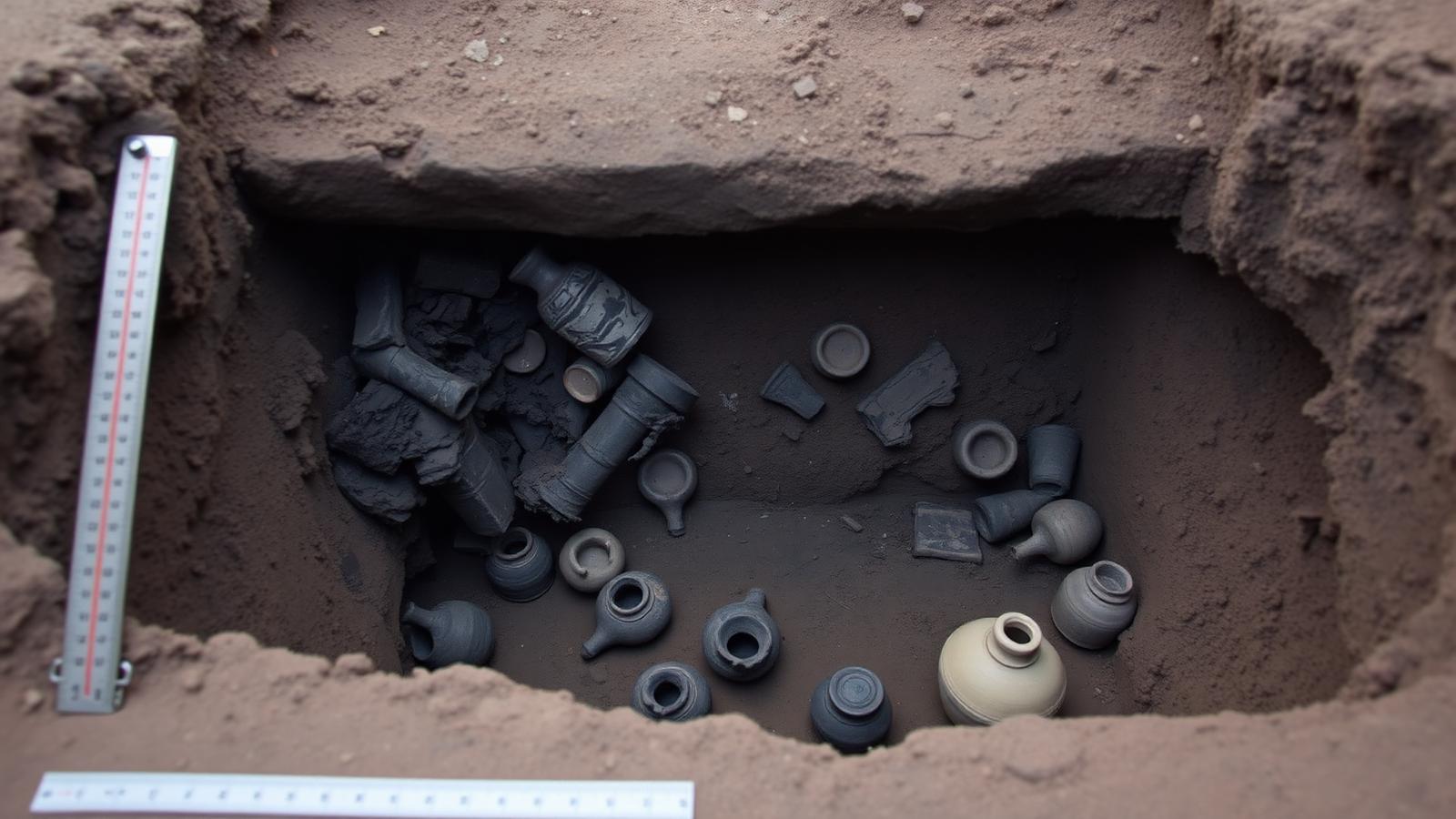
Excavation trench exposing a charred destruction layer with broken storage vessels
Evidence File 09Active Academic Debate

Bronze Age Collapse

Eastern Mediterranean · c. 1200 – 1150 BCE

Why did an interconnected system of empires fail within roughly fifty years?

Chicago style · PDF or .txt

Within roughly fifty years around 1200 BCE, the palace civilisations of the eastern Mediterranean stopped. Mycenae, Hattusa, Ugarit, the Levantine city-states — burnt, abandoned, or hollowed out. It is the best-documented systems failure in the ancient world and it still has no single agreed cause.

A destruction horizon. Across the eastern Mediterranean, layers like this cluster in a single century.

Historical record

Correspondence archives stop abruptly; destruction layers appear across the region.

Current scientific consensus

A systems failure with multiple interacting causes rather than one trigger.

The scale of the loss

Linear B ceases. The Hittite empire disappears as a political entity. Long-distance tin and copper networks that had supplied an entire technological base break down. Literacy contracts sharply in Greece. Population estimates in affected regions fall by large fractions and do not recover for centuries. This is not a dynastic change; it is the collapse of the connective tissue between states.

The candidate causes, and their evidence

Climate: pollen cores from the Sea of Galilee, Cyprus and the Nile delta, plus speleothem and isotope records, indicate a multi-decade dry phase in the relevant window. This is the strongest independent physical signal.

Systems fragility: palace economies were highly centralised, redistributive, and dependent on imported tin. A shock to any node propagates. This explanation is structural rather than evidential — it explains why a moderate stress produced an extreme outcome.

Migration and raiding: the Sea Peoples material. Real, but increasingly read as a consequence of the other stresses.

Earthquakes: a seismic storm along the Aegean and Anatolian fault systems has been proposed. Destruction layers are consistent with it in some sites and not others, and fire is a poor discriminator between earthquake and assault.

Why multi-causality is not a dodge

The current consensus is not 'we don't know'. It is that no single factor accounts for the geographic spread and the timing, while the combination does. That is a real finding about how complex interdependent systems fail, and it is the reason this file is one of the most cited in our Applied Science work.

Competing interpretations

Prolonged drought documented in pollen and isotope records.

Scientific Consensus
80% support

The mainstream position across the relevant scientific literature today.

Trade network fragility and elite over-centralization.

Active Academic Debate
48% support

Specialists disagree. Competing interpretations are presented side by side.

Earthquake storm along regional fault systems.

Active Academic Debate
48% support

Specialists disagree. Competing interpretations are presented side by side.

Support scores reflect the strength of the evidence class behind a claim, not how often you have heard it. Speculative entries appear because readers encounter them — never because we endorse them.

The dossier
Chicago style · PDF or .txt
The evidence base

Destruction layers across the eastern Mediterranean, palace archives ending mid-correspondence, and palaeoclimate proxies from regional cores.

How it is dated

Each row states the method, what was measured, and — the part usually skipped — what the result does not settle.

MethodSampleResultWhat it constrains
Destruction stratigraphyBurn layers at Levantine, Anatolian and Aegean sitesClustered within roughly a half-century around 1200 BCEShows synchrony without identifying a shared cause.
Archival textsUgarit, Hattusa and Egyptian correspondenceReports of famine, grain shipments and seaborne raiders before the endContemporary testimony, written by administrations under stress.
Palaeoclimate proxiesPollen and isotope records from regional coresA multi-century dry interval overlapping the collapse windowEstablishes drought. It does not by itself topple states.
Competing readings, scored

The percentage is our editorial reading of how much of the surviving record each claim accounts for. It is a judgement, stated openly, not a consensus figure.

  • Systems collapse: drought, famine, migration, trade failure and warfare compounding.

    Open Debate
    Explains the record78%
    Rests on
    • Each element is independently attested.
    • Explains why highly connected palace economies failed while village economies persisted.
    Runs into
    • Multi-cause models are hard to falsify.
  • Sea Peoples invasion as the primary driver.

    Open Debate
    Explains the record30%
    Rests on
    • Egyptian reliefs and texts record large-scale seaborne conflict.
    Runs into
    • The sources are victory monuments.
    • Movement of peoples looks as much a symptom as a cause.
  • A single earthquake storm destroyed the palace centres.

    Speculative
    Explains the record18%
    Rests on
    • Seismic destruction is identified at several individual sites.
    Runs into
    • Cannot account for the economic and administrative failures that follow.
Where to check us
  • Late Bronze Age collapse syntheses

    Princeton University Press / academic monographs

  • Eastern Mediterranean palaeoclimate reconstructions

    PLOS ONE / Quaternary journals

What would change this
  • Tighter absolute chronology across the destruction layers, which would show the order of failure.

What the record supports

  • Sea of Galilee pollen cores
  • Amarna and Ugarit letters
  • Regional destruction stratigraphy

What remains open

  • What sequence did the failures follow?
  • Why did Egypt survive in reduced form?
How this file was built

Destruction horizons are compared by radiocarbon and ceramic phasing rather than by assumed synchronicity. Climate proxies are reported by proxy type so readers can see where the signals independently agree.

What would settle it
  • Higher-resolution regional climate proxies bracketing the destruction layers
  • Site-by-site discrimination between seismic and anthropogenic destruction
  • Recovery of administrative archives from the final phase of an affected palace
Across the archive

Where Bronze Age Collapse connects to the rest of the ancient record — the worlds it belongs to, the chapters it sits in, the documents that record it, and the questions still open.