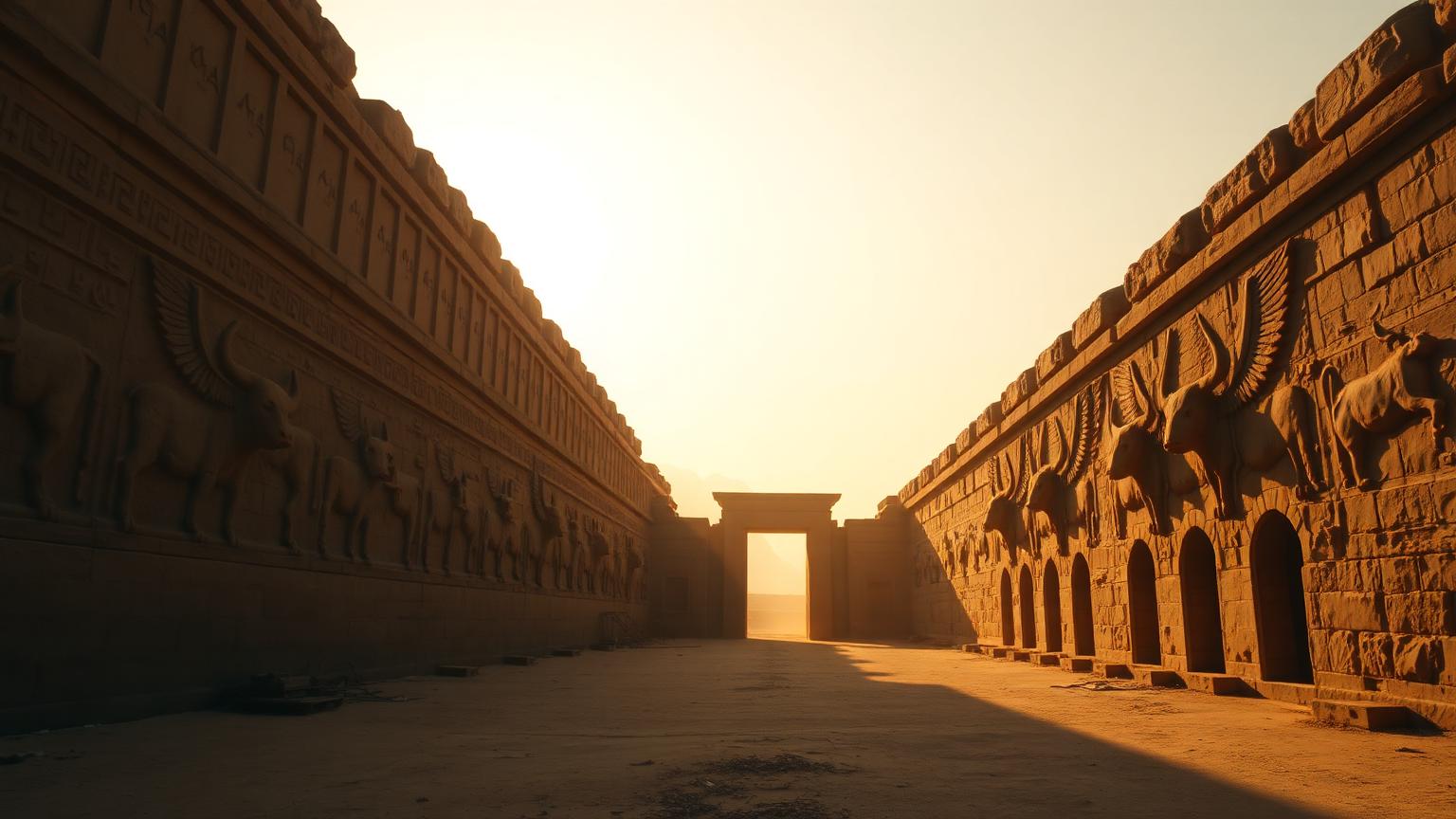
Assyria
2025 – 609 BCE
Empire logistics, siege warfare, and the library that preserved Mesopotamian literature.
Every claim in this period carries its evidence with it.
Royal annals, palace reliefs, the Nineveh library tablets, siege archaeology, and correspondence between kings and provincial officials.
- 01
Assyria operated a large territorial empire with provincial administration, standing forces and mass deportation policy.
- 02
The Nineveh libraries preserved a deliberately assembled scholarly collection, including the fullest Gilgamesh copies.
- 03
Siege warfare technique is documented in both texts and relief imagery, and corroborated at excavated sites.
Each row states the method, what is actually measured, and — the part usually skipped — what the result does not settle.
| Method | Material | What it constrains |
|---|---|---|
| Royal annals and eponym lists | Inscribed prisms, cylinders and year-name lists | Provides a firm regnal chronology. The narrative content is official self-presentation. |
| Relief iconography | Carved palace wall panels | Shows equipment and tactics as the court wished them seen. |
| Conflict archaeology | Siege ramps, arrowheads, destruction deposits and mass graves | Independently tests the annals. Where both survive, they often agree on the event and disagree on the outcome. |
How large were Assyrian armies and deportations?
The annals give round numbers with propagandistic function; settlement archaeology suggests lower figures.
Why did the empire fall so quickly?
Overextension, civil war, coalition attack and climate stress are all argued.
“Assyrian cruelty was unique in the ancient world.”
It was unusually well publicized by its own monuments — an advertising strategy, not an outlier practice.
“The annals are neutral military reports.”
They are commissioned victory texts. Defeats are omitted rather than recorded.
- How much of the Nineveh collection is still unpublished or lost?
- What was provincial life like away from the palace record?
- How much did drought contribute to the final collapse?
State Archives of Assyria series
Helsinki University Press
Nineveh and Nimrud excavation reports
British Museum / Iraq
Who was alive, and where
Mesopotamia & the Fertile Crescent
Where cities, writing, law and accounting first appear in the same layer.
The same centuries, side by side
Where Assyria connects to the rest of the ancient record — the worlds it belongs to, the chapters it sits in, the documents that record it, and the questions still open.
Worlds
All worlds →
Mesopotamia
Tigris–Euphrates · c. 6000 – 539 BCE
The wider river world where cities, law and bureaucracy first appear together.
Alive during Assyria
Assyria
Northern Mesopotamia · c. 2025 – 609 BCE
An empire that carved its own campaigns into the walls — and expected you to believe them.
Alive during Assyria
Primary Sources
All primary sources →
Epic of Gilgamesh
Mesopotamia · c. 2100 – 1200 BCE
The oldest surviving long-form literature, assembled across a millennium of tablet traditions.
Written in Assyria
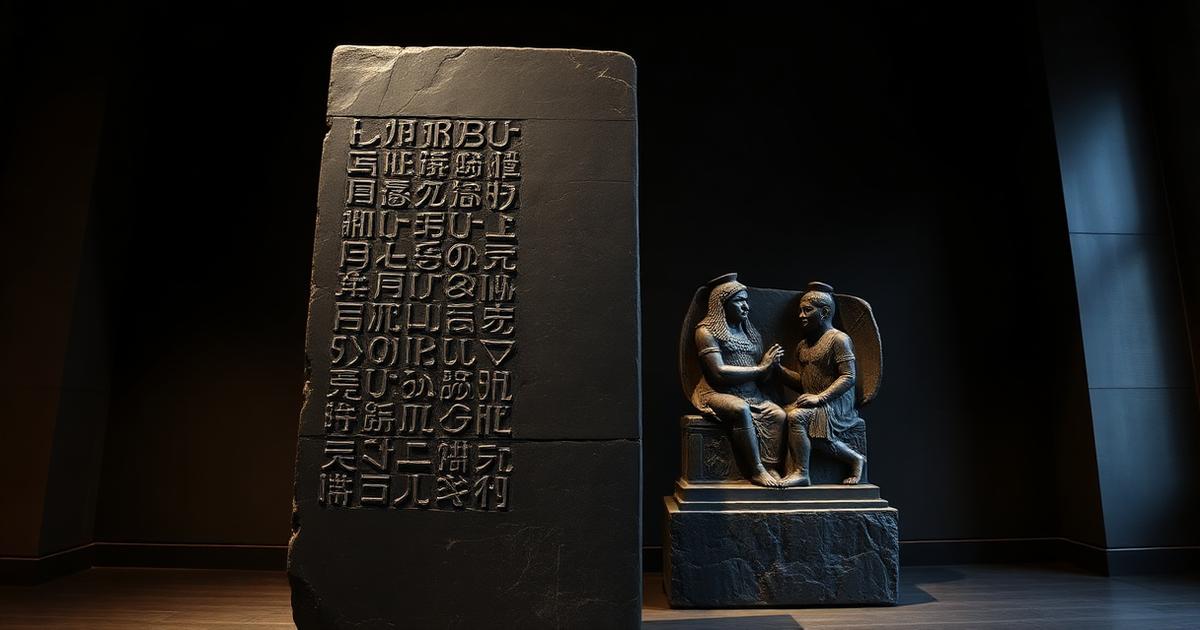
Code of Hammurabi
Babylon · c. 1754 BCE
282 provisions carved on a diorite stele — a legal monument as much as a working law code.
Source from Mesopotamia
Sumerian King List
Mesopotamia · c. 2100 – 1800 BCE
A dynastic list mixing verifiable kings with reigns of tens of thousands of years.
Source from Mesopotamia
Evidence Files
All evidence files →Bronze Age Collapse
Eastern Mediterranean · c. 1200 – 1150 BCE
Why did an interconnected system of empires fail within roughly fifty years?
Open question in Assyria
Baghdad Battery
Khujut Rabu, Iraq · c. 250 BCE – 250 CE
Were these jars electrochemical cells, or storage vessels misread by modern expectations?
Unresolved in Mesopotamia