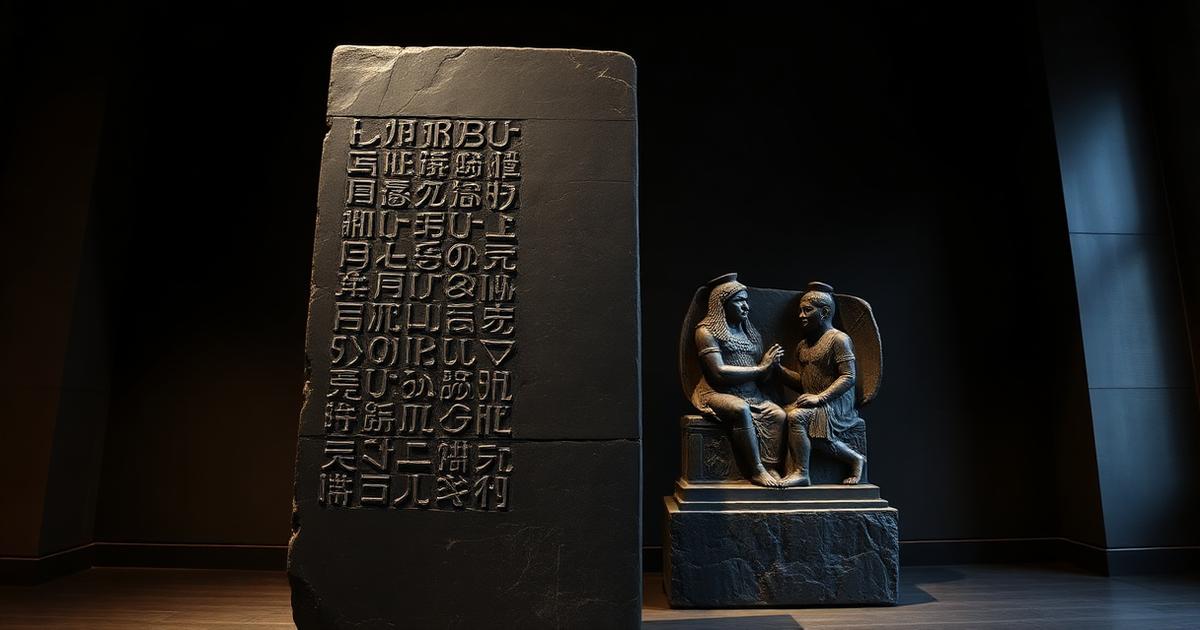
Code of Hammurabi
Babylon · c. 1754 BCE
282 provisions carved on a diorite stele — a legal monument as much as a working law code.
What the document is
A royal inscription of judgments, penalties and prices, discovered at Susa in 1901.
Why it matters
It is a direct window into class, liability and economic value in the Old Babylonian period.
How we treat this record
Attested in primary written sources that historians treat as reliable for this claim.
- Q01Was it enforced, or largely symbolic?
- Q02How does it relate to earlier codes like Ur-Nammu?

Documents that share themes, people, or historical periods with Code of Hammurabi.

Epic of Gilgamesh
Documentedc. 2100 – 1200 BCE
The oldest surviving long-form literature, assembled across a millennium of tablet traditions.
kingship · cuneiform literature · Same period: Babylon
Sumerian King List
Open Debatec. 2100 – 1800 BCE
A dynastic list mixing verifiable kings with reigns of tens of thousands of years.
kingship · cuneiform literature · Same period: Babylon
Ancient Egyptian Texts
Documentedc. 2400 BCE – 100 CE
Pyramid Texts, Coffin Texts, the Book of the Dead, and the administrative papyri that reveal daily logistics.
economic records · monumental inscription
Where Code of Hammurabi connects to the rest of the ancient record — the worlds it belongs to, the chapters it sits in, the documents that record it, and the questions still open.
Worlds
All worlds →Babylon
Central Mesopotamia · c. 1894 – 539 BCE
The city that wrote down the sky, and turned it into predictive mathematics.
Code of Hammurabi comes out of this world
Mesopotamia
Tigris–Euphrates · c. 6000 – 539 BCE
The wider river world where cities, law and bureaucracy first appear together.
Code of Hammurabi comes out of this world