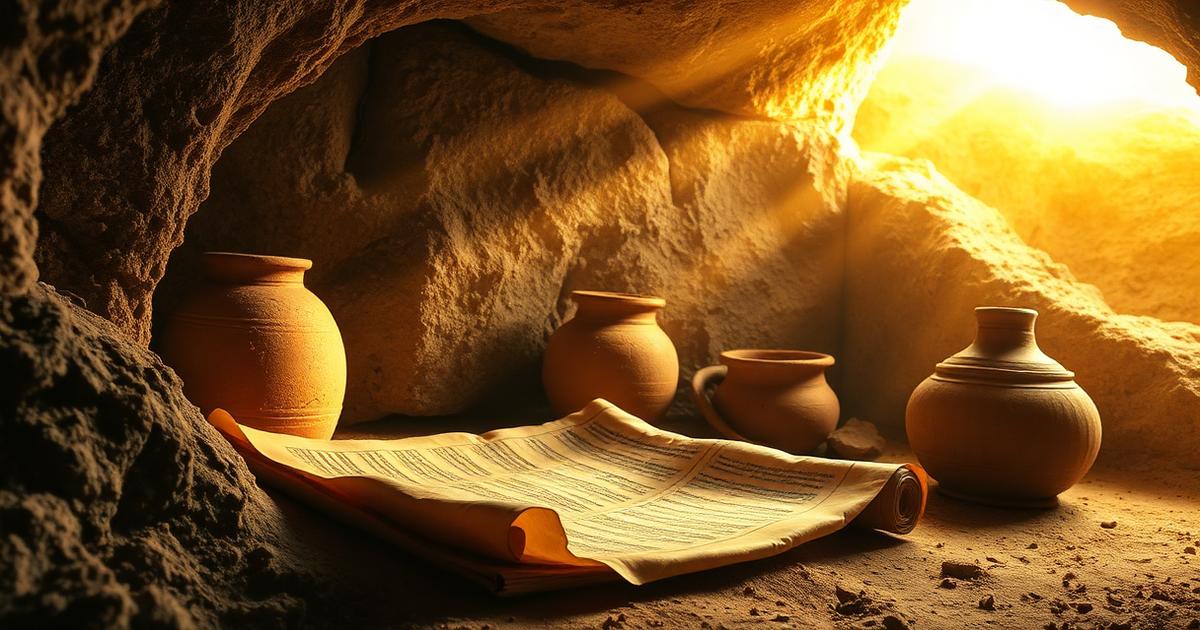
Dead Sea Scrolls
Qumran, Judaean Desert · c. 250 BCE – 68 CE
Roughly 900 manuscripts that reset what scholars knew about Second Temple Judaism and textual transmission.
What the document is
Biblical, sectarian and apocryphal manuscripts recovered from eleven caves between 1946 and 1956.
Why it matters
They push the manuscript record of several texts back by a thousand years and preserve Aramaic fragments of 1 Enoch.
How we treat this record
Attested in primary written sources that historians treat as reliable for this claim.
- Q01Who deposited the scrolls, and why?
- Q02How representative are they of wider Judaism?
Documents that share themes, people, or historical periods with Dead Sea Scrolls.

Book of Jubilees
Documentedc. 160 – 100 BCE
A retelling of Genesis and Exodus on a strict 364-day calendar, preserved fully in Ge'ez.
Shares the Qumran community and Enoch · textual transmission · canon formation · Same period: Israel

Nag Hammadi Library
Documentedc. 350 CE (copies)
Thirteen codices that transformed the study of early Christian diversity.
Shares the Qumran community · textual transmission · canon formation
Josephus
Documentedc. 75 – 94 CE
The single most-used narrative source for first-century Judaea, written by a participant with obvious interests.
Shares Josephus · Same period: Israel
Epic of Gilgamesh
Documentedc. 2100 – 1200 BCE
The oldest surviving long-form literature, assembled across a millennium of tablet traditions.
textual transmission · manuscript discovery
Where Dead Sea Scrolls connects to the rest of the ancient record — the worlds it belongs to, the chapters it sits in, the documents that record it, and the questions still open.