Second City Standard · History · Ancient Texts

The Book of Enoch: A Modern Illustrated Reading

The Book of Enoch is one of the most influential ancient Jewish writings left outside most modern biblical canons. This illustrated series presents an original modern-English rendering of 1 Enoch Chapters 1–10, followed by historical context, visual explanations and questions that remain open to interpretation.
The Book of Enoch — illustrated series cover

What is the Book of Enoch?

The Book of Enoch — usually meaning 1 Enoch — is an ancient Jewish work composed and edited across the centuries surrounding the Second Temple period. It survives in Geʽez in the Ethiopian Orthodox Tewahedo tradition, in Greek in partial manuscripts, and in Aramaic fragments recovered from the Dead Sea Scrolls at Qumran. It is one of the most influential ancient Jewish writings that did not become part of most modern biblical canons.

Was the Book of Enoch removed from the Bible?

The claim that a single church "removed" Enoch from an already-complete Bible is misleading. Different Jewish and Christian communities recognized their sacred collections over long periods. Most Jewish, Catholic, Eastern Orthodox and Protestant canons never accepted 1 Enoch. The Ethiopian Orthodox Tewahedo Church preserved it within its broader canon and still recognizes it today.

Read Chapters 1–10

Illustration of Enoch beneath an opening sky, representing the coming of the Holy One with heavenly beings
Chapter 1

The Blessing and the Coming Judgment

Book of Enoch Chapter 1 opens with a blessing for righteous people living during a future period of trouble. Enoch sees God approaching with countless holy ones

Read Chapter 1

Star-filled night sky representing the ordered paths of the heavenly lights in Book of Enoch Chapter 2
Chapter 2

Look Toward Heaven

Book of Enoch Chapter 2 asks readers to observe the heavens and earth. The stars and seasons remain within their appointed order, creating a contrast with intel

Read Chapter 2

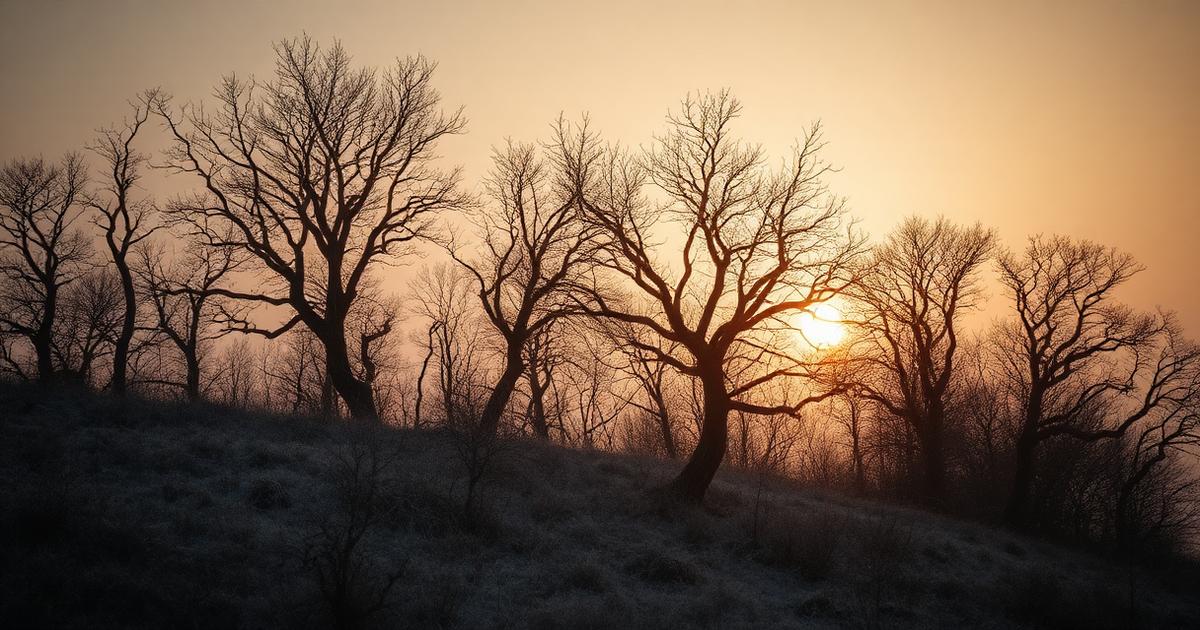
Bare winter trees representing patience, seasonal order and expected renewal
Chapter 3

The Trees of Winter

Book of Enoch Chapter 3 uses trees in winter to show that apparent emptiness exists within a larger cycle. The trees remain rooted and wait for renewal rather t

Read Chapter 3

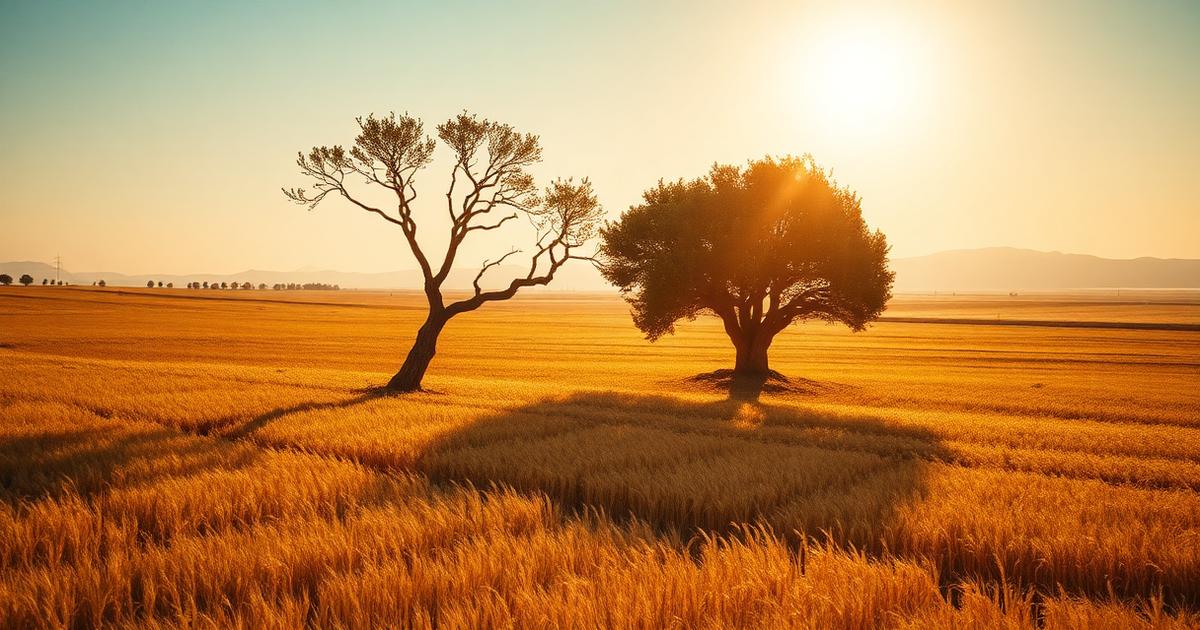
Sunlit summer landscape representing heat, shade and the changing seasons
Chapter 4

The Heat of Summer

Book of Enoch Chapter 4 turns from winter to summer. The intense heat, warmed earth and need for shade demonstrate that creation changes dramatically while cont

Read Chapter 4

Mountain landscape representing the contrast between ordered creation and human rebellion
Chapter 5

Creation Obeys

Book of Enoch Chapter 5 completes the comparison between creation and humanity. Nature follows its appointed order, while people knowingly reject justice. The c

Read Chapter 5

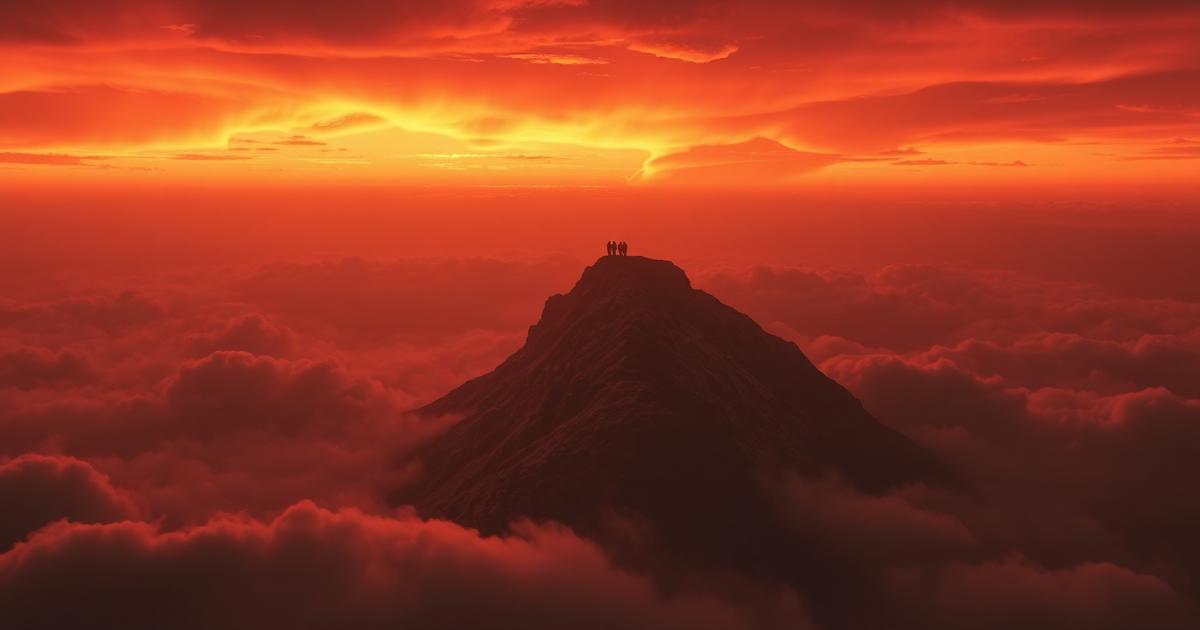
Mountaintop beneath a dramatic sky representing the Watchers' oath and descent upon Mount Hermon
Chapter 6

The Watchers Descend

Book of Enoch Chapter 6 introduces the Watchers, heavenly beings who desire human women. Two hundred Watchers swear a binding oath and descend upon Mount Hermon

Read Chapter 6

Dark mountain silhouettes representing the overwhelming scale and destructive appetite of the giants
Chapter 7

The Giants

Book of Enoch Chapter 7 describes the birth of the giants from the Watchers and human women. Their uncontrolled appetite consumes humanity's resources and event

Read Chapter 7

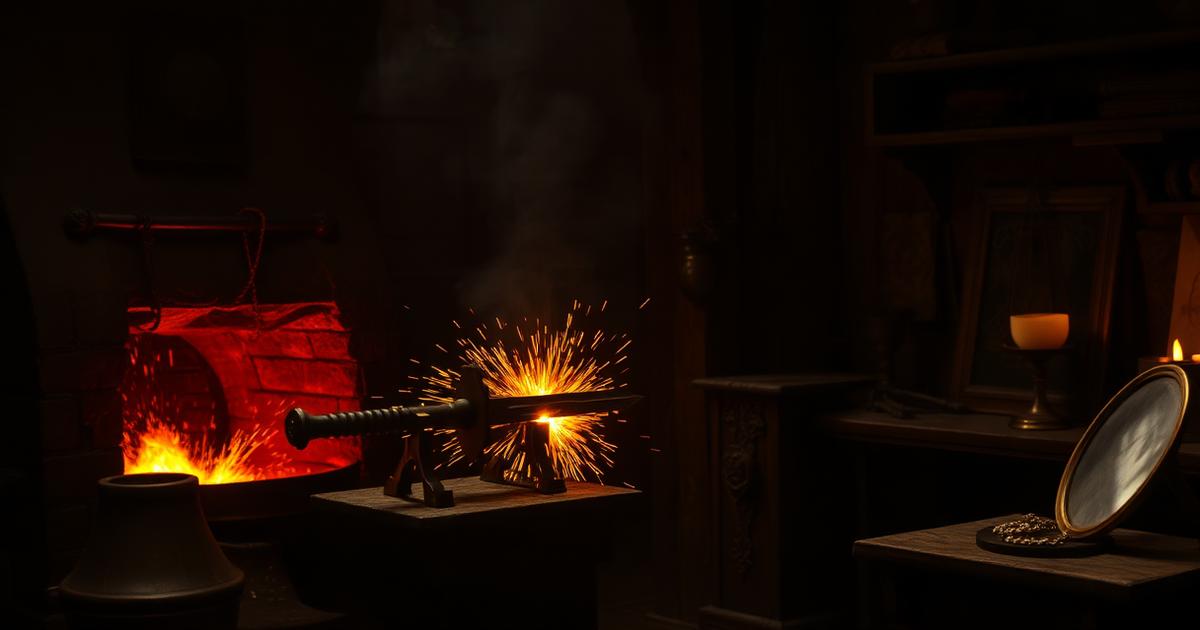
Ancient metalworking imagery representing weapons, adornment and forbidden knowledge taught by the Watchers
Chapter 8

Forbidden Knowledge

Book of Enoch Chapter 8 says the Watchers taught humanity weapons, metalworking, adornment, enchantments and knowledge of celestial signs. The chapter warns abo

Read Chapter 8

Light breaking through storm clouds representing the archangels witnessing suffering on Earth
Chapter 9

Heaven Hears the Earth

Book of Enoch Chapter 9 follows Michael, Uriel, Raphael and Gabriel as they witness the violence on Earth. They bring the cries of humanity before God and ident

Read Chapter 9

Remote wilderness landscape representing Azazel's imprisonment and the beginning of judgment
Chapter 10

Judgment Is Assigned

Book of Enoch Chapter 10 assigns judgment and restoration. Uriel warns Noah, Raphael binds Azazel, Gabriel confronts the giants, and Michael binds the Watchers

Read Chapter 10

Illustration of open heavens raining light onto a cleansed landscape
Chapter 11

The Storehouses of Blessing Opened

Chapter 11 closes the Watchers' judgment sequence with a promise: after the earth is cleansed, God will open the storehouses of blessing so that heaven's provis

Read Chapter 11

Illustration of Enoch standing between earth and a shining heavenly assembly
Chapter 12

Enoch Is Commissioned to Reprove the Watchers

Chapter 12 introduces Enoch as the messenger. Hidden from ordinary sight and walking with the holy ones, he is sent to tell the fallen Watchers that no peace re

Read Chapter 12

Illustration of Enoch beside a mountain river, scroll in hand, under a heavy sky
Chapter 13

Enoch Confronts Azazel and the Watchers' Petition

Enoch delivers the verdict to Azazel, writes a petition on behalf of the terrified Watchers, and keeps vigil by the waters of Dan until a vision comes.

Read Chapter 13

Illustration of a throne of crystal surrounded by fire in a house of hailstones
Chapter 14

The Vision of the Throne of Glory

Chapter 14 records Enoch's ascent through walls of crystal into a house of fire and ice, where he sees the Throne of Glory and receives God's answer for the Wat

Read Chapter 14

Illustration of divine light addressing shadowed figures below a throne
Chapter 15

God's Answer: Why the Watchers Cannot Be Forgiven

God rebukes the Watchers directly and explains why their sin cannot be pardoned: they left their proper place and produced a hybrid race whose spirits will beco

Read Chapter 15

Illustration of shadowy spirits dispersing beneath a rising dawn
Chapter 16

The Spirits of the Giants and the Final Verdict

Chapter 16 completes the verdict: the giants' spirits will operate until the final judgment, and the Watchers are told plainly that no peace remains for them.

Read Chapter 16

Illustration of Enoch at the edge of a fiery river beneath star-filled darkness
Chapter 17

The First Journey — Fire, Winds, and the Living Waters

Enoch's first cosmic journey begins. He is carried westward to a place of fire, storehouses of stars and winds, and the living waters that stand behind the visi

Read Chapter 17

Illustration of seven mountains of colored stone under a fiery chasm sky
Chapter 18

The Seven Mountains and the Prison of the Stars

Enoch sees the pillars of heaven, the seven mountains of precious stones, and a barren place beyond the world where seven stars burn — the disobedient luminarie

Read Chapter 18

Illustration of a desolate rocky place holding shadowed forms under Uriel's gaze
Chapter 19

The Place Where the Fallen Angels Await

Chapter 19 shows Enoch the desolate holding place of the angels who led humanity astray and the women who became like sirens — a brief but pointed vision of con

Read Chapter 19

Illustration of seven radiant figures standing over different regions of the cosmos
Chapter 20

The Seven Holy Archangels and Their Assignments

Chapter 20 names the seven archangels who preside over the cosmos — Uriel, Raphael, Raguel, Michael, Saraqael, Gabriel, and Remiel — and assigns each a specific

Read Chapter 20

Illustration of columns of fire descending into a bottomless abyss
Chapter 21

Two Prisons — The Empty Chaos and the Fiery Abyss

Enoch is shown two places of restraint: a chaotic void where nothing above or below is fixed, and a fiery abyss reserved for the seven fallen stars until their

Read Chapter 21

Illustration of four deep smooth hollows within a great western mountain
Chapter 22

The Four Hollow Places of the Dead

Chapter 22 gives 1 Enoch's map of Sheol: a great mountain in the west with four hollow places where human souls wait — separated by righteousness, wrongdoing, a

Read Chapter 22

Illustration of a river of fire streaming after the setting sun
Chapter 23

The Fire That Pursues the Western Luminaries

Chapter 23 shows Enoch a fire beyond the ends of the earth that runs without pause after the luminaries — the mechanism by which the sun and stars are moved thr

Read Chapter 23

Illustration of a central alabaster mountain crowned in sapphire with a fragrant tree at its side
Chapter 24

The Seven Mountains and the Fragrant Tree

Enoch sees the seven mountains again, dominated by a central throne-shaped mountain, and at its side a tree whose fragrance no living human being can imagine.

Read Chapter 24

Illustration of the tree of life at the foot of the throne mountain glowing at dawn
Chapter 25

The Tree of Life Reserved for the Elect

Michael explains that the throne mountain is where God will sit when He comes to visit the earth in goodness, and the fragrant tree is the tree whose fruit will

Read Chapter 25

Illustration of a blessed central mountain with narrow dry valleys carved beside it
Chapter 26

The Center of the Earth and the Accursed Valley

Enoch is brought to the center of the earth — a blessed place with springs and trees — and shown a deep valley next to it that will become the site of judgment.

Read Chapter 26

Illustration of a stark narrow valley beneath a bright holy mountain
Chapter 27

The Accursed Valley — Gehenna in 1 Enoch

Uriel explains that the deep valley next to the holy mountain will hold the accursed forever — the earliest developed picture of what later tradition names Gehe

Read Chapter 27

Illustration of a lush wilderness with a dividing stream under morning mist
Chapter 28

Into the Eastern Wilderness

Enoch turns eastward and sees a wilderness alive with trees, seeds, and running water — a preface to the fragrant garden regions that follow.

Read Chapter 28

Illustration of aromatic groves under an eastern sky at dawn
Chapter 29

Aromatic Trees of the East

Enoch travels further east and sees trees whose scent is like the fragrance of judgment — aromatic groves that mark the boundary of ordinary geography.

Read Chapter 29

Illustration of scented trees dripping resin beside slow water
Chapter 30

Sweet Trees Beside the Waters

Chapter 30 shows Enoch valleys of endlessly flowing water with beautiful trees like the mastic that yield sweet fragrance beyond description.

Read Chapter 30

Illustration of an aromatic ridge blooming with lily-scented trees at sunrise
Chapter 31

Cinnamon, Nard, and Sacred Spices

Enoch reaches groves of cinnamon and nard, the last of the aromatic regions before the garden of righteousness — trees whose fragrance he cannot fully describe.

Read Chapter 31

Illustration of the tree of wisdom heavy with fruit at the edge of a walled garden
Chapter 32

The Garden of Righteousness and the Tree of Wisdom

Enoch reaches the paradise of righteousness in the far east and sees the Tree of Wisdom — the tree from which the first humans ate and were driven out.

Read Chapter 32

Illustration of star portals opening at the eastern edge of the world
Chapter 33

The Eastern Ends of the Earth and the Gates of the Stars

Chapter 33 takes Enoch to the far edge of the earth, where he sees the gates of heaven opened for the stars, and Uriel writes down for him everything about thei

Read Chapter 33

Illustration of three northern portals opening onto a snow-swept sky
Chapter 34

The Northern Gates of the Winds

Enoch turns north and sees three gates of the sky through which the northern winds come — one bringing goodness, one bringing scattering, and one bringing devas

Read Chapter 34

Illustration of three western portals over an endless sea at dusk
Chapter 35

The Western Gates of the Winds

Enoch is shown the western portals of the sky — three more openings from which winds bring dew, rain, and cold onto the earth.

Read Chapter 35

Illustration of Enoch beneath opened eastern portals with sunrise streaming through
Chapter 36

The Southern and Eastern Portals — End of the Watchers Book

Chapter 36 completes the survey: three southern portals bring dew, rain, and wind; three eastern portals open onto the paradise of the righteous; Enoch closes t

Read Chapter 36

Explore the Key Topics

Short standalone explainers for the names and ideas readers most often ask about — designed as an entry point before, or alongside, the chapters.

What Is the Book of Enoch?

An ancient Jewish work, edited across centuries, that shaped how later readers imagined angels, judgment and the origins of evil.

Read more →

Who Are the Watchers?

Two hundred heavenly beings assigned to observe humanity. In 1 Enoch, a group of them breaks rank, descends to Mount Hermon and sets everything after in motion.

Read more →

What Are the Nephilim?

Genesis 6 mentions them in a single verse. 1 Enoch turns them into a full account of violence, hunger and a world driven past its limits.

Read more →

Who Is Azazel?

The Book of Enoch treats Azazel as a specific figure with a specific charge: he taught humanity what it was not ready to know.

Read more →

Mount Hermon and the Oath of the Watchers

A real mountain on the northern edge of the Levant, and — in the Book of Enoch — the site of the choice that changes everything.

Read more →

The Dead Sea Scrolls and the Book of Enoch

The Qumran fragments are the oldest surviving pieces of 1 Enoch — and the reason we know how old the earliest layers really are.

Read more →

Glossary of Names and Terms

Enoch
A brief figure in Genesis 5, expanded in 1 Enoch into a righteous seer shown visions of heaven and judgment. Read the full explainer →
Watchers
Heavenly beings assigned to observe the world. In 1 Enoch, two hundred of them descend on Mount Hermon and take human wives. Read the full explainer →
Nephilim
The giants of Genesis 6:4. Many readers connect them with the giants born to the Watchers in Enoch Chapter 7. Read the full explainer →
Azazel
A rebellious figure blamed for teaching weapons, metallurgy and adornment. Bound by Raphael in Chapter 10. Read the full explainer →
Mount Hermon
The mountain where the Watchers swear their oath. Enoch offers an etymology: Hermon = 'oath.' Read the full explainer →
Dead Sea Scrolls
The Qumran manuscript collection, which includes Aramaic fragments of several portions of 1 Enoch. Read the full explainer →
Ethiopian Enoch
The Geʽez tradition of the Ethiopian Orthodox Tewahedo Church, which preserves the full text of 1 Enoch.

Frequently Asked Questions

Is the Book of Enoch part of the Bible?

The answer depends on the religious tradition. Most Jewish, Catholic, Protestant and Eastern Orthodox biblical canons do not include 1 Enoch. The Ethiopian Orthodox Tewahedo tradition preserves it within its broader biblical canon.

Was the Book of Enoch removed by the Catholic Church?

It is misleading to describe the history as one church removing Enoch from a universally accepted completed Bible. Different Jewish and Christian communities formed their recognized collections over centuries. Enoch remained influential but was not accepted in most later canons.

Is the Book of Enoch older than Christianity?

Yes. Aramaic fragments of several portions of 1 Enoch were found among the Dead Sea Scrolls, showing that the work circulated in Jewish communities before Christianity.

Does the Bible mention Enoch?

Yes. Enoch appears briefly in Genesis 5. The New Testament Letter of Jude also contains a prophecy closely corresponding to 1 Enoch 1:9.

Who are the Watchers?

In 1 Enoch, the Watchers are heavenly beings assigned to observe the world. A group of them descends to Earth, takes human wives and shares knowledge that the text connects with growing corruption.

Are the giants the same as the Nephilim?

Many readers connect Enoch's giants with the Nephilim mentioned in Genesis 6, although the texts do not provide identical levels of detail. First Enoch greatly expands the brief Genesis account.

Who is Azazel?

Azazel is one of the rebellious figures blamed for teaching humanity weapons, metalworking, adornment and other forms of knowledge. Chapter 10 assigns Raphael to bind and imprison him.

Is this series a direct translation?

No. This is an original modern-English rendering created for accessible reading. It preserves the principal events and themes while adding connective language. It should not replace a scholarly translation for formal research.

Sources and Further Reading

  • 1 Enoch — public-domain English translation (R.H. Charles, 1917).
  • Aramaic Enoch fragments from Qumran (4Q201, 4Q202, and related).
  • Ethiopian Orthodox Tewahedo tradition and the Geʽez text.
  • The Letter of Jude, verses 14–15.