Second City Standard · The Book of Enoch · Chapter 18
The Seven Mountains and the Prison of the Stars
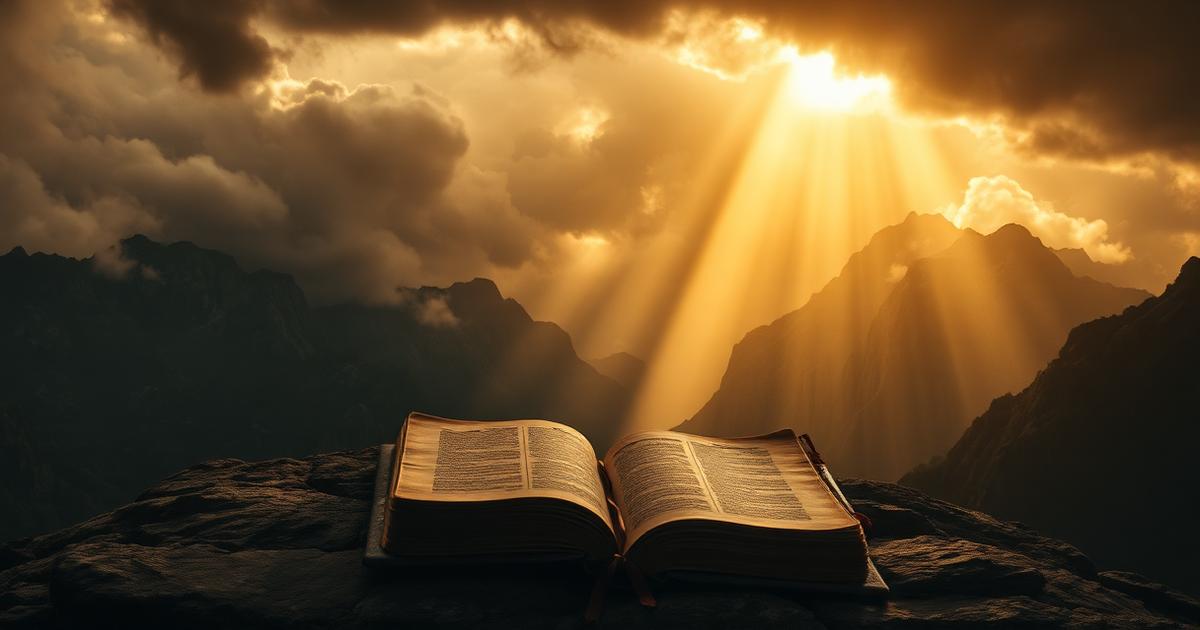
Enoch sees the pillars of heaven, the seven mountains of precious stones, and a barren place beyond the world where seven stars burn — the disobedient luminaries awaiting judgment.
Read-aloud is unavailable in this browser. The full chapter text is on the page above.
Book of Enoch Chapter 18: Modern Reading
I saw the storehouses of all the winds. I saw how by them He orders all created things, and the firm foundations of the earth. I saw the cornerstone of the earth, and the four winds that bear the earth and the firmament of the heaven.
I saw the winds stretched out that carry the heaven and hold their station between heaven and earth: they are the pillars of the heaven. I saw the winds that turn the sky and cause the wheel of the sun and of all the stars to set.
I saw seven mountains of magnificent stones, three toward the east and three toward the south. Those toward the east were of colored stone, one of pearl, one of healing stone; and those toward the south of red stone. The middle one reached to heaven like the throne of God, of alabaster, and its summit was of sapphire.
I saw a flaming fire, and beyond these mountains a place beyond the great earth: there the heavens are completed. I saw a deep chasm with columns of heavenly fire, and I saw among them columns of fire falling that were beyond measure.
Beyond this chasm I saw a place which had no firmament of heaven above, and no firmly founded earth beneath. There was no water and no birds — a waste, a horrible place. There I saw seven stars like great burning mountains, bound together. I asked, 'For what sin are they bound, and why have they been cast in here?' The angel said, 'These are the stars of heaven that transgressed the command of the Lord, and are bound here till ten thousand years — the time of their sins — is completed.'
What Happens in Book of Enoch Chapter 18?
Enoch sees the pillars of heaven, the seven mountains of precious stones, and a barren place beyond the world where seven stars burn — the disobedient luminaries awaiting judgment.
What Does Chapter 18 Mean?
Chapter 18 treats disobedience as something that exists on every level of creation, not only among humans and Watchers. Even stars can transgress and be jailed for a defined term.
The seven mountains, the cornerstone, and the pillars picture a universe with load-bearing structure — a building rather than an accident.
Historical and Biblical Context
The 'seven stars' as fallen luminaries anticipates later apocalyptic imagery, including some readings of Revelation.
The middle mountain of alabaster and sapphire prefigures the throne-mountain of Chapter 25 and shapes later Christian depictions of the mount of God.
Key Ideas
Creation has architecture.
Cornerstone, pillars, and mountains present a designed cosmos rather than a random one.
Even stars can rebel.
The stellar prison universalizes the theme of accountability.
Judgment is time-bounded.
The stars are held for a fixed term, not indefinitely — a signature Enochic pattern.
Questions Raised by the Chapter
Are the seven stars literal astronomical bodies?
Later Enochic material treats them symbolically as heavenly beings; the exact identification is debated.
Why seven mountains?
The number recurs across Enoch's cosmology and Ancient Near Eastern tradition as a marker of completeness.