Second City Standard · The Book of Enoch · Chapter 9
Heaven Hears the Earth
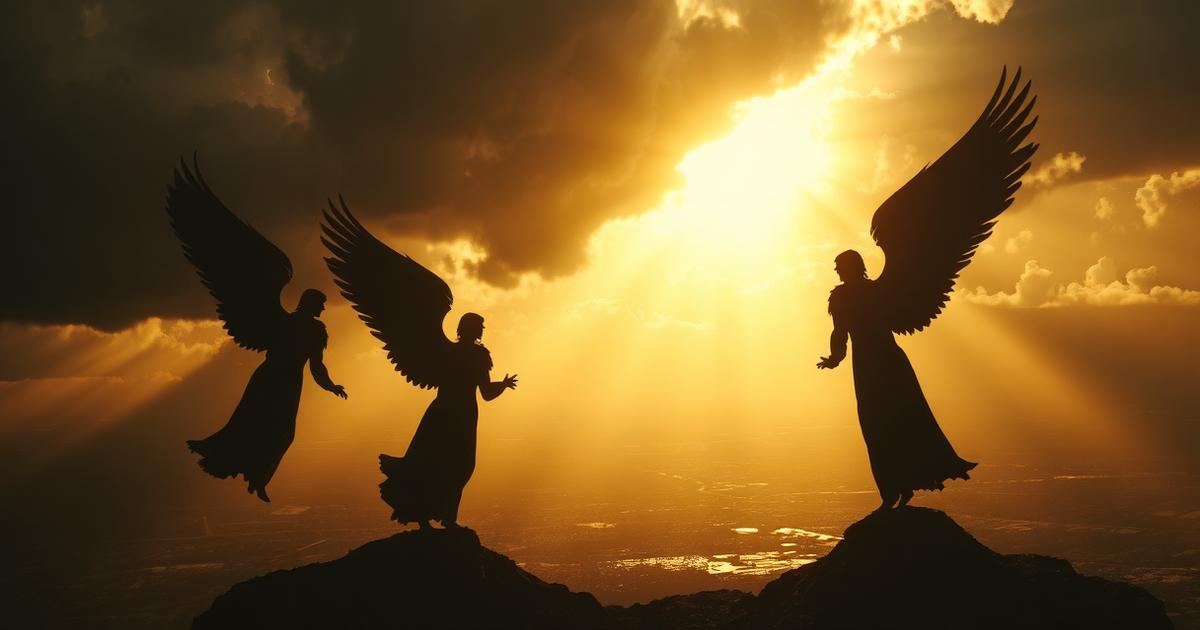
Book of Enoch Chapter 9 follows Michael, Uriel, Raphael and Gabriel as they witness the violence on Earth. They bring the cries of humanity before God and identify Azazel and the Watchers as sources of corruption.
Read-aloud is unavailable in this browser. The full chapter text is on the page above.
Book of Enoch Chapter 9: Modern Reading
Then Michael, Uriel, Raphael and Gabriel looked down from heaven and saw the great quantity of blood being shed upon the earth, and all the lawlessness that was being done upon it.
They stood at the edge of heaven and did not speak at first. What they saw was not one atrocity but a pattern — a whole world tilted, generation upon generation, into a direction it had not been made to go. The silence between them was not indifference. It was the weight of witnesses whose testimony had not yet been called.
They said to one another: the voice of the crying of humanity rises up. The souls of those who have died make suit, and their complaint has come up to the gates of heaven. And the four said among themselves: bring in our case before the Most High.
So they went in and said to the Lord of the ages: You are Lord of lords, God of gods, King of kings, and God of the ages. The throne of Your glory stands unto all the generations of the ages, and Your name is holy and glorious and blessed forever.
You have made all things and have power over all. All things are naked and open in Your sight, and You see all things, and nothing can hide itself from You. See then what Azazel has done — how he has taught all unrighteousness on earth and revealed the eternal secrets that were kept in heaven, which the sons of men were striving to learn.
See what Shemihazah has done, to whom You gave authority to rule over those who are with him. They have gone in together to the daughters of men, have lain with them, have defiled themselves, and have revealed to them all sorts of sins. The women have brought forth giants, and the whole earth has been filled with blood and unrighteousness.
And now, behold, the souls of those who have died cry out and complain to the gate of heaven, and their groanings ascend and cannot cease because of the lawless deeds that are wrought on the earth. And You know all things before they come to pass. You see this, and You permit them. Say to us: what shall we do with them regarding this?
It is one of the most unguarded sentences in the whole of the ancient literature. The archangels themselves do not pretend to understand the pause. They ask, plainly and on the record, what a suffering earth is entitled to ask: how long, and what next.
What Happens in Book of Enoch Chapter 9?
Book of Enoch Chapter 9 follows Michael, Uriel, Raphael and Gabriel as they witness the violence on Earth. They bring the cries of humanity before God and identify Azazel and the Watchers as sources of corruption.
What Does Chapter 9 Mean?
Chapter 9 answers a question the earlier chapters have been building toward: does heaven notice?
The archangels do not simply act. They present a case. Justice, even in this apocalyptic literature, follows something like a legal procedure — evidence, naming, and a formal request for a ruling.
The chapter also gives voice to a hard question the reader is likely already asking: 'You see this, and You permit them.' The book does not pretend the question is unreasonable. It puts the question in the mouth of the archangels themselves.
Historical and Biblical Context
Michael, Uriel, Raphael and Gabriel are the same four archangels who receive the specific assignments in Chapter 10.
The chapter's language — souls crying from the ground, the case brought before a throne — echoes and expands earlier Hebrew tradition, including the cry of Abel's blood in Genesis 4.
The formal address ('God of gods, Lord of lords') is a liturgical form recognizable across ancient Jewish prayer.
Key Ideas
Heaven is not indifferent.
The archangels see, hear and act on what has been done.
Justice is procedural.
The archangels present a case; they do not simply retaliate.
The hard question is spoken aloud.
'You see this and permit them' is asked openly. The chapter does not soften it.
Questions Raised by the Chapter
Why go to God at all if He already knows?
The chapter treats the presentation itself as meaningful — a form of witness that names what has been done.
Why four archangels rather than one?
Chapter 10 will give each a distinct assignment. Chapter 9 introduces them as a group so their individual roles carry weight when they diverge.