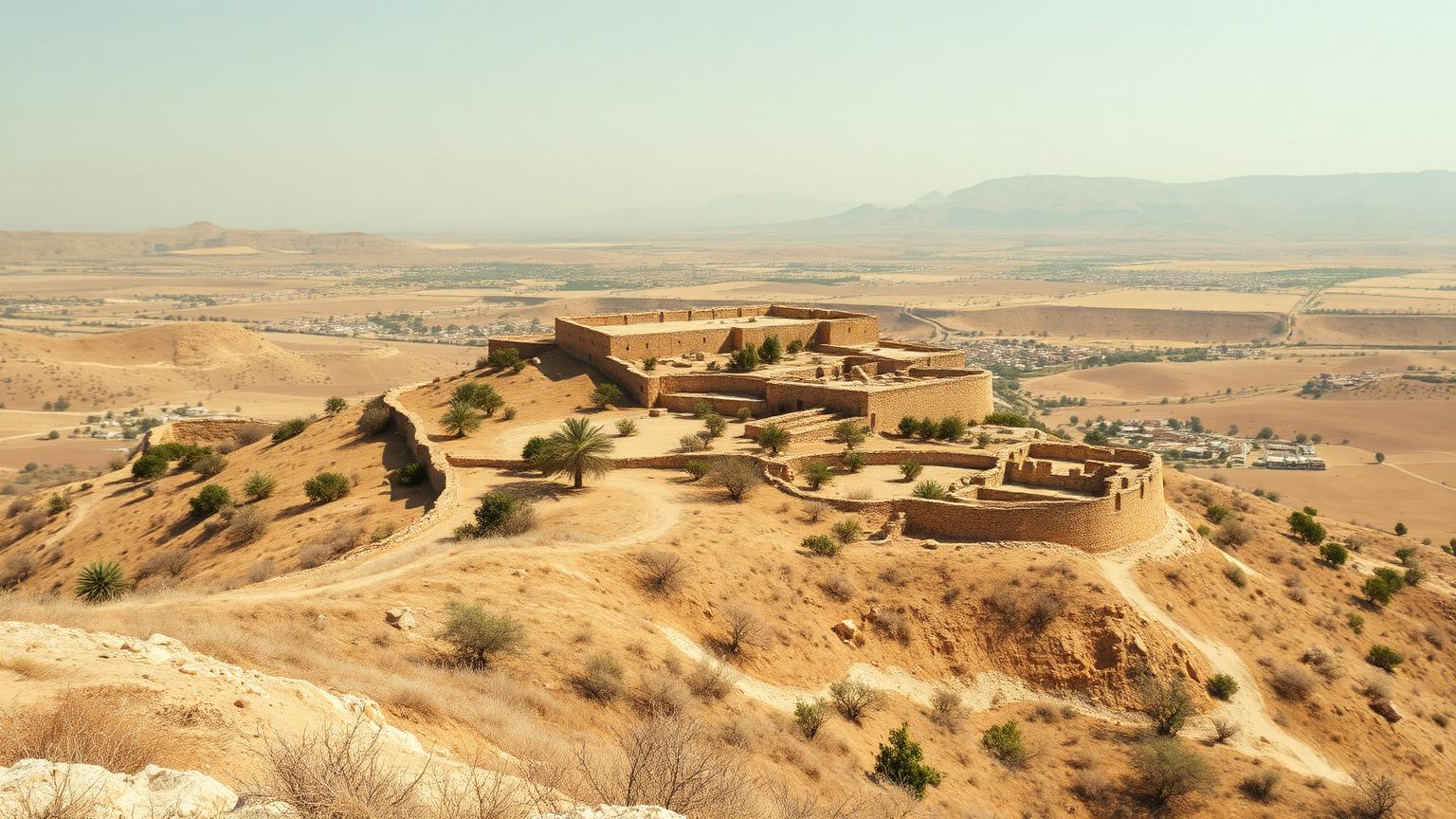
Weathered Egyptian temple relief depicting a naval battle with ships and warriors
Evidence File 08Active Academic Debate

Sea Peoples

Eastern Mediterranean · c. 1200 – 1150 BCE

Who were the Sea Peoples, and were they a cause of collapse or a symptom of it?

Chicago style · PDF or .txt

The Sea Peoples are named by the people who fought them and by nobody else. That is the entire evidentiary problem: we have an Egyptian enemy list, and we are trying to reconstruct a migration from it.

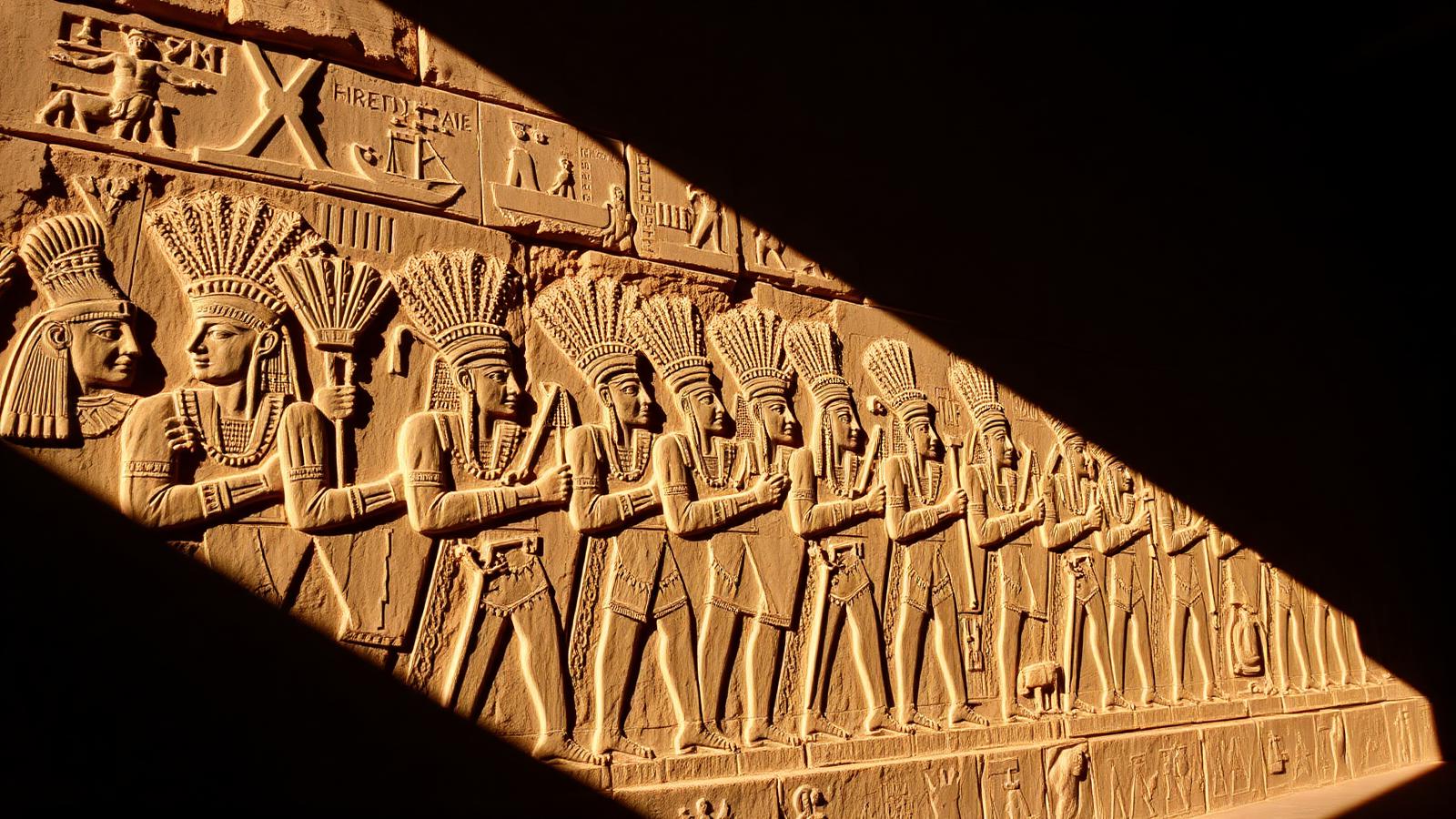
Medinet Habu. The Sea Peoples exist chiefly as the enemy in someone else's victory monument.

Historical record

Egyptian inscriptions at Medinet Habu and Ugaritic letters describe seaborne attackers.

Current scientific consensus

A loose set of displaced groups, not a single coordinated nation.

The sources

Ramesses III's mortuary temple at Medinet Habu carries reliefs and inscriptions describing a coalition — Peleset, Tjeker, Shekelesh, Denyen, Weshesh — arriving by land and sea and being defeated. Earlier texts under Merneptah name overlapping groups. Ugaritic letters from the final days of that city describe enemy ships and a defenceless coast. The Egyptian record is propaganda in genre and reliable in outline: something arrived, and it was serious.
What the names are not

The group names have been mapped onto Sicily, Sardinia, Anatolia, the Aegean and the Philistine coast largely on the strength of phonetic resemblance. Some of these identifications are plausible — the Peleset–Philistine link is supported by material culture and now by ancient DNA from Ashkelon showing a southern-European genetic component arriving in the early Iron Age. Others are little more than word games.

Nor is 'Sea Peoples' a self-description. No group calls itself that. It is a modern label applied to an Egyptian list, and it smuggles in the assumption that these were one coordinated movement rather than several unrelated pressures across a bad century.

Cause or symptom

The current weight of argument treats the migrations as part of the Late Bronze Age collapse rather than its cause: drought-driven displacement, failing palace economies, and disrupted trade produce moving populations, and moving populations produce raids. Distinguishing the trigger from the consequence in a single generation of destruction layers remains difficult.

Competing interpretations

Migrating populations fleeing systemic collapse.

Active Academic Debate
48% support

Specialists disagree. Competing interpretations are presented side by side.

Opportunistic raiders exploiting weakened states.

Active Academic Debate
48% support

Specialists disagree. Competing interpretations are presented side by side.

Support scores reflect the strength of the evidence class behind a claim, not how often you have heard it. Speculative entries appear because readers encounter them — never because we endorse them.

The dossier
Chicago style · PDF or .txt
The evidence base

Egyptian temple reliefs and inscriptions, correspondence from Levantine and Anatolian archives, and destruction layers across the eastern Mediterranean.

How it is dated

Each row states the method, what was measured, and — the part usually skipped — what the result does not settle.

MethodSampleResultWhat it constrains
Egyptian royal inscriptionsMedinet Habu reliefs and texts of Ramesses IIINamed groups arriving by land and sea, defeated in the DeltaContemporary testimony from one side, carved as a victory monument.
Archival correspondenceUgarit letters written shortly before the city's destructionUrgent reports of enemy ships and undefended coastsConfirms seaborne threat in real time. It does not identify who the attackers were.
Destruction stratigraphy and material cultureBurn layers and subsequent pottery styles at Levantine sitesNew ceramic traditions appearing after destruction at some sitesShows cultural change. Migration, imitation and trade all produce similar signatures.
Competing readings, scored

The percentage is our editorial reading of how much of the surviving record each claim accounts for. It is a judgement, stated openly, not a consensus figure.

  • A loose coalition of displaced groups moving during a wider systems collapse.

    Open Debate
    Explains the record70%
    Rests on
    • The Egyptian sources themselves name several distinct groups, not one nation.
    • Fits the drought, famine and trade-failure evidence across the same decades.
    Runs into
    • Origins of the named groups are still argued individually.
  • An organised invasion by a defined confederation.

    Open Debate
    Explains the record28%
    Rests on
    • The reliefs depict coordinated land and sea forces with families in tow.
    Runs into
    • Victory monuments compress and simplify by design.
    • No archive from the attackers' side exists.
  • The Sea Peoples are largely an Egyptian rhetorical construct.

    Analysis
    Explains the record25%
    Rests on
    • The category groups very different peoples under one convenient label.
    Runs into
    • Independent Ugaritic testimony records genuine seaborne attack.
Where to check us
  • Medinet Habu publication series

    Oriental Institute, University of Chicago

  • Ugarit archive editions and Late Bronze collapse studies

    Ras Shamra-Ougarit series / Princeton University Press

What would change this
  • An archive from a homeland site that names these groups from the inside.

What the record supports

  • Medinet Habu reliefs
  • Ugarit destruction layer
  • Philistine material culture in the Levant

What remains open

  • Where did each named group originate?
  • How much of the record is Egyptian propaganda?
How this file was built

Egyptian inscriptions are read as commissioned victory rhetoric with a factual core. Identifications are reported at the tier the supporting archaeology or genetics justifies, not at the tier the phonetic match suggests.

What would settle it
  • Settlement archaeology tied securely to a named group outside Egypt
  • Additional ancient DNA series across the eastern Mediterranean transition
  • Contemporary non-Egyptian textual references to the same coalition
Across the archive

Where Sea Peoples connects to the rest of the ancient record — the worlds it belongs to, the chapters it sits in, the documents that record it, and the questions still open.