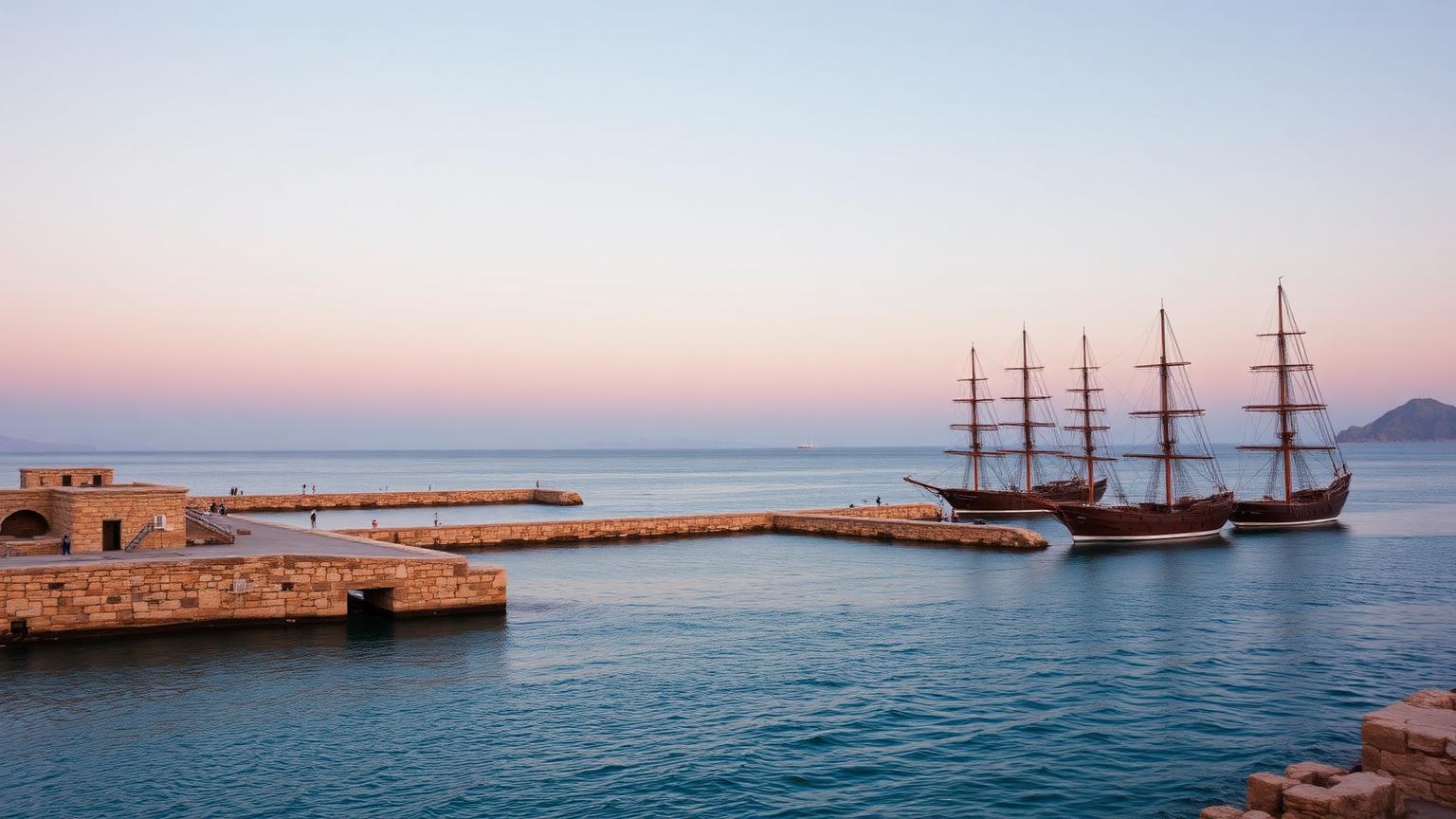
Phoenicia
1500 – 300 BCE
Maritime trade networks and the alphabet that traveled with them.
Every claim in this period carries its evidence with it.
Harbour and colony sites across the Mediterranean, inscriptions in the Phoenician alphabet, shipwreck cargoes, and accounts written by their trading partners and rivals.
- 01
The Phoenician alphabet is the ancestor of Greek and, through it, Latin script.
- 02
Phoenician cities ran long-range maritime trade networks and founded colonies across the Mediterranean.
- 03
Murex-based purple dye production is attested archaeologically by industrial shell middens.
Each row states the method, what is actually measured, and — the part usually skipped — what the result does not settle.
| Method | Material | What it constrains |
|---|---|---|
| Epigraphic comparison | Phoenician, early Greek and Aramaic inscriptions | Traces script transmission by letter form and order, independent of any narrative. |
| Maritime archaeology | Shipwreck hulls and amphora cargoes | Documents routes, goods and ship construction. Ownership and nationality are usually inferred. |
| Industrial residue analysis | Murex shell deposits and dye vats | Confirms production at scale in specific coastal locations. |
Did Phoenician ships circumnavigate Africa?
Herodotus reports it, including a detail he disbelieved that would actually support the voyage.
How much of 'Phoenician' identity is an external label?
The cities identified locally rather than as one nation.
“The Phoenicians invented writing.”
They adapted an existing consonantal alphabetic tradition and spread it, which is a different achievement.
“They left almost no written record.”
They wrote extensively on perishable media. Survival bias, not illiteracy, produced the gap.
- How far into the Atlantic did the trade network reach?
- What did the internal politics of the city-states look like?
- How much archive material is lost to the damp Levantine coast?
Corpus of Phoenician and Punic inscriptions
academic epigraphic corpora
Mediterranean shipwreck excavation reports
International Journal of Nautical Archaeology
Who was alive, and where
Nile & North Africa
River agriculture, desert logistics, and the longest state records we have.
Mesopotamia & the Fertile Crescent
Where cities, writing, law and accounting first appear in the same layer.
The same centuries, side by side
Where Phoenicia connects to the rest of the ancient record — the worlds it belongs to, the chapters it sits in, the documents that record it, and the questions still open.
Worlds
All worlds →Phoenicia
Levantine Coast · c. 1500 – 300 BCE
Not a state — a network. It exported the alphabet almost as a side effect.
Alive during Phoenicia
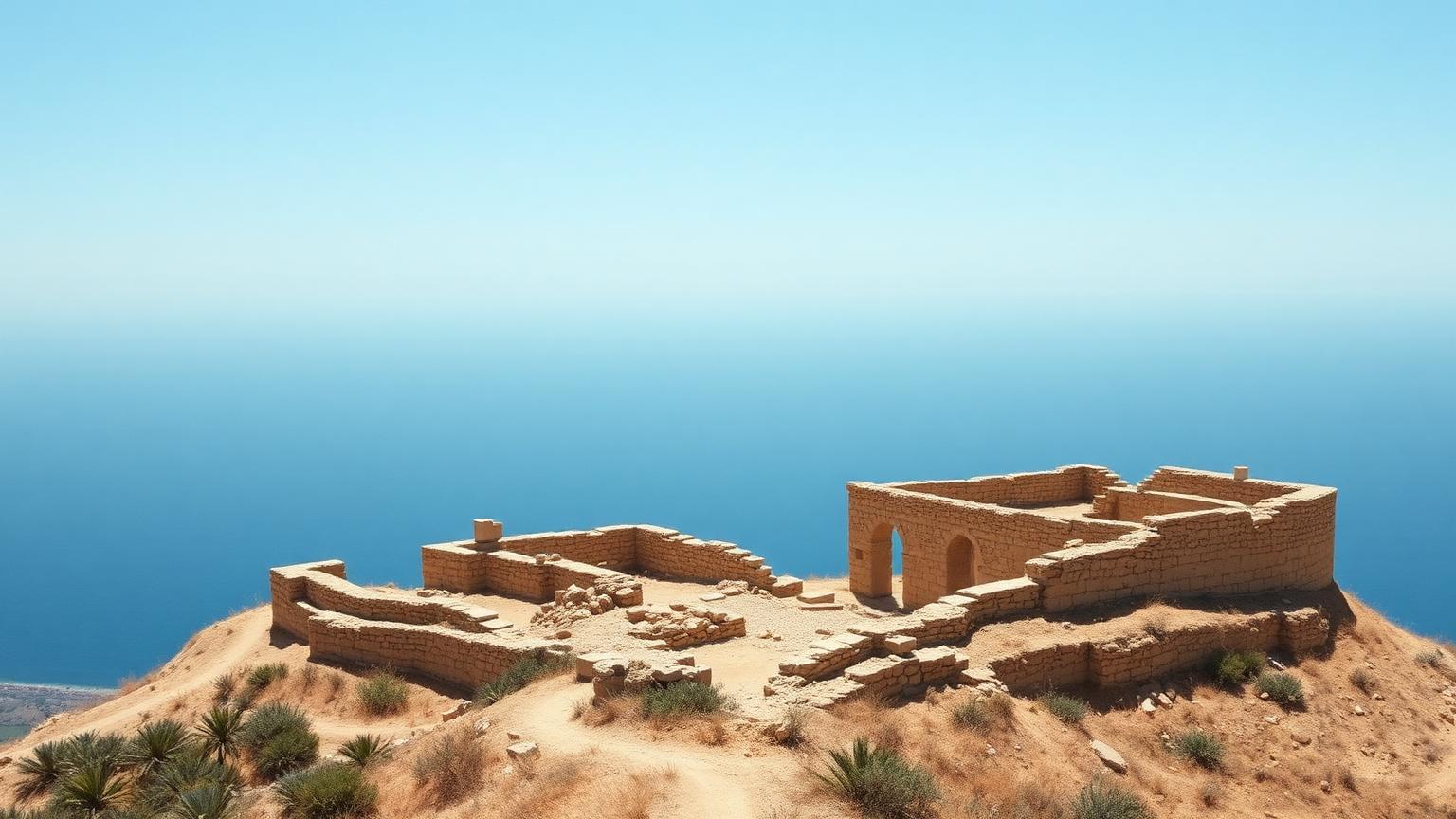
Carthage
North Africa · c. 814 – 146 BCE
A maritime superpower whose own account of itself was destroyed by the winners.
Alive during Phoenicia
Evidence Files
All evidence files →Sea Peoples
Eastern Mediterranean · c. 1200 – 1150 BCE
Who were the Sea Peoples, and were they a cause of collapse or a symptom of it?
Open question in Phoenicia
Bronze Age Collapse
Eastern Mediterranean · c. 1200 – 1150 BCE
Why did an interconnected system of empires fail within roughly fifty years?
Unresolved in Phoenicia