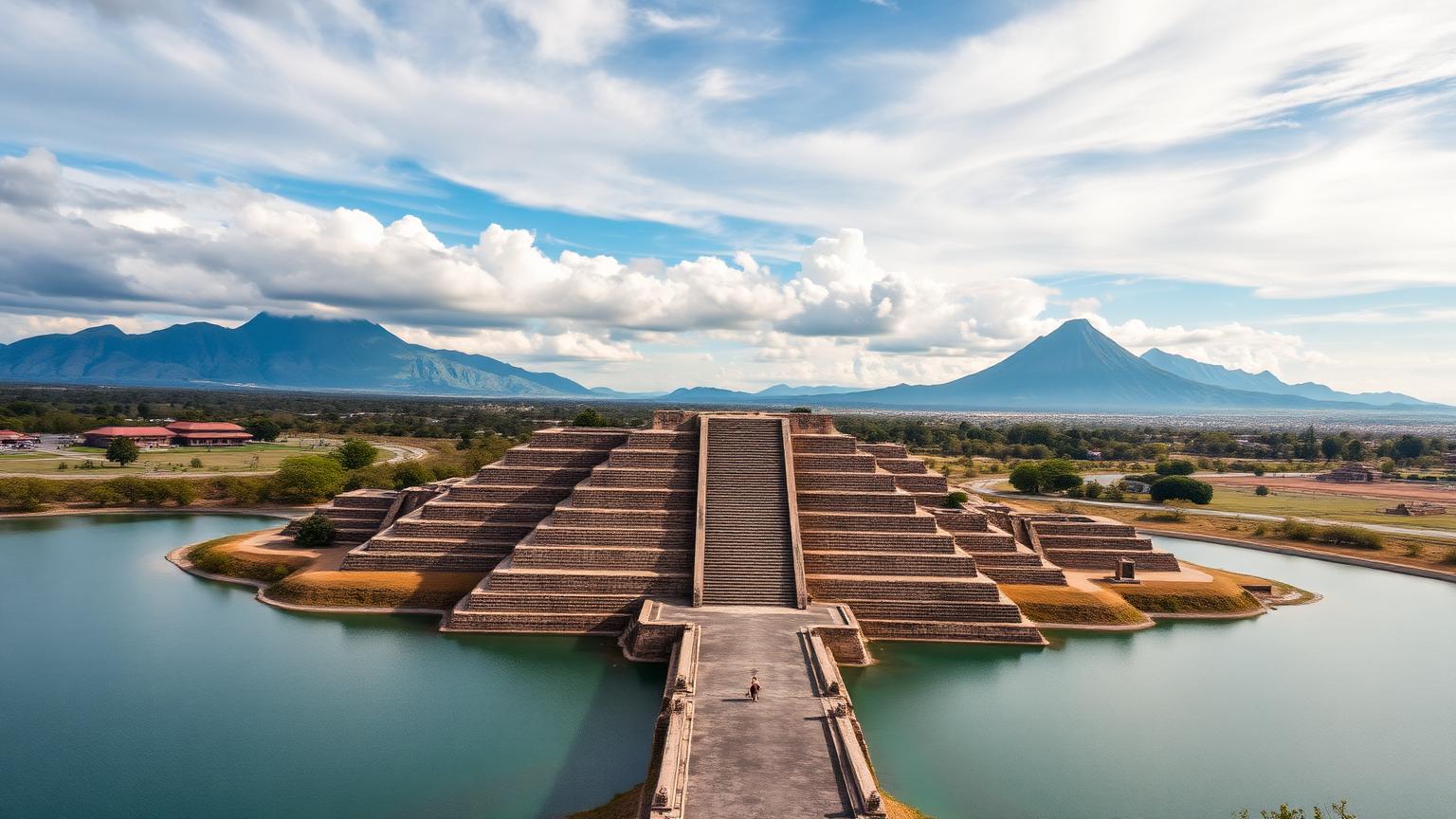
Aztec
1300 – 1521 CE
Lake-city agriculture, tribute economics, and codices written on both sides of conquest.
Every claim in this period carries its evidence with it.
Excavations in and beneath Mexico City, indigenous and colonial-era codices, Nahuatl-language texts, and Spanish accounts written by participants and their descendants.
- 01
Tenochtitlan was one of the largest cities in the world at contact, built on an engineered lake system with chinampa agriculture.
- 02
The Templo Mayor excavations recovered offering caches that corroborate documented ritual practice.
- 03
Conquest depended heavily on indigenous allies and introduced epidemic disease, not on European technology alone.
Each row states the method, what is actually measured, and — the part usually skipped — what the result does not settle.
| Method | Material | What it constrains |
|---|---|---|
| Urban excavation | Templo Mayor precinct and offering deposits | Directly tests textual descriptions of ritual. Much of the city remains under a modern capital. |
| Codex analysis | Pictorial manuscripts and Nahuatl alphabetic texts | Preserves indigenous accounts; most surviving copies were produced under colonial conditions. |
| Bioarchaeology | Skeletal remains from ritual and burial contexts | Establishes practice and demography without confirming reported totals. |
What was the scale of human sacrifice?
Skull-rack excavation confirms the practice; Spanish-reported totals remain contested.
How coercive was the tribute empire?
Provincial evidence shows a spectrum from garrisoned control to negotiated tribute.
“A few hundred Spaniards defeated an empire.”
Tens of thousands of indigenous allies and catastrophic epidemics are what the sources actually describe.
“The Aztecs mistook Cortés for a returning god.”
That narrative appears in later colonial sources and is treated by most specialists as retrospective framing.
- How much of Tenochtitlan is recoverable beneath Mexico City?
- How did the lake hydraulic system function in detail?
- What did pre-contact population figures actually look like?
Templo Mayor Project reports
INAH, Mexico
Florentine Codex digital edition
Getty Research Institute / Library of Congress
Who was alive, and where
Mesoamerica
Astronomy, calendars and monumental stone in tropical environments.
The same centuries, side by side
Where Aztec connects to the rest of the ancient record — the worlds it belongs to, the chapters it sits in, the documents that record it, and the questions still open.