Aztec
A lake city of a quarter-million people, farmed on rafts and taxed on paper.
- Span
- c. 1300 – 1521 CE
- Now
- Mexico City
- Coordinates
- 19.43° N, 99.13° W
- Palette
- Turquoise · obsidian · earth
Geography first. Everything else is a response to it.
Tenochtitlan and the Triple Alliance
Mexico City
Lake Texcoco · Chinampa canals
Tenochtitlan · Texcoco · Tlacopan · Tlatelolco
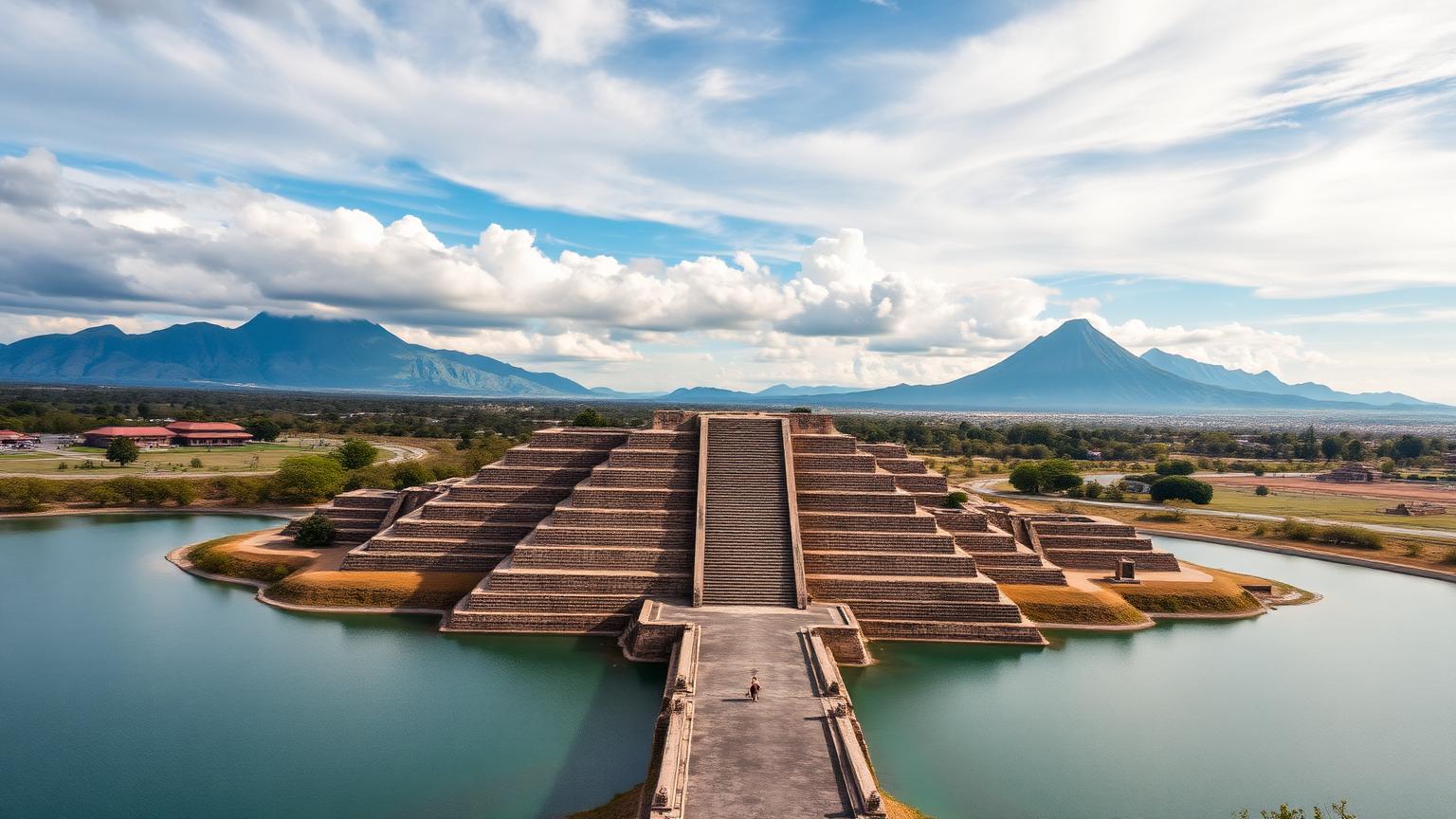
An island in a shallow saline lake — nearly indefensible-looking, actually the opposite. Causeways with removable bridges made it a fortress with a built-in freight canal system.
Chinampas — raised beds built from lake mud and staked vegetation — produced multiple harvests a year and are among the most productive pre-industrial agricultural systems documented.
A dike separated fresh from saline water; when the Spanish drained the lake system, the flooding problems they created are still being managed today.
A tribute empire recorded in indigenous codices and in the accounts of the people who destroyed it.
The civilization at a glance
Ancient population and army figures are estimates. Anything marked est. is a reconstruction, not a count.
What they built, and how it worked
Chinampa agriculture
Templo Mayor excavations
Tribute rolls
How we know what we claim
Editorial confidence ratings, not measurements. They describe how much of the picture rests on each channel — and where a single new find could move the file.
This rating governs the whole hub. Any claim on this page that outruns it is labeled where it appears.
- How reliable are post-conquest sources?
- What fed Tenochtitlan's population?
Where the evidence stops
- The Templo Mayor has been excavated in central Mexico City with thousands of cataloged offerings.
- Tribute lists survive and can be cross-checked against archaeology in the provinces.
- Sacrifice was real and ritually central; the numbers in Spanish accounts are inflated, and osteological evidence suggests a far lower scale.
- Epidemic disease, not battlefield defeat alone, decided the conquest.
- Actual annual sacrifice counts.
- Pre-contact population of the wider valley.
Who else was alive
Valley of Mexico · 1,325 CE – 1,521 CE. Bars below show civilizations alive at the same moment.
Where Aztec connects to the rest of the ancient record — the worlds it belongs to, the chapters it sits in, the documents that record it, and the questions still open.
One more civilization
Same moment in history, different world. Keep going.