Inca
An empire of ten million run without writing, wheels, or money.
- Span
- c. 1438 – 1533 CE
- Now
- Peru, Bolivia, Ecuador, Chile, Argentina
- Coordinates
- 13.16° S, 72.54° W
- Palette
- Andean gold · terracotta · granite
Geography first. Everything else is a response to it.
Tawantinsuyu, the Four Regions
Peru, Bolivia, Ecuador, Chile, Argentina
Urubamba · Lake Titicaca · Pacific coast
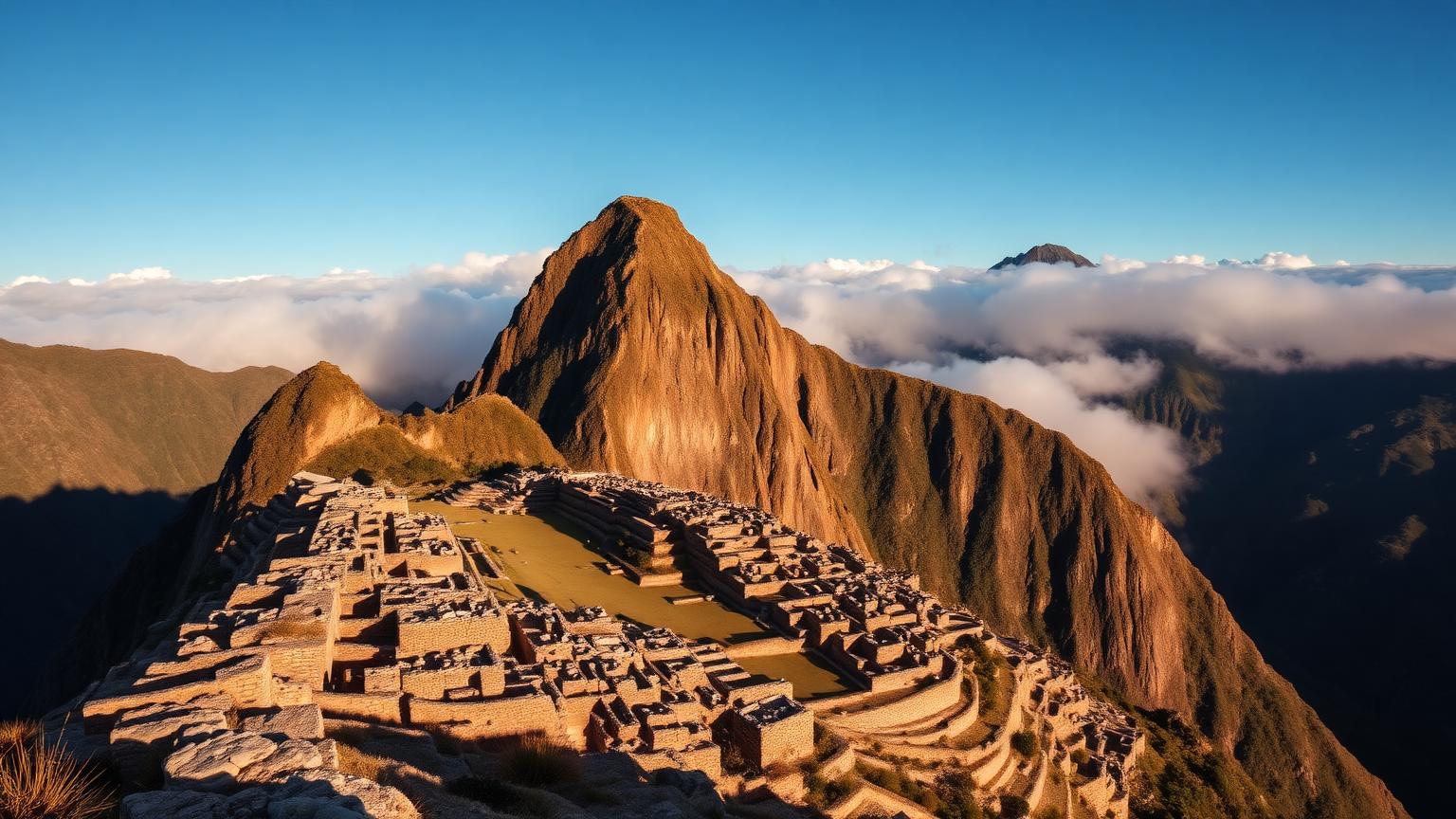
Cusco · Machu Picchu · Ollantaytambo · Quito
Vertical geography. Within a day's walk you can move through several climate zones, so a single community can farm potatoes, maize and coca — risk spread by altitude.
Terracing is not decorative: it controls erosion, extends the growing season by retaining daytime heat, and was engineered with graded drainage fill.
Roughly 40,000 km of road crossed some of the most vertical terrain on earth, with suspension bridges rewoven annually — one, Q'eswachaka, still is.
Continental-scale administration without a phonetic script, held together by roads and khipu.
The civilization at a glance
Ancient population and army figures are estimates. Anything marked est. is a reconstruction, not a count.
What they built, and how it worked
Qhapaq Ñan road system
Khipu record-keeping
Ashlar masonry
How we know what we claim
Editorial confidence ratings, not measurements. They describe how much of the picture rests on each channel — and where a single new find could move the file.
This rating governs the whole hub. Any claim on this page that outruns it is labeled where it appears.
- Do khipu encode narrative language?
- How was labor tax actually scheduled?
Where the evidence stops
- Ashlar masonry at Cusco and Ollantaytambo is fitted without mortar and survives earthquakes that destroy colonial buildings above it.
- State storehouses (qollqas) and the mit'a labor system are documented in early colonial administrative records.
- Some khipus encode more than numbers; a narrative component is plausible but not demonstrated.
- How khipu narrative encoding worked, if it existed.
- Machu Picchu's precise function — royal estate is the leading reading.
Who else was alive
Andes · 1,438 CE – 1,533 CE. Bars below show civilizations alive at the same moment.
Where Inca connects to the rest of the ancient record — the worlds it belongs to, the chapters it sits in, the documents that record it, and the questions still open.
Deep Time
All deep time →Evidence Files
All evidence files →Puma Punku
Tiwanaku, Bolivia · c. 536 – 600 CE
How were interlocking andesite blocks cut to such tolerance without iron tools?
Open question inside Inca
Nazca Lines
Nazca Desert, Peru · c. 500 BCE – 500 CE
What were geoglyphs meant to do for people who could not see them from above?
Open question inside Inca
One more civilization
Same moment in history, different world. Keep going.