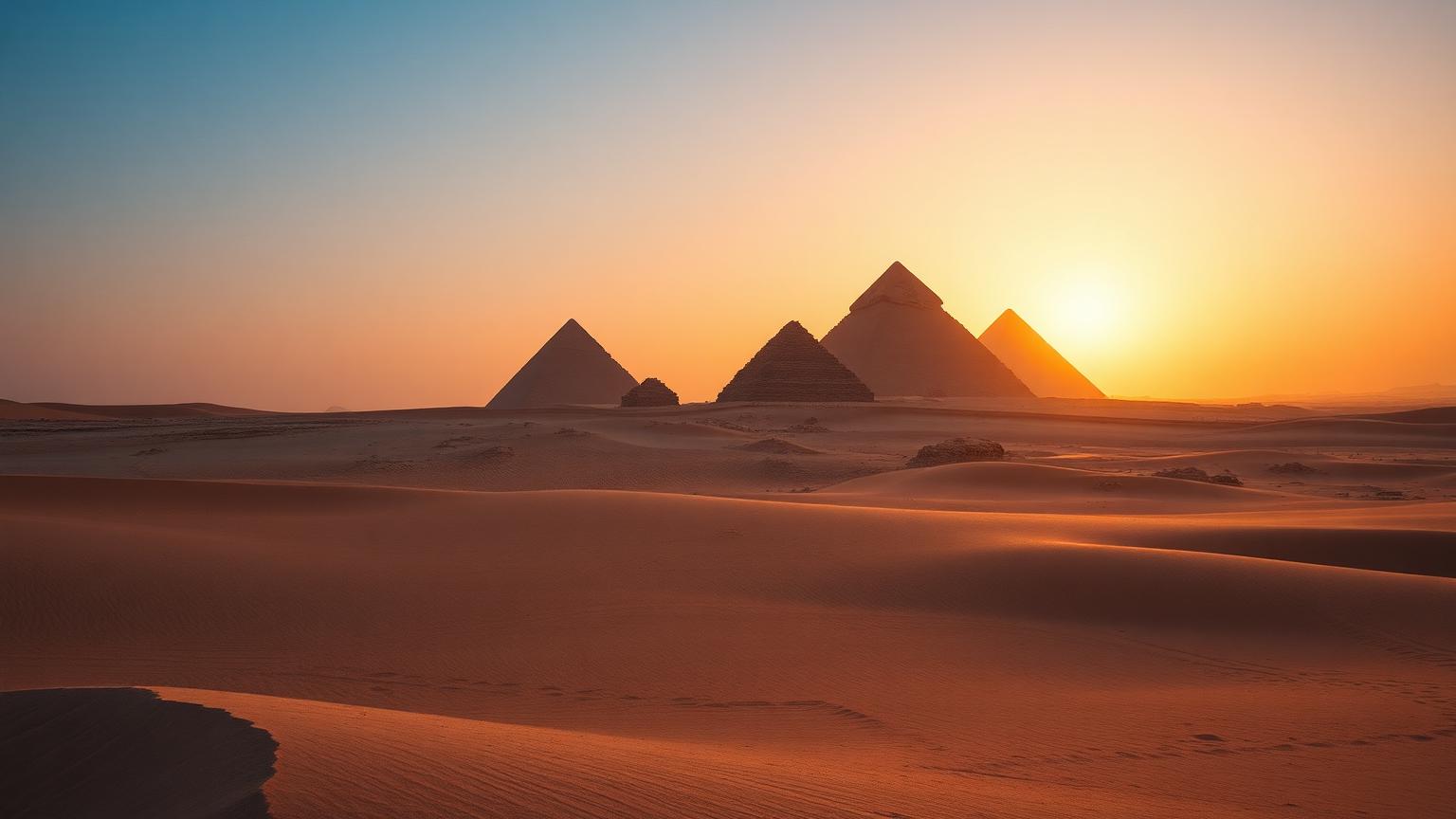
Egypt
A civilization built along a river, recorded in stone, and still being excavated.
- Span
- c. 3100 – 30 BCE
- Now
- Egypt and northern Sudan
- Coordinates
- 29.98° N, 31.13° E
- Palette
- Sand · gold · lapis
Geography first. Everything else is a response to it.
Ancient Nile Valley and Delta
Egypt and northern Sudan
Nile · Faiyum basin · Red Sea corridor
Memphis · Thebes · Amarna · Giza · Abydos
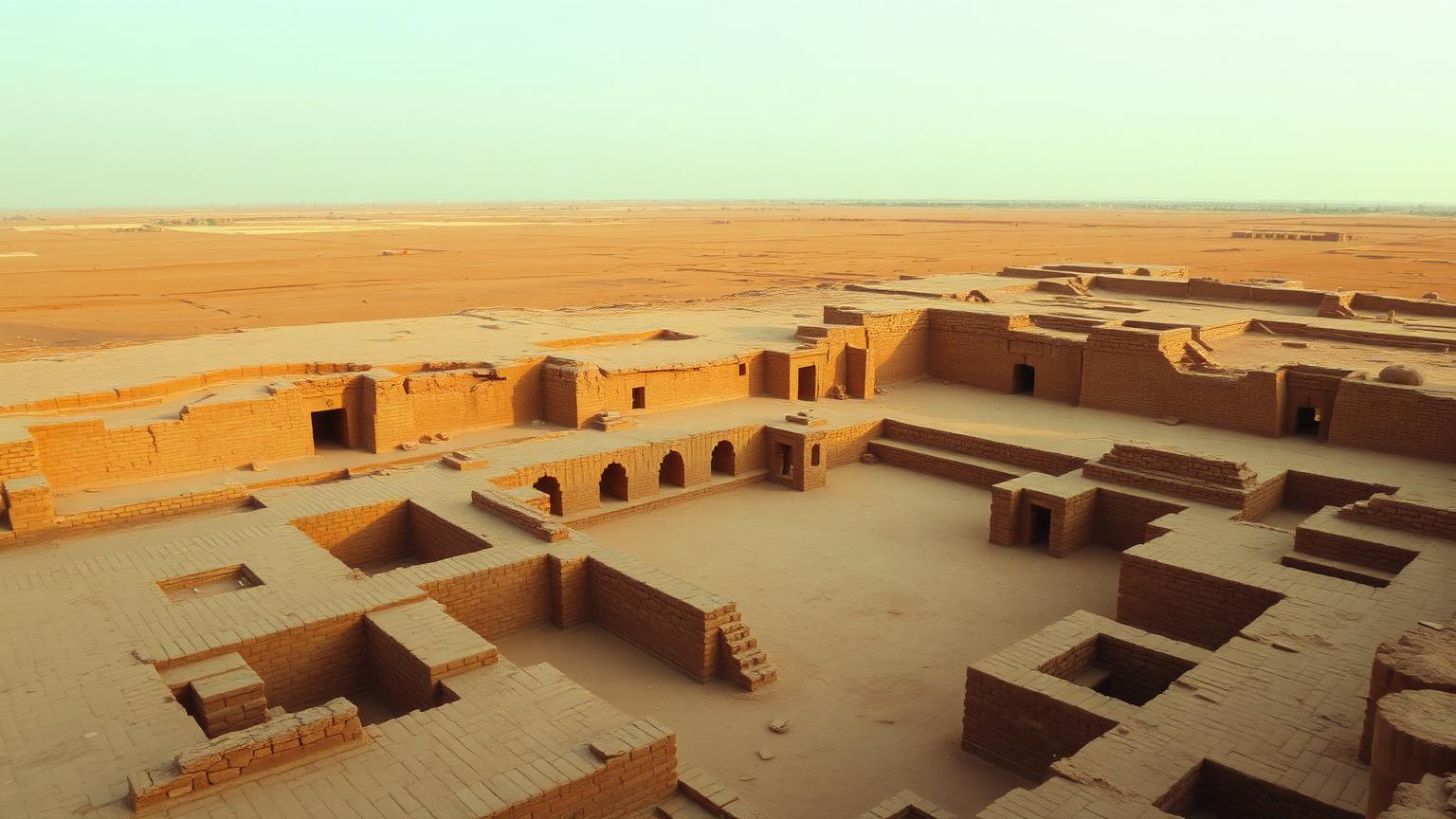
An annual, predictable flood laid new silt across a narrow strip of otherwise lethal desert. Agriculture was reliable enough to support specialists, and the desert on both sides did the work of a standing frontier.
Egypt is a ribbon. Habitable land is a few kilometers wide in most of the valley, widening only in the Delta and the Faiyum, and everything outside it is desert that kills the unprepared.
The inundation arrived in late summer, carried silt from the Ethiopian highlands, and withdrew in time for planting. Nilometers measured it because tax assessment depended on it: a low flood was a fiscal event before it was a famine.
The river also ran the wrong way for a highway, which turned out to be an advantage. The current carried boats north; the prevailing wind pushed sails south. A stone barge could make a round trip under natural power alone.
One of the longest continuous state records in human history, with monumental engineering documented in its own administrative texts.
The civilization at a glance
Ancient population and army figures are estimates. Anything marked est. is a reconstruction, not a count.
What they built, and how it worked
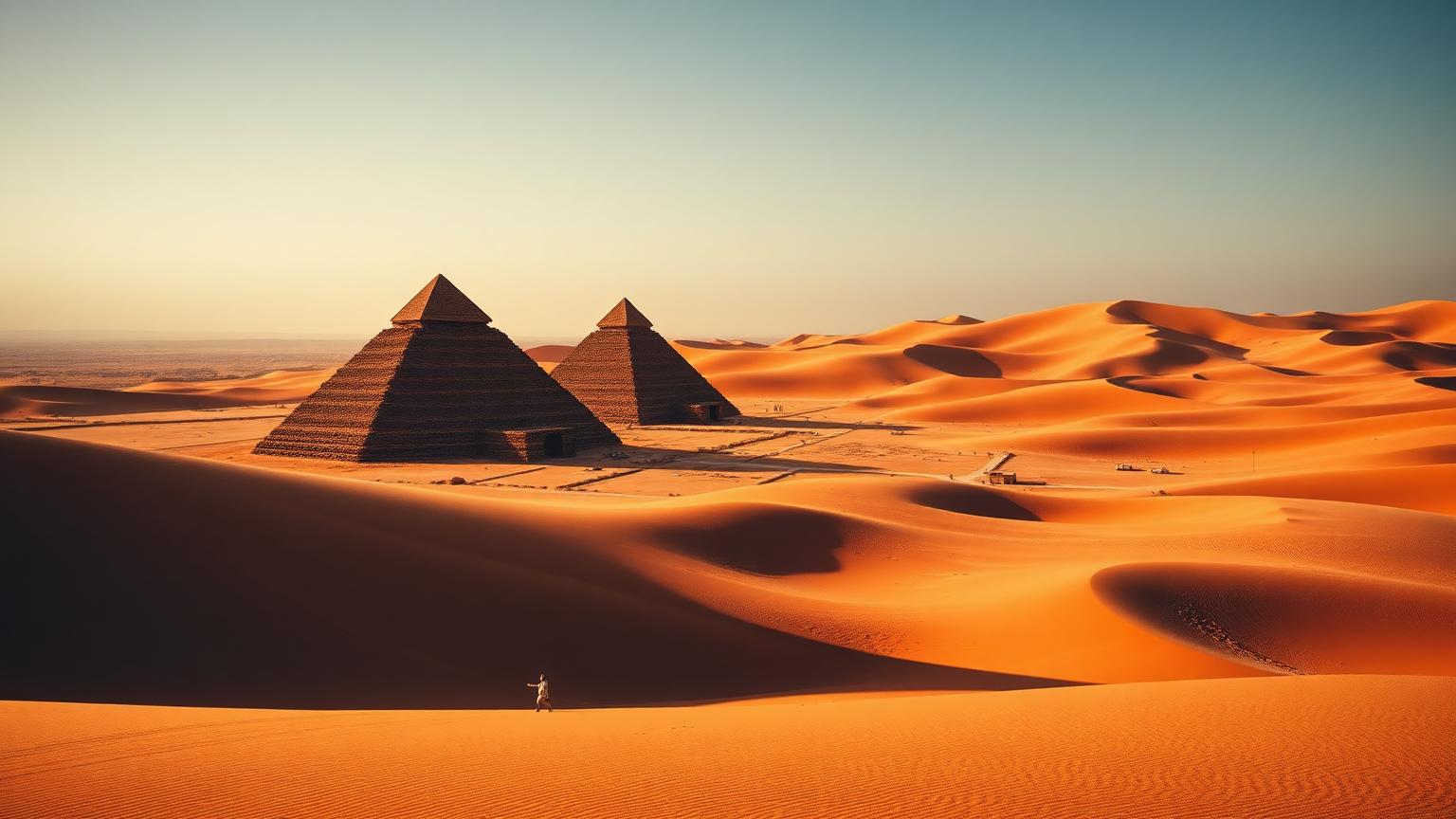
Pyramid construction logistics
Hieroglyphic decipherment
Nile flood administration
How we know what we claim
Editorial confidence ratings, not measurements. They describe how much of the picture rests on each channel — and where a single new find could move the file.
This rating governs the whole hub. Any claim on this page that outruns it is labeled where it appears.
- How was Old Kingdom labor organized and fed?
- What ended the Old Kingdom — climate, politics, or both?
Where the evidence stops
- Pyramid workers were housed, fed and organized by the state — bakeries, breweries and a labor settlement have been excavated at Heit el-Ghurab.
- The Merer papyri record actual limestone shipments to Giza, dated to Khufu's reign.
- Hieroglyphs were deciphered from bilingual texts and are read with high confidence today.
- Ramp systems were probably composite — straight, zigzag and internal solutions used at different heights.
- The Old Kingdom's end involved a drying trend interacting with political fragmentation rather than either cause alone.
- The precise geometry of the construction ramps.
- What is inside the ScanPyramids 'Big Void'.
- Total workforce at peak, and its rotation schedule.
Who else was alive
Northeast Africa · 3,100 BCE – 30 BCE. Bars below show civilizations alive at the same moment.
Where Egypt connects to the rest of the ancient record — the worlds it belongs to, the chapters it sits in, the documents that record it, and the questions still open.
Deep Time
All deep time →Primary Sources
All primary sources →
Nag Hammadi Library
Upper Egypt · c. 350 CE (copies)
Thirteen codices that transformed the study of early Christian diversity.
Primary source for Egypt

Herodotus
Halicarnassus · c. 430 BCE
The first surviving work of systematic inquiry — and a running lesson in source evaluation.
Primary source for Egypt

Plato
Athens · c. 399 – 347 BCE
Philosophical dialogues that also contain the earliest surviving mention of Atlantis.
Primary source for Egypt
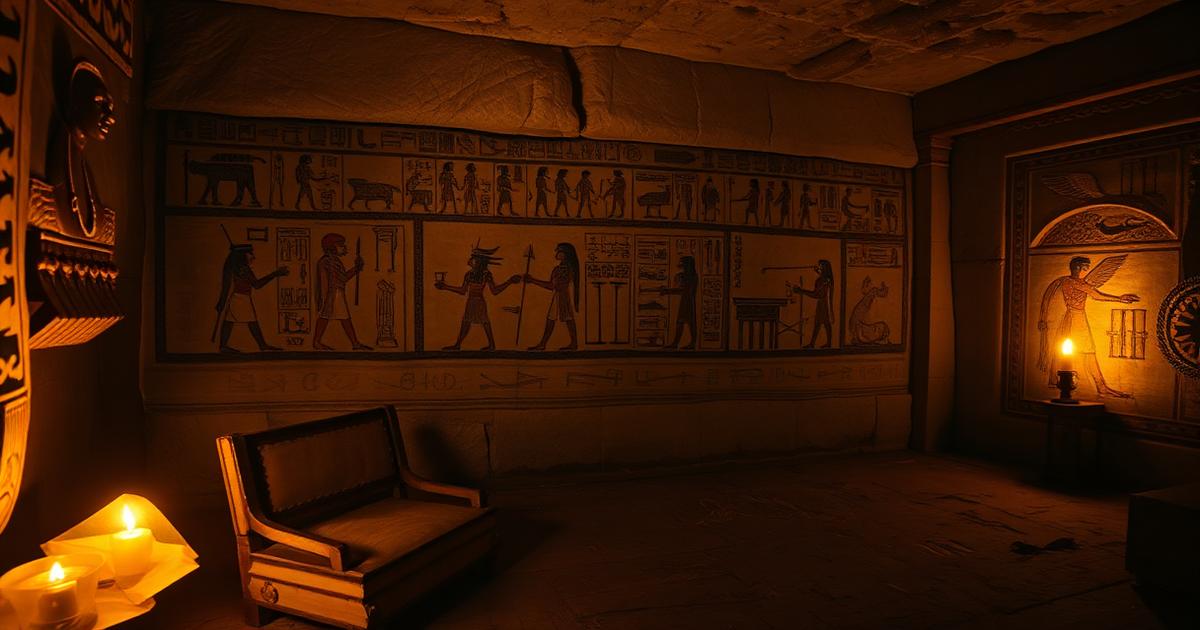
Ancient Egyptian Texts
Egypt · c. 2400 BCE – 100 CE
Pyramid Texts, Coffin Texts, the Book of the Dead, and the administrative papyri that reveal daily logistics.
Primary source for Egypt
Evidence Files
All evidence files →Great Pyramid
Giza, Egypt · c. 2560 BCE
How was a 2.3-million-block monument organized, supplied, and raised in roughly two decades?
Open question inside Egypt
Great Sphinx
Giza, Egypt · c. 2500 BCE (consensus)
When was the Sphinx carved, and what caused the weathering on its enclosure walls?
Open question inside Egypt
Sea Peoples
Eastern Mediterranean · c. 1200 – 1150 BCE
Who were the Sea Peoples, and were they a cause of collapse or a symptom of it?
Open question inside Egypt
Bronze Age Collapse
Eastern Mediterranean · c. 1200 – 1150 BCE
Why did an interconnected system of empires fail within roughly fifty years?
Open question inside Egypt
One more civilization
Same moment in history, different world. Keep going.