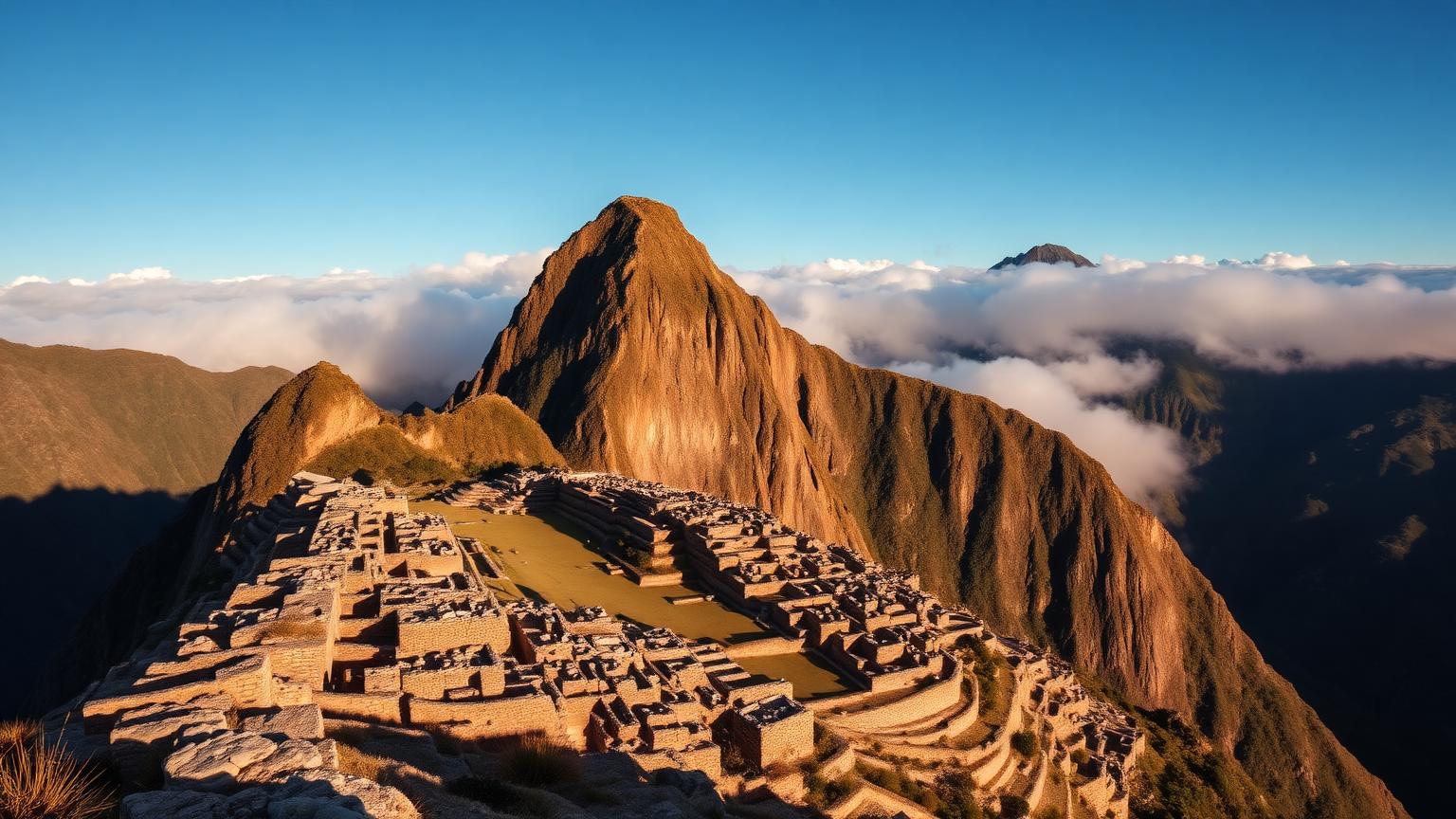
Inca
1438 – 1533 CE
Road systems, khipu record-keeping, and stonework still being reverse-engineered.
Every claim in this period carries its evidence with it.
Monumental stone architecture, the road network, khipu cord records, Spanish administrative inspections, and Andean archaeology across a vast altitudinal range.
- 01
The Inca state built and maintained an extensive road system with waystations across extreme terrain.
- 02
Stone masonry at major sites uses precisely fitted blocks without mortar, achieved with documented tool and abrasion techniques.
- 03
Khipu were used for administrative record-keeping, at minimum for numerical accounting.
Each row states the method, what is actually measured, and — the part usually skipped — what the result does not settle.
| Method | Material | What it constrains |
|---|---|---|
| Architectural and quarry analysis | Tool marks, unfinished blocks and abandoned quarry stones | Documents shaping and transport methods. Exact logistics of the largest blocks are still modeled. |
| Khipu structural study | Cord, knot type, ply direction and color in surviving khipu | Numerical content is readable. Whether narrative content is encoded remains open. |
| Colonial administrative records | Inspections and tribute assessments | Preserves detail about the Inca system through a Spanish administrative lens. |
Do khipu encode language as well as numbers?
Some khipu resist purely numerical interpretation; no reading has been independently reproduced.
What was Machu Picchu for?
Royal estate is the leading reading, based on a colonial land document and site layout.
“The Inca had no writing, therefore no records.”
Khipu functioned as a state record technology; the absence of a script is not the absence of records.
“The masonry cannot be explained.”
Experimental archaeology has reproduced the fitting technique with stone hammers and abrasives.
- Can khipu be read beyond accounting?
- How were labor obligations organized across the whole empire?
- How much high-altitude archaeology remains unsurveyed?
Khipu Database Project
Harvard University
Andean archaeology site reports
Latin American Antiquity / Ñawpa Pacha
Who was alive, and where
South America
Vertical agriculture, road engineering, and record-keeping without writing.
The same centuries, side by side
Where Inca connects to the rest of the ancient record — the worlds it belongs to, the chapters it sits in, the documents that record it, and the questions still open.
Worlds
All worlds →Evidence Files
All evidence files →Puma Punku
Tiwanaku, Bolivia · c. 536 – 600 CE
How were interlocking andesite blocks cut to such tolerance without iron tools?
Unresolved in Inca
Nazca Lines
Nazca Desert, Peru · c. 500 BCE – 500 CE
What were geoglyphs meant to do for people who could not see them from above?
Unresolved in Inca