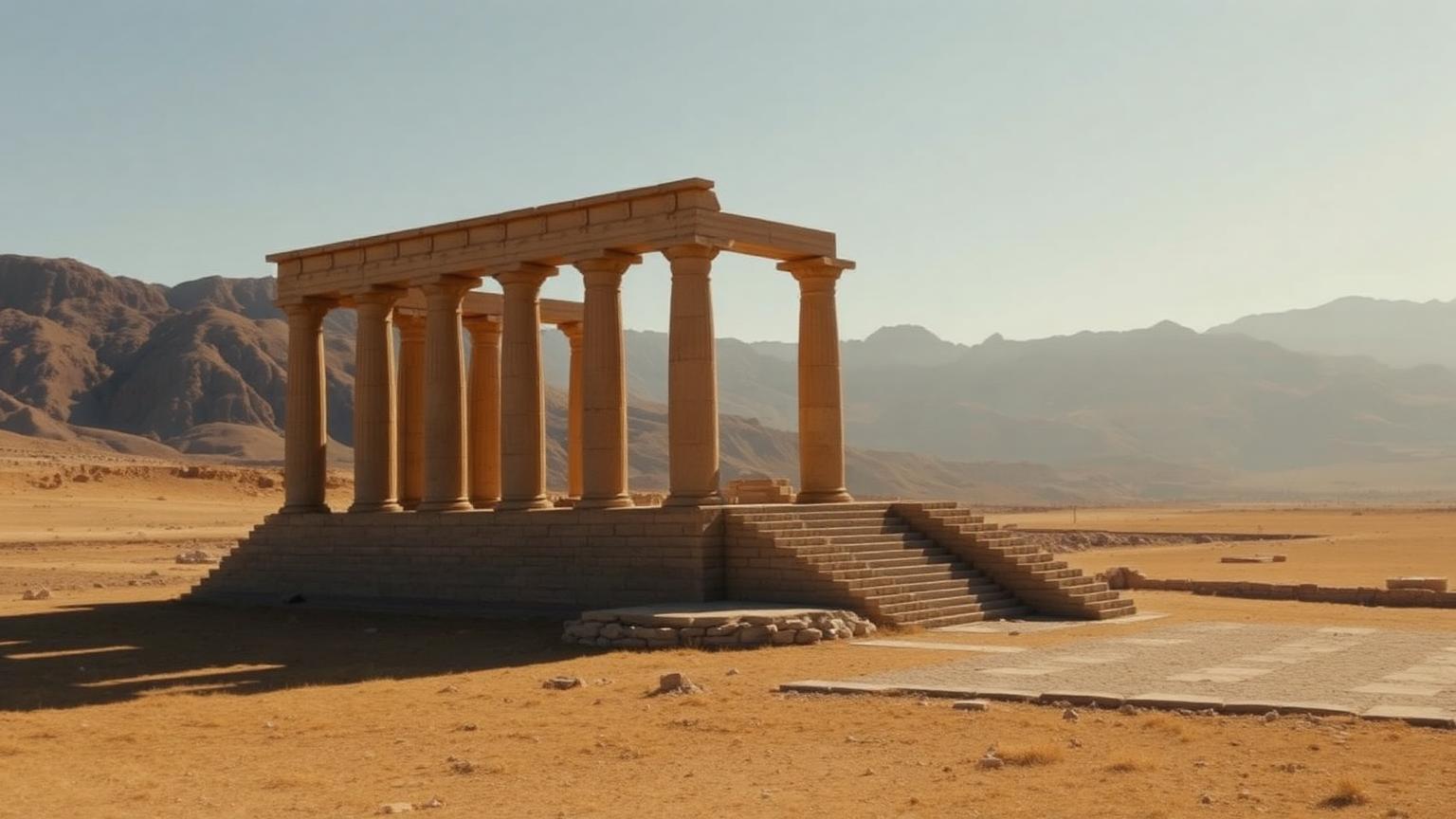
Persia
550 – 330 BCE
The Achaemenid administrative machine and the roads that held it together.
Every claim in this period carries its evidence with it.
Royal inscriptions in multiple languages, the Persepolis administrative archives, imperial road and canal infrastructure, and Greek accounts written by adversaries.
- 01
The Achaemenid Empire administered an unusually large multi-ethnic territory through satrapies and a documented courier system.
- 02
The Behistun inscription's trilingual text was the key to deciphering cuneiform.
- 03
The Persepolis Fortification tablets record rations and labor, showing a paid, organized workforce.
Each row states the method, what is actually measured, and — the part usually skipped — what the result does not settle.
| Method | Material | What it constrains |
|---|---|---|
| Multilingual royal inscription analysis | Old Persian, Elamite and Akkadian versions of the same text | Enabled decipherment and reveals how the message was tailored per audience. |
| Administrative archive study | Persepolis Fortification and Treasury tablets | Documents the working economy from the inside, in contrast with Greek narrative sources. |
| Landscape and infrastructure survey | Road systems, qanats and provincial centers | Maps imperial reach. Political control is inferred from logistics. |
How reliable is Herodotus on Persia?
He preserves genuine detail alongside numbers no logistics model can support.
How uniform was imperial policy across satrapies?
Local variation looks larger than the royal inscriptions suggest.
“The Cyrus Cylinder is the first charter of human rights.”
It follows a Mesopotamian royal genre of restoring temples and legitimising conquest. The modern label is anachronistic.
“Persian armies numbered in the millions.”
Those figures come from Greek sources and exceed what any ancient supply system could sustain.
- How much of the administrative archive remains unread?
- What did provincial religious policy look like in practice?
- How were the imperial roads maintained across such distances?
Persepolis Fortification Archive Project
Oriental Institute, University of Chicago
Achaemenid history workshops series
Nederlands Instituut voor het Nabije Oosten
Who was alive, and where
Persia & Central Asia
Imperial administration at continental scale, recorded by allies and enemies.
The same centuries, side by side
Where Persia connects to the rest of the ancient record — the worlds it belongs to, the chapters it sits in, the documents that record it, and the questions still open.