What the ground actually shows
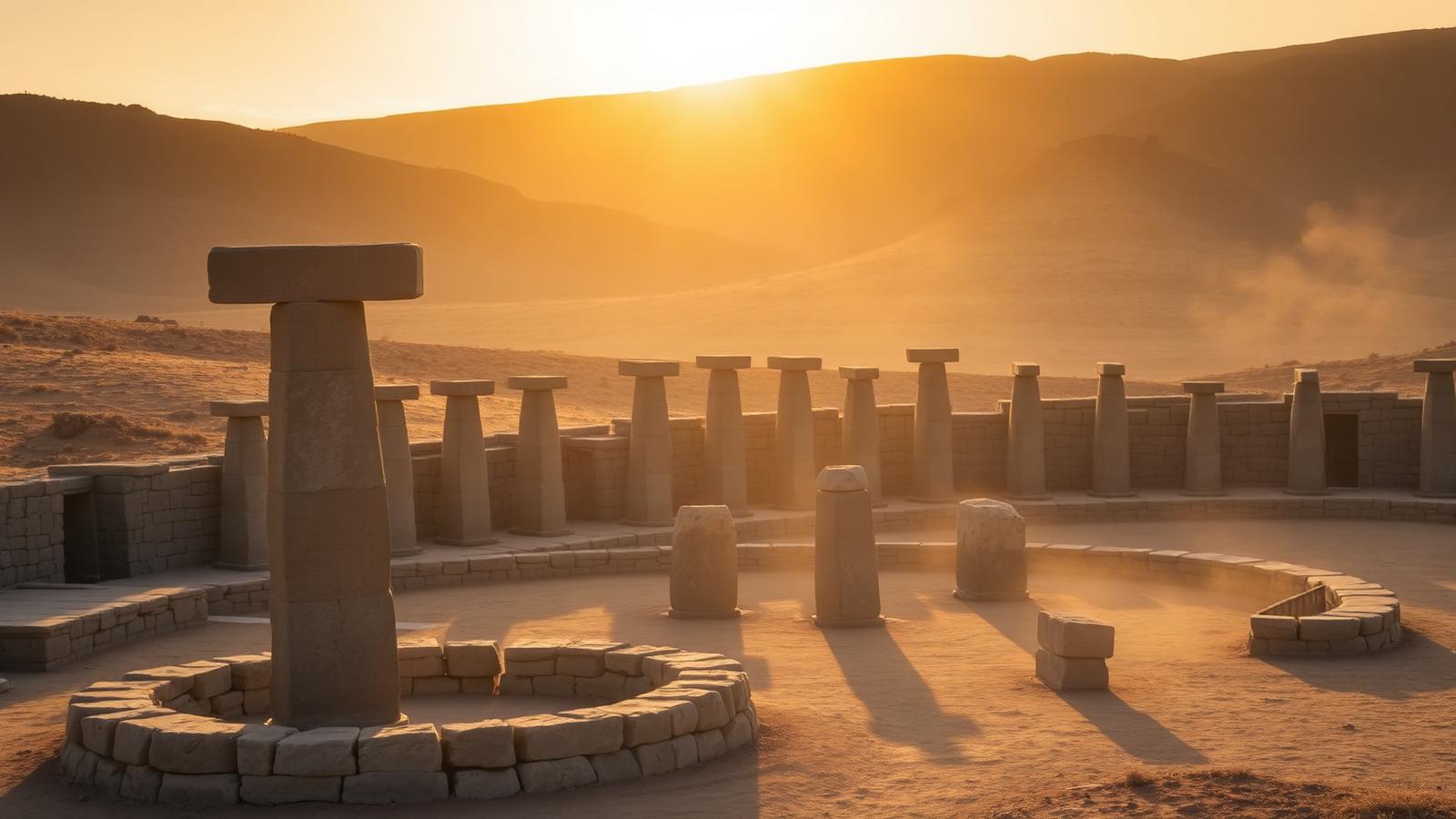
The site sits on a limestone ridge above the Harran plain. Excavation has exposed a series of oval enclosures ringed by carved T-shaped pillars, some over five meters tall and weighing several tonnes, quarried from bedrock a few hundred meters away. The carvings are animals — foxes, boars, cranes, scorpions, snakes — rendered with a confidence that implies a long prior tradition in perishable materials we will never recover.
Radiocarbon dates from the fill place the earliest enclosures in the Pre-Pottery Neolithic A, roughly 9500 BCE. That is seven thousand years before Stonehenge and roughly six thousand before the Great Pyramid. Faunal remains are overwhelmingly wild: gazelle, aurochs, wild boar. Botanical samples from the early phases show no domesticated grain.