Dark Mediterranean sea over a submerged rocky shelf, light breaking on the surface
Evidence File 06Speculative Theory

Atlantis

Textual · Described c. 360 BCE

Is there any evidentiary basis for Atlantis beyond two Platonic dialogues?

Chicago style · PDF or .txt

Atlantis has exactly one source: Plato, writing in the fourth century BCE, in two dialogues that are explicitly moral arguments. There is no independent ancient record of it, and no archaeological horizon has ever produced one.

Every proposed Atlantis is a real place forced to wear a philosopher's parable.

Historical record

Timaeus and Critias are the only ancient sources. No earlier tradition is attested.

Current scientific consensus

A philosophical allegory constructed by Plato, not a report of a lost civilization.

The source, read as a source

The Timaeus and Critias present Atlantis as a story relayed at fourth hand from Egyptian priests. Its structure — a virtuous small city defeating a vast, wealthy, hubristic empire — maps onto Plato's political argument in the Republic with uncomfortable neatness. Ancient readers noticed. Aristotle, who had access to Plato's circle, treated it as invention.

No Egyptian text mentions Atlantis. No Greek writer before Plato mentions it. Every later ancient reference traces back to Plato.
Why real candidates keep appearing

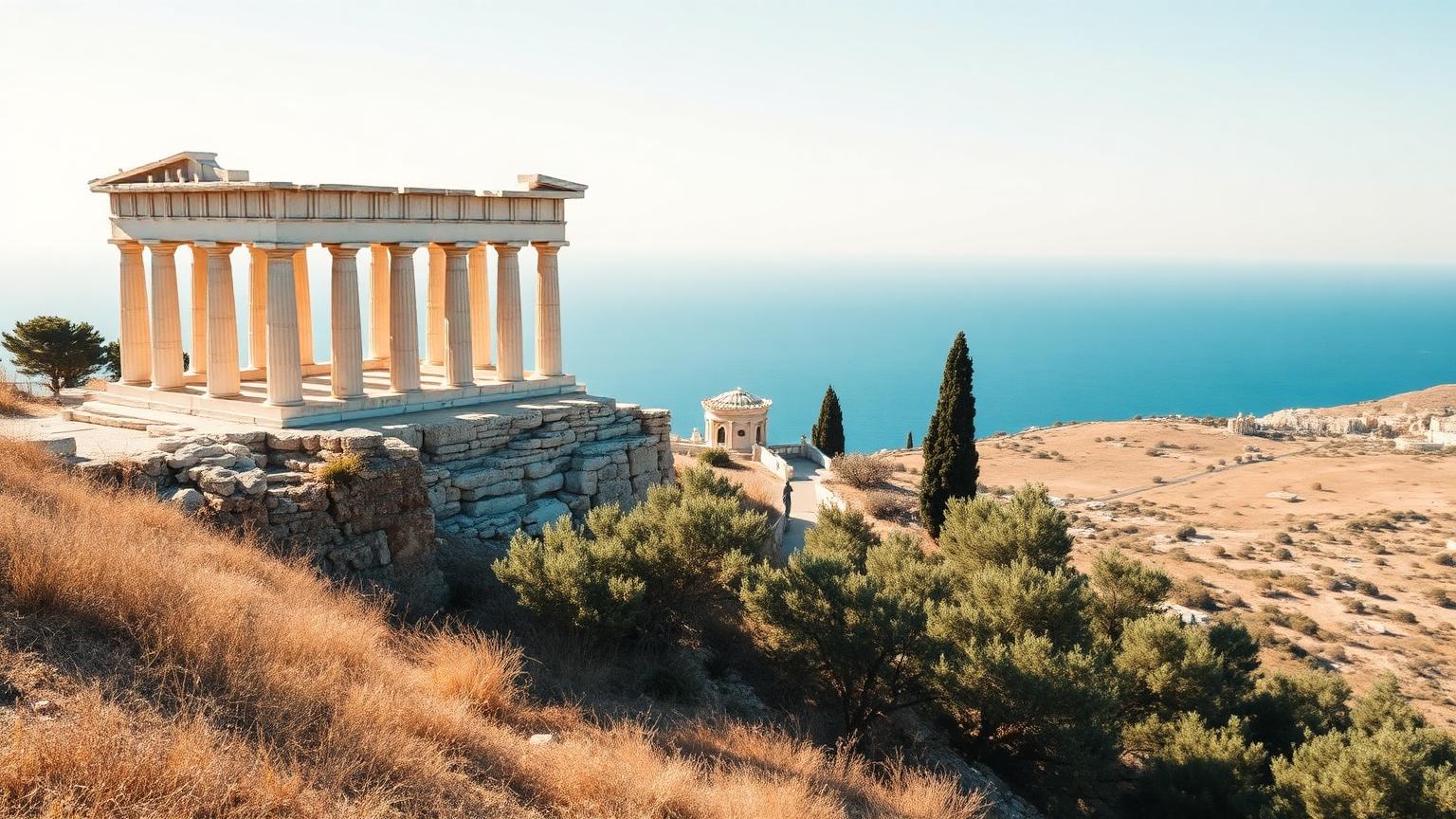
The Minoan hypothesis is the strongest of them: the Late Bronze Age eruption of Thera devastated a sophisticated maritime civilisation and left a caldera and a buried city at Akrotiri. It is a genuine catastrophe with genuine ruins. But it does not match Plato's date, scale, location, or political geography, and the identification works only by discarding the numbers he gives.

Doñana, Santorini, Malta, the Azores, the Richat Structure and dozens of others follow the same pattern: a real place, a partial resemblance, and a set of discarded details.

Our position

Atlantis is filed as literary. That is not a verdict about whether Bronze Age civilisations were lost to the sea — several were, and Doggerland is the better story. It is a verdict about whether this particular text describes one. Nothing found so far requires it to.

Competing interpretations

A distorted memory of the Minoan Thera eruption.

Active Academic Debate
48% support

Specialists disagree. Competing interpretations are presented side by side.

A literal sunken Atlantic continent.

Speculative Theory
10% support

Proposed but unsupported by accepted evidence. Reported, never endorsed.

Support scores reflect the strength of the evidence class behind a claim, not how often you have heard it. Speculative entries appear because readers encounter them — never because we endorse them.

The dossier
Chicago style · PDF or .txt
The evidence base

Two dialogues by Plato and nothing else. There is no independent ancient source, no site, and no material record — which is itself the finding.

How it is dated

Each row states the method, what was measured, and — the part usually skipped — what the result does not settle.

MethodSampleResultWhat it constrains
Textual criticismTimaeus and CritiasComposed in the fourth century BCE, describing events placed nine thousand years earlierDates the text. It says nothing about whether the narrative describes a real place.
Source tracingEarlier Greek and Egyptian literatureNo attestation of the story before PlatoThe chain of transmission Plato describes cannot be corroborated from any other surviving text.
Marine and terrestrial surveyRepeated searches across the proposed locationsNo structure or deposit matching the described cityAbsence of evidence in searched areas. Much of the sea floor remains unsurveyed at resolution.
Competing readings, scored

The percentage is our editorial reading of how much of the surviving record each claim accounts for. It is a judgement, stated openly, not a consensus figure.

  • A philosophical invention: an ideal state constructed to be destroyed for the argument.

    Analysis
    Explains the record80%
    Rests on
    • The story appears inside a dialogue about ideal governance and hubris.
    • The narrative structure matches Plato's use of framing myths elsewhere.
    Runs into
    • Plato presents it as a received account rather than an invention.
  • A distorted memory of a real Bronze Age catastrophe, such as the Thera eruption.

    Open Debate
    Explains the record30%
    Rests on
    • A genuine, massive eruption and tsunami affected the Aegean within cultural memory.
    • Ancient traditions do preserve real events in altered form.
    Runs into
    • Location, scale and date in the text do not match Thera or Minoan Crete without heavy reinterpretation.
  • A literal sunken Atlantic civilisation awaiting discovery.

    Speculative
    Explains the record4%
    Rests on
    • The text places it beyond the Pillars of Heracles.
    Runs into
    • No artefact, quarry, harbour or refugee trace exists anywhere in the record.
    • Plate tectonics does not permit a continent to vanish in the timeframe described.
Where to check us
  • Plato, Timaeus and Critias — critical editions

    Loeb Classical Library / Perseus Digital Library

  • Thera eruption chronology studies

    PNAS / Antiquity

What would change this
  • Any pre-Platonic text referring to the account independently, or a surveyed structure matching the description.

What the record supports

  • Plato's own framing as a moral fable
  • No corroborating Egyptian source
  • Plate tectonics rules out a sunken Atlantic landmass

What remains open

  • Which real events, if any, informed the story?
  • Why did later antiquity mostly ignore it?
How this file was built

Treated as a textual problem first: the dialogue is read in context before any site is proposed. Candidate locations are assessed against Plato's stated date, scale, and geography rather than against selected fragments of them.

What would settle it
  • An independent pre-Platonic text referring to the same polity
  • An Egyptian record matching the transmission Plato describes
  • A submerged urban site matching the dialogue's date and scale, not merely its mood