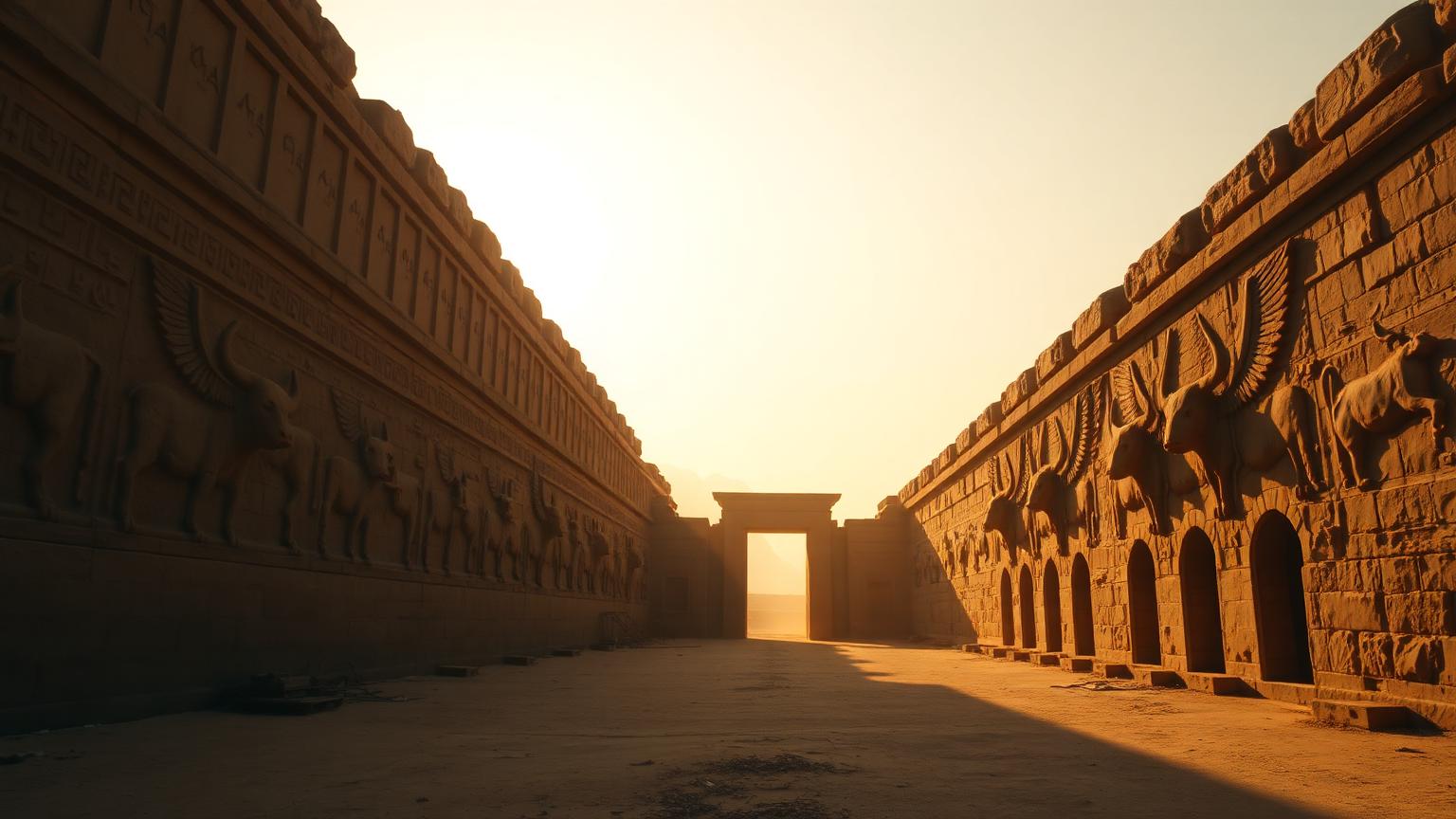
Assyria
An empire that carved its own campaigns into the walls — and expected you to believe them.
- Span
- c. 2025 – 609 BCE
- Now
- Northern Iraq
- Coordinates
- 36.36° N, 43.15° E
- Palette
- Gypsum · bronze · blood red
Geography first. Everything else is a response to it.
The Assyrian heartland on the upper Tigris
Northern Iraq
Tigris · Upper Zab · Khosr
Ashur · Nimrud · Nineveh · Dur-Sharrukin
Rain-fed agriculture, stone and timber within reach, and a position astride the routes between Anatolia, Iran and the southern plain.
Unlike the south, the north could farm without canals, which freed labor for campaigning and building.
Sennacherib's water system for Nineveh included a stone aqueduct at Jerwan — one of the earliest known.
An empire that recorded its own campaigns in detail — a source that must be read against its propaganda function.
The civilization at a glance
Ancient population and army figures are estimates. Anything marked est. is a reconstruction, not a count.
What they built, and how it worked
Library of Ashurbanipal
Siege engineering
Deportation policy
How we know what we claim
Editorial confidence ratings, not measurements. They describe how much of the picture rests on each channel — and where a single new find could move the file.
This rating governs the whole hub. Any claim on this page that outruns it is labeled where it appears.
- How reliable are royal annals as event history?
- What triggered the rapid 7th-century collapse?
Where the evidence stops
- The Library of Ashurbanipal preserved literature that would otherwise be lost, including the fullest Gilgamesh text.
- Siege engineering — ramps, rams, sapping — is depicted in enough detail to be reconstructed.
- Royal annals inflate results and omit defeats; they are reliable for itineraries, less so for outcomes.
- Overextension plus a Babylonian–Median coalition explains the speed of the 612 BCE collapse better than either alone.
- Real casualty and deportation figures.
- How much of the countryside the empire actually controlled.
Who else was alive
Northern Mesopotamia · 2,025 BCE – 609 BCE. Bars below show civilizations alive at the same moment.
Where Assyria connects to the rest of the ancient record — the worlds it belongs to, the chapters it sits in, the documents that record it, and the questions still open.
Deep Time
All deep time →Primary Sources
All primary sources →
One more civilization
Same moment in history, different world. Keep going.