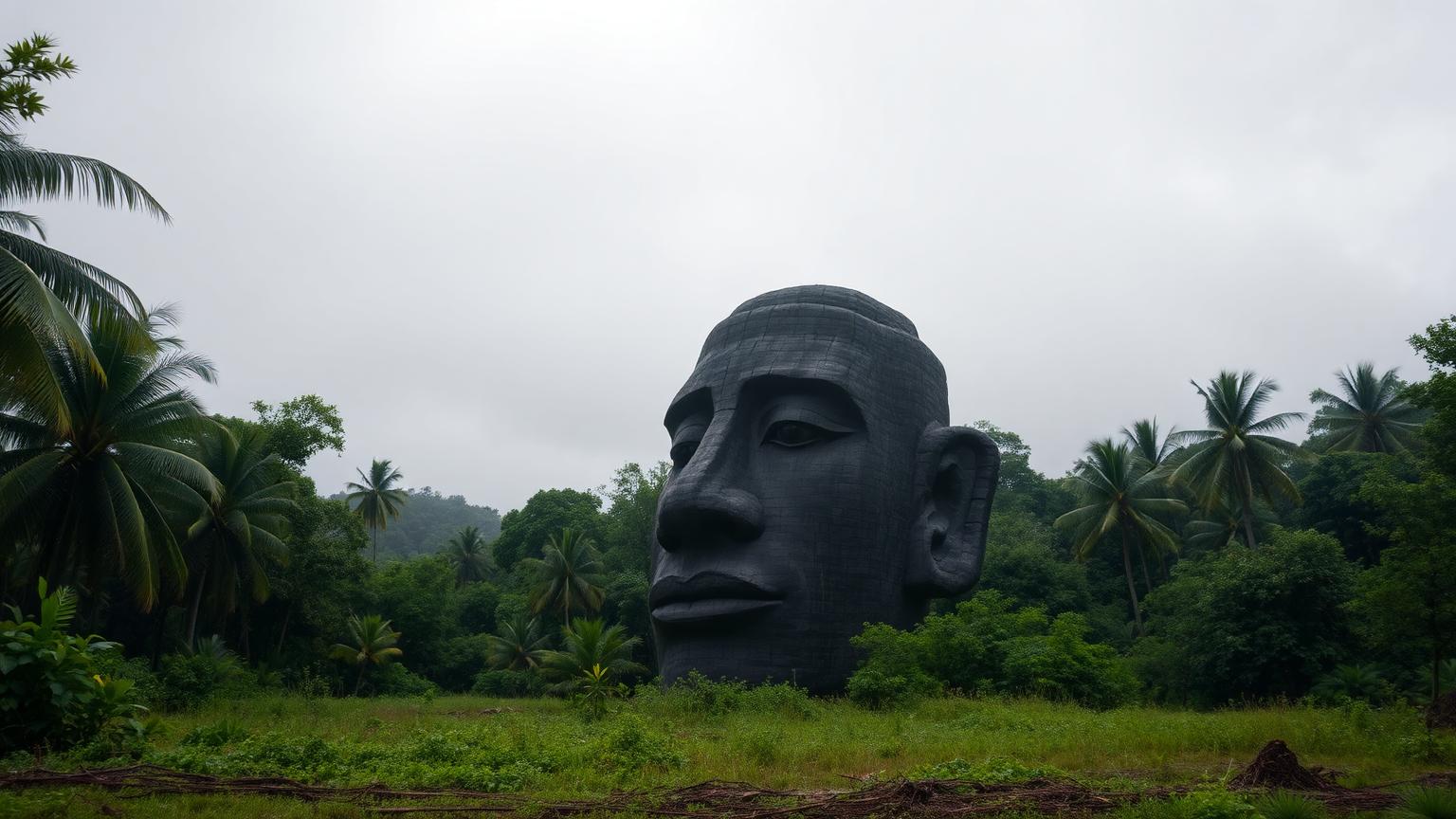
Olmec
Mesoamerica's earliest monumental culture, moving twenty-tonne basalt without wheels.
- Span
- c. 1600 – 400 BCE
- Now
- Veracruz and Tabasco, Mexico
- Coordinates
- 17.90° N, 94.60° W
- Palette
- Basalt · jade · rainforest
Geography first. Everything else is a response to it.
San Lorenzo and La Venta heartland
Veracruz and Tabasco, Mexico
Coatzacoalcos · Gulf of Mexico
San Lorenzo · La Venta · Tres Zapotes
Rich alluvial soil, year-round water, and rivers navigable enough to raft multi-tonne basalt down from the Tuxtla mountains.
Humid lowland conditions destroy organic material, so what survives is stone — which biases the entire picture toward monuments.
The colossal heads were carved from basalt quarried 50–90 km away and moved without draft animals or wheeled vehicles.
The earliest known complex society in Mesoamerica, and a foundation for later calendars and iconography.
The civilization at a glance
Ancient population and army figures are estimates. Anything marked est. is a reconstruction, not a count.
What they built, and how it worked
Colossal heads
Early calendar precursors
Long-distance jade trade
How we know what we claim
Editorial confidence ratings, not measurements. They describe how much of the picture rests on each channel — and where a single new find could move the file.
This rating governs the whole hub. Any claim on this page that outruns it is labeled where it appears.
- How were multi-ton basalt heads transported?
- How direct is Olmec influence on the Maya?
Where the evidence stops
- Basalt heads weighing up to ~20 tonnes were transported tens of kilometers.
- Jade and obsidian networks connected the Gulf coast to highland Mexico and Guatemala.
- The Olmec were one influential node in a wider interaction sphere rather than a single 'mother culture' — the debate is unresolved.
- Whether the Cascajal block is genuine writing.
- Why San Lorenzo's monuments were mutilated and buried.
Who else was alive
Gulf Coast lowlands · 1,600 BCE – 400 BCE. Bars below show civilizations alive at the same moment.
Where Olmec connects to the rest of the ancient record — the worlds it belongs to, the chapters it sits in, the documents that record it, and the questions still open.
One more civilization
Same moment in history, different world. Keep going.