Combat Sports Science: Why Small Advantages Win Championships
In the high-stakes arena of combat sports, understanding and meticulously applying sports science principles transforms marginal gains into championship-winning performances.
By Erik Chambers
Founder, Creator & Editorial Architect
Built By
Editorial Operating System v1.0Creator
Erik Chambers
Architecture
Founder, Creator & Editorial Architect
AI Assisted
No
Human Reviewed
Pending
Evidence Reviewed
In progress
Last Updated
August 26, 2026
Confidence
Evergreen high/10
Research Status
foundational
We do not claim perfection. We promise transparency. Every investigation shows its work — the question, the evidence, the tools, the humans, and the updates.
In this articleThe Biomechanics of Power: Punching, Kicking, and Takedowns
Combat Sports Science: Why Small Advantages Win Championships
In combat sports—whether it is boxing, MMA, or judo—victory and defeat usually turn on extraordinarily small margins. A champion is rarely just the strongest person in the room; more often, they are the athlete who has systematically stacked minor, scientifically measured advantages until the margin becomes unassailable. This is seldom a story of revolutionary breakthroughs. It is mostly the tedious, disciplined optimization of human performance, where applying basic science turns a contender into a belt holder.
A casual spectator usually credits a knockout to raw horsepower or a submission to freakish flexibility. Those attributes help, certainly, but a closer look reveals the biomechanical, physiological, and neurological choreography underneath. The physics of angular momentum in a hook and the neurological delay required to slip it are not romantic mysteries; they are governed by predictable mechanics.
Modern combat training has largely traded old-school lore for repeatable, measurable variables. Understanding these mechanics matters not because we need more gym dogma, but because it explains how high-level athleticism actually operates under pressure.
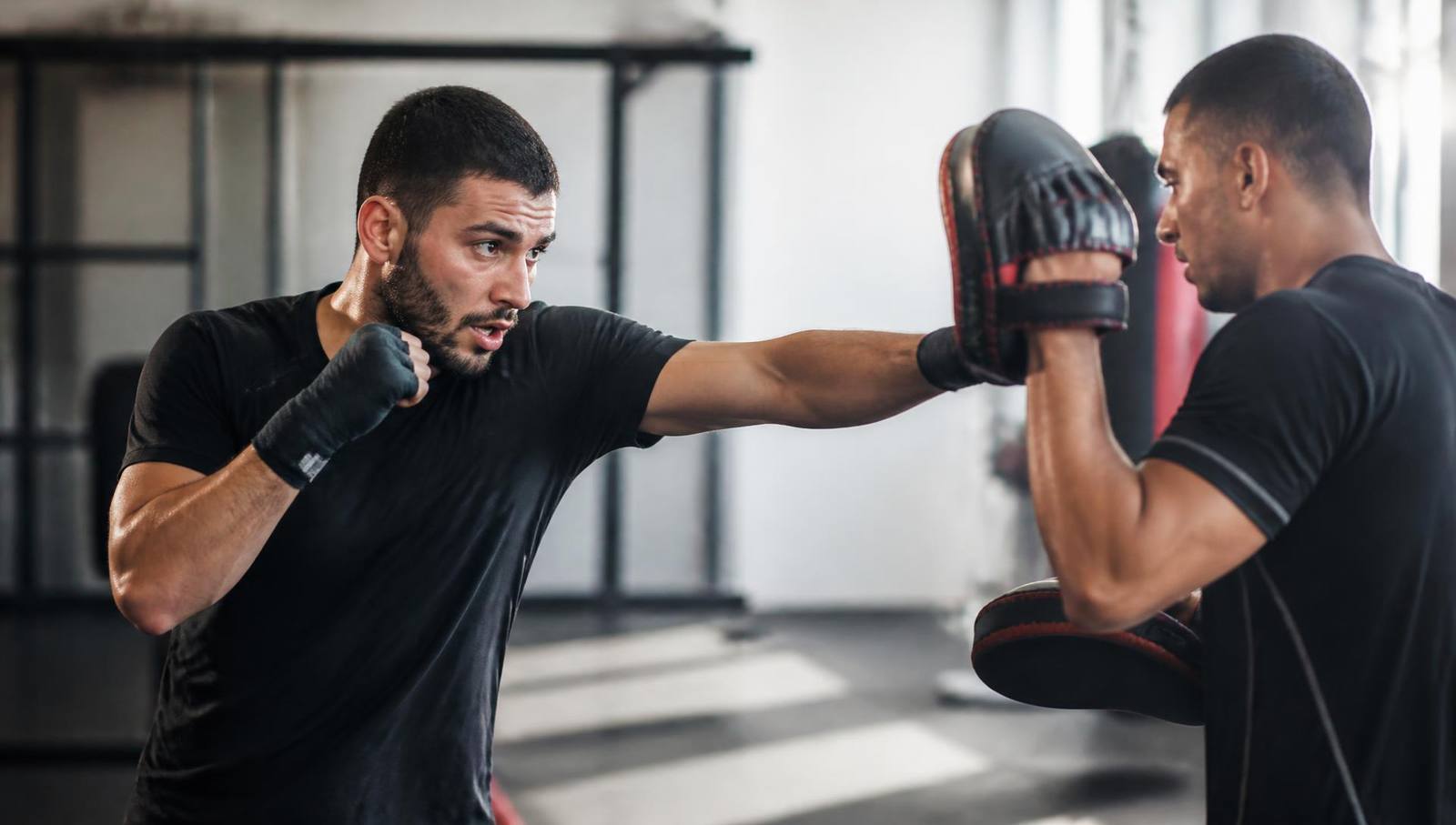
Power in combat sports is rarely a function of raw muscle mass; it is about transferring force along kinetic chains without leaking energy along the way. In boxing, a heavy straight right gets relatively little of its force from the arm. The sequence starts at the feet, drives through hip rotation and core stabilization, and finishes with shoulder and arm extension. Research by sport scientists like Dr. Richard D. Price on punch mechanics highlights the critical role of ground reaction forces and rotational velocity. For instance, a boxer generating 1,000 Newtons of force at impact needs to meticulously coordinate core rotation exceeding 800 degrees per second, alongside rapid hip internal rotation.
A Muay Thai roundhouse kick relies on similar mechanics: the pivot of the lead leg, hip extension, and core torque drive the shin into the target. In wrestling, a single-leg takedown combines leverage, lower-body drive, and upper-body control, built on hip-hinge mechanics and explosive leg extension. Performance labs break down these movements using high-speed cameras and force plates to spot micro-inefficiencies—the small flaws that bleed off vital foot-pounds of force or waste precious milliseconds.
Combat sports ask for a difficult combination: explosive anaerobic power coupled with baseline aerobic stamina. A single 5-minute round in MMA can swing from high-velocity striking to prolonged grappling exchanges requiring sustained isometric strength, all while the brain attempts to make coherent decisions under duress. Running long miles on a treadmill does not prepare an athlete for that.
Elite combat athletes often exhibit VO2 max values ranging from 55 to 70 ml/kg/min, while simultaneously demonstrating exceptional lactate threshold performance, sometimes sustaining 90-95% of their VO2 max for extended periods. That level of physiological robustness lets an athlete clear metabolic waste quickly between bursts and keep working in the final minutes of a fight. Core and grip endurance are equally critical—whether holding a clinch in wrestling or finishing a choke in Brazilian Jiu-Jitsu. Modern conditioning relies on targeted intervals, sport-specific circuits, compound lifts, and isometric holds to cultivate this durability. A well-conditioned athlete doesn't just punch harder; they can sustain that power round after round.
"The battle in the final round is often won weeks earlier, in the grueling, scientifically-designed conditioning sessions that refine an athlete's capacity to endure."
When a fraction of a second separates a clean slip from an early night, reaction time becomes guarded currency. Simple reaction time—responding to a single predictable stimulus—is distinct from complex reaction time, which requires evaluating options under threat. Combat athletes are rarely waiting to see a punch thrown; they read micro-cues, like a slight shift in weight, a twitch of the shoulder, or an angle of approach.
Studies on professional boxers have shown visual reaction times averaging between 150-180 milliseconds, significantly faster than the general population. That speed is built through drills that train pattern recognition and decision-making under high cognitive load. Strobe glasses, visual processing exercises, and scenario sparring help trim perceptual-motor lag, enabling fighters to counter before an opponent's intention fully manifests. Some programs incorporate virtual reality to simulate high-stress scenarios, sharpening decision-making without adding unnecessary physical strain from live sparring.
Executing a judo throw like a clean O-goshi requires thousands of repetitions. Mindless repetition, however, just cements flawed movement patterns. Modern motor learning theory emphasizes deliberate practice—targeted, structured work paired with immediate feedback. This progression moves an athlete from cognitive processing (understanding the movement) to associative refinement, and ultimately to autonomous execution, where the body acts without conscious thought.
The Role of Deliberate Practice
Block practice—throwing the exact same jab 100 times against a static target—is giving way to varied training schedules. A fighter might drill a combination, instantly switch to defensive counters, and then transition into controlled sparring, forcing the nervous system to adapt to dynamic real-world scenarios. This variability strengthens neural pathways and improves adaptability under pressure. Feedback—whether external technical cues from a coach or the internal, proprioceptive feel of balance—drives error correction. The timing and structure of that feedback heavily influence how well skills hold up when chaos starts.
In combat sports, injury is not a hypothetical risk; it is the operational environment. Musculoskeletal damage, concussions, and tissue trauma are routine. Consequently, a large portion of sports science in this domain focuses on hazard mitigation and optimizing recovery. For example, injury data in professional MMA shows a high incidence of hand, foot, and head injuries, leading to targeted strength and conditioning programs focused on bone density, tendon resilience, and neck strengthening.
"The greatest skill in combat sports is the ability to show up to the fight healthy and perform at your peak. That is a science in itself."
Recovery protocols have evolved along similar evidence-based lines. Sleep optimization, structured nutrient timing (including macro and micro-nutrient timing), cryotherapy, massage, and active recovery are managed systematically to control cumulative fatigue. Monitoring tools like heart rate variability (HRV) metrics and subjective wellness questionnaires provide insights into recovery status, allowing coaches to adjust training loads and prevent overtraining syndrome, a common trap for driven athletes.
The physical demands of combat sports are inseparable from the psychological strain. Performance anxiety, fear, acute stress, and the demand for absolute focus are constant factors in the locker room. Sports psychology equips athletes with practical tools to manage these stresses, turning volatile emotions into manageable variables. Techniques such as visualization, mindfulness, goal setting, and self-talk are not decorative extras; they are integral to peak performance.
Pre-fight visualization helps athletes mentally rehearse successful outcomes, reducing anxiety and priming their motor systems. Mindfulness exercises improve present-moment awareness, crucial for reacting to dynamic threats. The ability to stay composed under intense pressure, executing a game plan while fatigued or hurt, is often the ultimate differentiator between equally skilled opponents. Mental resilience is not an inherent gift; it is a learned skill, honed through deliberate psychological training.
Key Takeaways
- Combat sports success relies on mastering marginal gains across physical, physiological, and cognitive domains.
- Biomechanics informs movement efficiency and force generation in striking, kicking, and grappling techniques.
- Hybrid conditioning, blending aerobic endurance and anaerobic power, is crucial for sustained performance and recovery.
- Advanced reaction time involves cognitive anticipation and pattern recognition, going beyond simple stimulus-response.
- Deliberate practice and varied repetition facilitate robust skill acquisition and adaptability in dynamic combat scenarios.
- Injury prevention and strategic recovery protocols are fundamental for consistent, high-level athletic output.
FAQ
Q: How fast do elite combat athletes react compared to average individuals? A: Elite combat athletes, particularly in boxing or MMA, often exhibit visual reaction times in the range of 150-180 milliseconds, which is significantly faster than the average human's typical ~200-250 milliseconds. This improved speed is a result of extensive training in pattern recognition and anticipation.
Q: What is the most critical physiological attribute for a combat sports athlete? A: There isn't one single 'most critical' attribute. Combat sports demand a unique blend of high anaerobic power for explosive efforts and strong aerobic endurance for sustained output and recovery. Without both, an athlete will be significantly disadvantaged in longer bouts.
Q: How do combat athletes prevent concussions given the nature of their sport? A: While complete prevention is impossible in impact sports, athletes employ strategies like rigorous neck strengthening to improve head and neck stability, proper technique to reduce impact severity, and meticulous post-concussion protocols (including rest and gradual return-to-play) if an injury occurs. Research into better headgear design also continues.
Q: Is visualization actually useful for combat sports training? A: Yes, absolutely. Visualization, a key technique in sports psychology, helps athletes mentally rehearse techniques, strategies, and even manage pre-fight anxiety. Studies have shown it can improve motor skill acquisition, boost confidence, and enhance performance under pressure by essentially 'pre-loading' successful neural pathways.
Q: What role does nutrition play in a combat athlete's performance? A: Nutrition is fundamental. It fuels training, facilitates recovery, and plays a crucial role in safe and effective weight cutting. Precise macro and micronutrient timing supports energy levels, muscle repair, immune function, and overall physiological resilience, directly impacting an athlete's ability to perform consistently.
The Standard
Combat sports narratives prefer simple myths: raw grit, destiny, and innate talent. While those tropes sell tickets, the underlying reality is far more methodical: victory is increasingly engineered in biomechanics labs and performance facilities. The champions of tomorrow are not merely out-willing their rivals; they are systematically optimizing their bodies and minds against the current limits of human performance knowledge.
From the precise measurement of ground reaction forces in a straight right to the cognitive processing that enables a split-second counter, every edge is built on evidence rather than gym lore. Science doesn't ruin the spectacle; it simply explains why one athlete is still executing flawlessly in the final round while another has run out of answers. The fighters who consistently stand at the apex of their divisions are those who leave no stone unturned, leveraging every available scientific insight to compound marginal gains into an undeniable, championship-winning edge.
This is the Second City Standard: where the raw power of athleticism meets the refined precision of scientific inquiry, revealing why the smallest advantages lead to the largest victories.
Editorial Transparency
This article contains a combination of reporting, publicly available research, and editorial analysis.
Analysis and interpretation. Facts are sourced; conclusions are the author's. Evidence before opinion — facts require sources, analysis requires transparency, opinions require labels.
Meet the creator
Erik Chambers
Founder, Creator & Editorial Architect
Erik originated the central idea, directed the investigation, reviewed the evidence, and approved the final published work.
Read the founder profile →Challenge This
We welcome disagreement
A different way to read the evidence. Research that points in another direction. Where specialists diverge.
Loading challenges…
Submit a challenge
Sign in to submit a challenge. All submissions are reviewed before appearing publicly.
Comments
Ask A Question
What would you ask an editor about this piece?
Reader questions feed our coverage map. The most-asked ones become our next investigations.
Continue Exploring
Guided by the evidenceWhere should this take you next?
Combat Sports Science: Why Small Advantages Win Championships
A composite 0–100 measure of how well this investigation meets the Second City Standard. Scores are auditable — every point comes from the criteria below.
Composite
—
of 100
This investigation is queued for editorial scoring. No score has been assigned yet — the absence of a number is not a judgment on the evidence.
The Standard
· Editorial verdictBased on the evidence presented,
Second City Standard believes In the high-stakes arena of combat sports, understanding and meticulously applying sports science principles transforms marginal gains into championship-winning performances.
Remaining uncertainty: Awaiting a final written verdict from the editorial desk.
The Standard · Second City Standard
Continue The Investigation
· Never a dead endThis investigation is one thread. Pull the next one — every path below is another investigation, another question, or another discipline applied to the same problem.
Signal over noise.
One weekly dispatch. The best of 2ND CITY STANDARD, straight to your inbox.
No spam. Unsubscribe anytime.