Is PCA the Greatest Center Fielder Ever?
Is Chicago watching the beginning of the greatest center-field career baseball has ever seen?
By Erik Chambers
Founder, Creator & Editorial Architect
The Standard take
The Standard
Evidence rating: Emerging.
Key Findings
Evidence: Emerging- DOCUMENTED: A statistic or statement supported by an identified source.
- Pete Crow-Armstrong is my favorite baseball player.
- Through July 27, 2026, Crow-Armstrong was batting .289 with a .390 on-base percentage, a .543 slugging percentage and a .933 OPS.[^1]
DOCUMENTED: A statistic or statement supported by an identified source.
COMPARISON: A cross-era evaluation that requires context because baseball statistics, schedules and tracking systems have changed.
ANALYSIS: An interpretation of the available evidence rather than a proven fact.
SECOND CITY STANDARD BASEBALL INVESTIGATION
Pete Crow-Armstrong: Is PCA on Pace to Become the Greatest Center Fielder Ever?
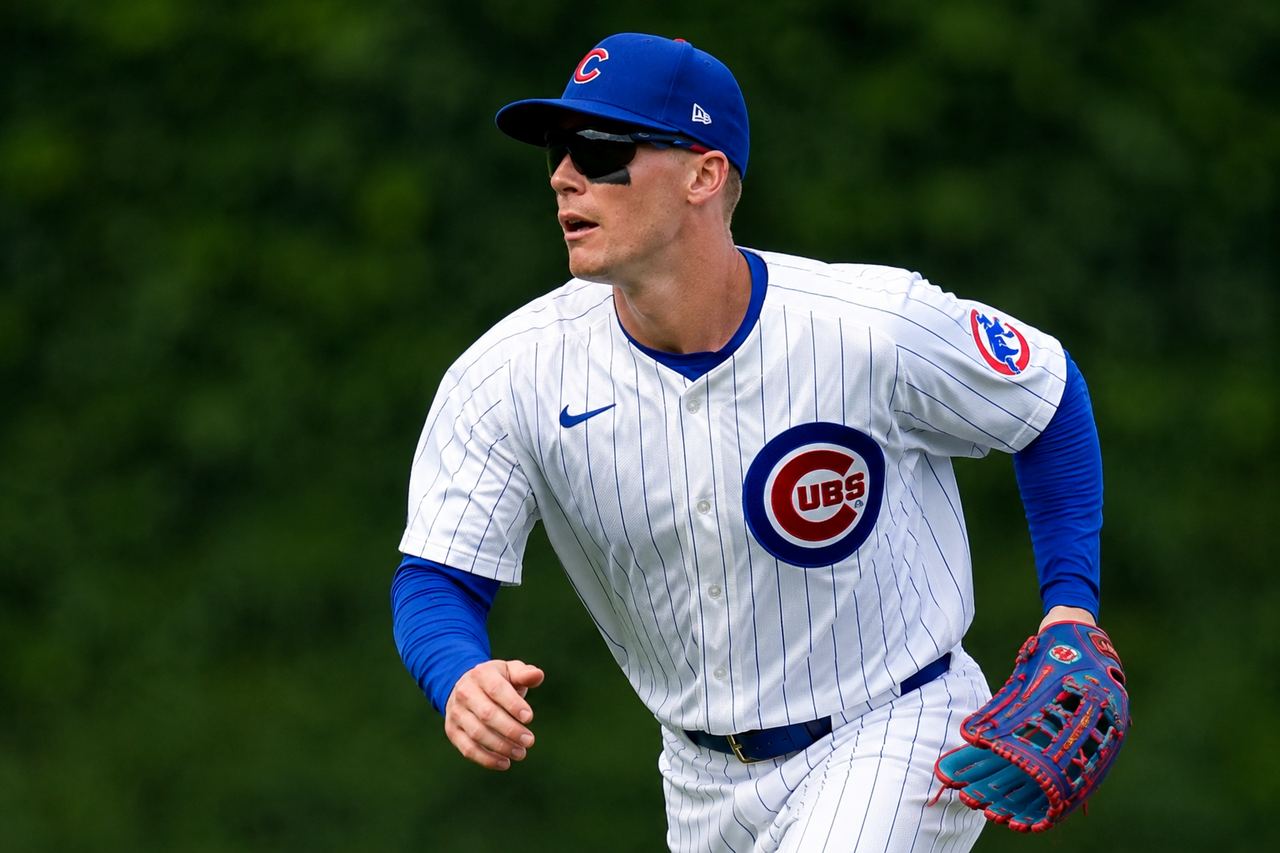
Pete Crow-Armstrong already owns a Statcast defensive record, leads Major League Baseball in WAR and is producing like a legitimate National League MVP candidate. Now comes the uncomfortable question: Is Chicago watching the beginning of the greatest center-field career baseball has ever seen, or are we getting carried away by one extraordinary stretch?
Statistics updated through July 27, 2026.
Pete Crow-Armstrong is my favorite baseball player.
I am a Cubs fan. I want him to succeed. I want the loud chants at Wrigley Field, the Gold Gloves, the stolen bases, the thirty-home-run seasons, and the MVP trophies.
I want to spend the next decade watching him patrol center field in Chicago and eventually brag to anyone listening that I saw an all-time great before the rest of baseball caught on.
Desire, however, is not proof.
The Cubs have produced exciting young talent before. Baseball history is littered with players who looked utterly invincible for eighteen months. The game’s archives are overflowing with brilliant beginnings that quietly refused to become legendary careers.
So this cannot just be a Cubs partisan gushing over high-grade game film.
We have to ask the harder question.
When Pete Crow-Armstrong’s hitting, speed, baserunning, throwing, defense and total value are compared with the best center fielders of the last thirty years, is he truly building an all-time trajectory?
Through July 27, 2026, Crow-Armstrong was batting .289 with a .390 on-base percentage, a .543 slugging percentage and a .933 OPS.[1]
He had recorded 23 home runs, 26 stolen bases, 70 runs, 60 RBIs, 19 doubles and six triples through 106 games.[1]
His 26 stolen bases ranked second in the National League, while his 23 home runs ranked sixth.[1]
He also ranked third in the National League in on-base percentage and fourth in OPS.[1]
FanGraphs credited him with 7.0 WAR, the highest total of any player in Major League Baseball at that point in the season.[2]
| Metric | PCA | What It Tells Us |
|---|---|---|
| Batting Average | .289 | Approaching the .300 level while supplying power and elite defense.[1] |
| On-Base Percentage | .390 | A major improvement in reaching base and controlling the strike zone.[1] |
| Slugging Percentage | .543 | Middle-of-the-order power from a premium defensive position.[1] |
| OPS | .933 | Fourth-best mark in the National League at the time of publication.[1] |
| Home Runs | 23 | Another legitimate threat at a thirty-home-run season.[1] |
| Stolen Bases | 26 | Another legitimate threat at a thirty-stolen-base season.[1] |
| FanGraphs WAR | 7.0 | Highest total in Major League Baseball through July 27.[2] |
| Fielding Run Value | +20 | Best defensive total in baseball at the time of MLB’s MVP analysis.[3] |
| Five-Star Catches | 33 career | Most recorded during the Statcast tracking era.[4] |
Thirty-three.
That single figure forces us to stop treating Crow-Armstrong as merely another fun young center fielder.
On July 21, 2026, Crow-Armstrong recorded the 33rd five-star catch of his career, breaking Kevin Kiermaier’s Statcast-era record of 32.[4]
A five-star catch is a play assigned a catch probability of 25 percent or lower by Statcast.[4]
Crow-Armstrong reached the record at age 24 and during the early stages of his major-league career.[4]
The record matters because Kiermaier was no mere highlight artist. He was the baseline defensive center fielder of his era.
Yet PCA blew past him before reaching his physical prime.
Crow-Armstrong also produced a 29.1-feet-per-second sprint speed on the record-setting play and received a jump rating 8.5 feet better than average.[4]
MLB’s Statcast analysis credited Crow-Armstrong with +57 Fielding Run Value over the previous three seasons, the highest total among non-catchers during that period.[4]
Pete Crow-Armstrong does not simply catch difficult baseballs. He reaches baseballs that most center fielders never get close enough to attempt.
What Makes PCA Different
Baseball has seen transcendent defensive center fielders before.
Andruw Jones possessed perhaps the finest mix of initial read, route efficiency, and effortless ground coverage of the modern era.
Ken Griffey Jr. made the hardest plays look cinematic.
Jim Edmonds turned routine fly balls into high drama.
Kevin Kiermaier functioned as a human wall in the era of precise measurement.
Byron Buxton, when his ligaments cooperate, offers speed and vertical athleticism that border on absurdity.
PCA’s early argument stands apart because his production isn't concentrated in one place.
He is not just a glove-first specialist.
He is not just a speed merchant.
He is not just a young hitter riding a hot sun-baked month in July.
He is creating offense, erasing runs in the alley, and weaponizing the basepaths at an MVP level simultaneously.
Nobody doubted Crow-Armstrong could field.
The million-dollar question was always his bat.
In 2025, he produced 31 home runs and 35 stolen bases, establishing himself as a thirty-thirty player.[1]
The most important offensive change in 2026 has been measurable rather than theoretical: Crow-Armstrong dramatically reduced how often he offered at pitches while substantially increasing how often he reached base via the walk. MLB’s own analysis identified the combination as one of the defining changes in his offensive profile.[3]
His swing rate declined from 60.1 percent in 2025 to 49.8 percent in 2026, representing the largest year-to-year reduction among qualified hitters when MLB examined the change.[3]
His walk rate increased from 4.5 percent in 2025 to 11.8 percent in 2026, which MLB identified as the largest year-to-year increase in baseball at that time.[3]
That matters because opposing pitchers once had a fairly simple plan: tempt the hyper-aggressive athlete into chasing something he could not damage. Increasingly, that invitation is being declined.
Suddenly, the pitcher actually has to come back into the strike zone.
That seems like a minor inconvenience until the person waiting there can hit the baseball 400 feet and then run around the bases like someone forgot to tell him there was a speed limit.
The raw athleticism was never in doubt.
The arrival of strike-zone discipline is what starts turning a high-highlight prospect into a truly terrifying player.
Is a .300 Season Realistic?
Crow-Armstrong was batting .289 through July 27.[1]
That doesn't guarantee a .300 finish, but it makes the conversation entirely serious.
The gap between a .289 hitter and a .300 hitter over six months can come down to a handful of ground balls finding grass instead of somebody’s glove.
The more meaningful number may be his .390 on-base percentage.[1]
A center fielder hovering near .300 with a .400-range OBP, 30-bomb power, 30 steals, and game-altering defense isn't just an All-Star.
That is the blueprint for a generational cornerstone.
FanGraphs listed Crow-Armstrong first among all major-league players with 7.0 WAR through July 27.[2]
At that time, Shohei Ohtani ranked second with 5.7 combined pitching and hitting WAR on the same leaderboard.[2]
MLB had already identified Crow-Armstrong as a legitimate National League MVP candidate based on his offense, defense, speed and league-leading WAR.[3]
The beauty of his MVP campaign is its lack of reliance on winning a batting title.
He can build superior overall value by marrying very good hitting with historic outfield defense and ruthless running.
The PCA Value Formula
Above-average hitting + elite power-speed potential + elite baserunning + historic defensive production at a premium position = legitimate MVP value.
Historical comparisons require standard caveats.
Statcast didn't exist for Griffey, Jones, Edmonds, or most of Carlos Beltrán’s career.
Five-star catches, Catch Probability, and Fielding Run Value cannot be neatly backfilled across thirty years of footage.
The logical approach is to study how previous center-field titans generated their value, then see if PCA is assembling those same tools at scale.
| Center Fielder | Historical Standard | PCA Comparison |
|---|---|---|
| Ken Griffey Jr. | Power, athleticism, iconic defense and sustained superstar production. | PCA has comparable all-around athletic excitement, but nothing yet approaching Griffey’s career longevity or offensive résumé. |
| Andruw Jones | One of the strongest defensive peaks ever recorded at center field, combined with major home-run power. | PCA’s tracking-era defensive record gives him a legitimate peak-defense comparison, but Jones sustained elite run prevention for many seasons. |
| Mike Trout | Historic offensive dominance, elite early-career WAR and repeated MVP-level seasons. | PCA’s defense may be stronger, but he has not matched Trout’s extraordinary early offensive dominance. |
| Carlos Beltrán | Power, speed, switch-hitting production, strong defense and postseason impact. | PCA’s thirty-thirty ability creates a natural comparison, though Beltrán proved his value over a long career. |
| Jim Edmonds | Powerful offense paired with spectacular center-field defense. | PCA may cover more ground, but he must sustain middle-of-the-order offense to approach Edmonds’ complete résumé. |
| Andrew McCutchen | MVP-level offense, speed and franchise leadership during his center-field prime. | PCA currently offers more defensive value, while McCutchen’s offensive peak remains the standard he must chase. |
| Kevin Kiermaier | Tracking-era defensive excellence and elite run prevention. | PCA has already passed Kiermaier in career five-star catches, but career defensive greatness requires sustained excellence.[4] |
| Byron Buxton | Rare speed, power and defensive ability limited at times by availability. | PCA offers a similar athletic ceiling; durability may determine whether his career becomes substantially greater. |
What About Willie Mays?
Every serious center-field debate eventually runs into the shadow of Willie Mays.
And that is precisely where the sheer ambition of the question gets exposed.
The greatest-ever threshold isn't satisfied by a single defensive masterclass, one 30-30 season, or a lonely MVP run.
It demands elite hitting, defensive brilliance, hyper-efficient baserunning, structural durability, and unrelenting production across twenty years.
Crow-Armstrong can be on a staggering trajectory without belonging in a sentence with Willie Mays yet.
That isn't a slight.
It’s simply the massive difference between observing an impressive launch and evaluating a full orbit.
In classic modern Chicago fashion, Crow-Armstrong’s jump involves Bears quarterback Caleb Williams.
A report published by Bleacher Nation described Williams as an influence on changes to Crow-Armstrong’s weight training and recovery approach during the offseason.[5]
The documented record indicates a shared focus on strength training, movement efficiency, and recovery.[5]
It does not claim Williams spent his afternoons running routes with PCA to teach him the finer points of tracking line drives.
The context, however, matters.
Chicago's young stars are comparing notes, sharing training protocols, and learning how high-end modern athletes preserve their bodies.
For PCA, adding functional muscle without sacrificing elite acceleration is vital.
His style of defense requires violent top-end sprints, sudden hard breaks, full-extension dives, and regular, heavy contact with outfield walls and warning tracks.
The primary question isn't whether he can pull off these absurd plays.
It’s whether his body can survive doing them eight hundred times.
The Case Against Crowning Him Too Early
Here is where we put away the foam finger.
PCA hasn't played nearly long enough to enter any "greatest ever" conversation.
No amount of analytical gymnastics can paper over the value of decade-long endurance.
Griffey sustained high-level output for over two decades.
Mays dominated across entirely different eras of the game.
Trout put together a string of early offensive seasons that read like video game cheat codes.
Jones saved hundreds of runs over thousands of demanding innings in center field.
Crow-Armstrong's sample size is an intriguing prelude, not a finished thesis.
There are real structural concerns, too.
He had struck out 121 times through 463 plate appearances in 2026.[1]
His aggressive playstyle carries built-in injury risks.
Raw speed fades for everyone eventually.
Pitchers will inevitably assemble new scouting reports to counter his increased patience.
The real test of an all-time career is how a hitter adjusts when the league figures out his counter-adjustment.
- Can he maintain an on-base percentage near .375 or better? His improved patience may be more important than any single home-run total.
- Can he remain healthy while playing center field this aggressively? Availability separates legendary peaks from legendary careers.
- Can he continue producing thirty-home-run power without sacrificing contact? The greatest version of PCA is not merely powerful. It is selective.
- Can his defensive value remain elite after his speed begins to decline? Route recognition, positioning and reaction time must eventually replace some raw explosiveness.
- Can he sustain MVP-level WAR for five to ten seasons? One 7-WAR season is special. Repeating it changes baseball history.
The answer hinges on your definition of pace.
If we are measuring total career volume, no.
The sample size is far too small.
If we are measuring defensive run prevention within the Statcast era, he is performing at a historical level.[4]
If we are measuring raw total value in 2026, he was leading all of Major League Baseball in FanGraphs WAR through July 27.[2]
If we mean combining 30-30 potential, elite outfield range, and rapidly maturing plate discipline at age 24, very few center fielders in modern memory present a clean match.
That doesn't make him Willie Mays.
It just means asking the question isn't absurd.
The Standard
I started this exercise looking for cold data to validate my Cubs-tinted optimism.
The data mostly obliged.
Pete Crow-Armstrong isn't just a highlight machine making dramatic catches for social media clips.
He is delivering top-tier value across hitting, base-stealing, and defense simultaneously.
He holds the Statcast-era record for career five-star catches.[4]
He was leading all major-league players in FanGraphs WAR through July 27, 2026.[2]
He was knocking on the door of a .300 average while posting a .390 OBP, a .933 OPS, 23 homers, and 26 stolen bases.[1]
These aren't rosy projection models.
They are hard, recorded numbers.
Still, you don't hand out all-time center-field crowns after two-and-a-half seasons.
Historic careers are forged by surviving mechanical slumps, inevitable physical decline, pitch adjustments, and suffocating expectations.
PCA still has to navigate all of it.
So here is the sober assessment from a Cubs fan who hopes he pulls it off:
Pete Crow-Armstrong is not the greatest center fielder ever.
He may, however, be producing one of the most complete and statistically extraordinary beginnings to a center-field career that modern baseball has measured.
That isn't simple Chicago hype.
That's the foundation of a real historical case.
And every time a fly ball gets launched toward the gap at Wrigley, Chicago gets another live data point.
Second City Standard Scorecard
Current Offensive Production: MVP level
Power-Speed Combination: Elite
Defensive Peak: Historic within the Statcast era
Baserunning: Elite
Career Longevity: Not yet established
Hall of Fame Trajectory: Possible, but far too early to confirm
Greatest Center Fielder Ever: Not yet
Greatest-Ever Conversation: Officially open
Sources
[1] Major League Baseball — Pete Crow-Armstrong player statistics and National League rankings, updated July 27, 2026:
https://www.mlb.com/player/pete-crow-armstrong-691718
[2] FanGraphs — 2026 Major League Baseball WAR Leaderboard, updated July 27, 2026:
https://www.fangraphs.com/leaders/war
[3] Major League Baseball — “Pete Crow-Armstrong’s case for MVP,” July 2026:
https://www.mlb.com/cubs/news/pete-crow-armstrong-2026-mvp-case
[4] Major League Baseball — “Pete Crow-Armstrong sets Statcast record for 5-star catches,” July 21, 2026:
https://www.mlb.com/news/pete-crow-armstrong-statcast-record-five-star-catches
[5] Bleacher Nation — “Caleb Williams’ advice to Pete Crow-Armstrong,” May 13, 2026:
https://www.bleachernation.com/cubs/2026/05/13/caleb-williams-advice-pete-crow-armstrong/
Sources
Built By
Editorial Operating System v1.0Creator
Erik Chambers
Architecture
Founder, Creator & Editorial Architect
AI Assisted
No
Human Reviewed
Pending
Evidence Reviewed
In progress
Last Updated
September 27, 2026
Confidence
Evergreen medium/10
Research Status
Living investigation
We do not claim perfection. We promise transparency. Every investigation shows its work — the question, the evidence, the tools, the humans, and the updates.
Editorial Transparency
This article contains a combination of reporting, publicly available research, and editorial analysis.
Analysis and interpretation. Facts are sourced; conclusions are the author's. Evidence before opinion — facts require sources, analysis requires transparency, opinions require labels.
Meet the creator
Erik Chambers
Founder, Creator & Editorial Architect
Erik originated the central idea, directed the investigation, reviewed the evidence, and approved the final published work.
Read the founder profile →Challenge This
We welcome disagreement
A different way to read the evidence. Research that points in another direction. Where specialists diverge.
Loading challenges…
Submit a challenge
Sign in to submit a challenge. All submissions are reviewed before appearing publicly.
Comments
Ask A Question
What would you ask an editor about this piece?
Reader questions feed our coverage map. The most-asked ones become our next investigations.
Continue Exploring
Guided by the evidenceWhere should this take you next?
Part of a cluster
Baseball Value
What is a baseball player actually worth, and who decides?
See the whole clusterIs PCA the Greatest Center Fielder Ever?
A composite 0–100 measure of how well this investigation meets the Second City Standard. Scores are auditable — every point comes from the criteria below.
Composite
—
of 100
This investigation is queued for editorial scoring. No score has been assigned yet — the absence of a number is not a judgment on the evidence.
The Standard
· Editorial verdictBased on the evidence presented,
Second City Standard believes Is Chicago watching the beginning of the greatest center-field career baseball has ever seen?
Remaining uncertainty: Awaiting a final written verdict from the editorial desk.
The Standard · Second City Standard
Continue The Investigation
· Never a dead endThis investigation is one thread. Pull the next one — every path below is another investigation, another question, or another discipline applied to the same problem.
One clear idea, once a week.
Get the strongest investigation, one useful tool, and one question worth carrying forward.
No fake urgency. No spam. Leave any time.