Ultra-Processed Food: Is the Problem the Processing—or Everything We Put Into It?
Ultra-processed food is linked to obesity and chronic disease, but researchers still can't agree whether it's the processing, the calories, the sugar and sodium, or simply that UPFs replace whole foods.
By Erik Chambers
Founder, Creator & Editorial Architect
In this articleThe Question
The Standard take
Ultra-processed food is linked to obesity and chronic disease, but researchers still can't agree whether it's the processing, the calories, the sugar and sodium, or simply that UPFs replace whole foods.
Key Findings
- Does the "ultra-processed" classification itself identify a distinct causal driver of obesity and chronic disease, or is it primarily a proxy for other well-established risk factors—excess calories, added sugar, sodium, saturated fat, low fiber, and the displ…
- The NOVA classification system, developed by researchers at the University of São Paulo, sorts foods into four groups based on the extent and purpose of industrial processing, culminating in "ultra-processed" foods—products typically containing ingredients no…
- Here's the uncomfortable part for anyone who wants a clean headline: most observational UPF studies cannot fully separate "processing" from the nutrients that ride along with it, because in the real food supply, ultra-processed products are disproportionately…
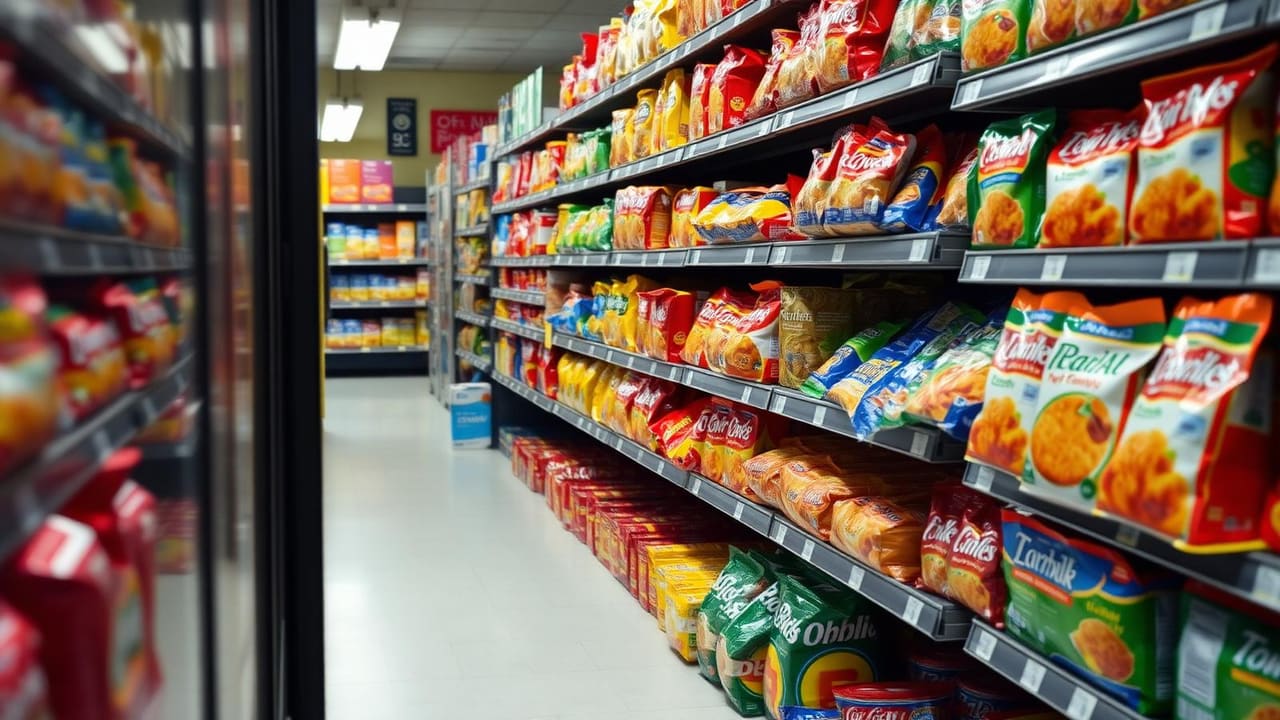
Walk into any grocery store on Chicago's North Side and you can watch the ultra-processed food debate play out in real time: shoppers scanning labels for "no seed oils," clutching bars that promise to be "clean," while a cart two aisles over is stacked with frozen dinners nobody's pretending are farm-to-table. Somewhere in between is where most of us actually eat, and that's precisely the terrain this story lives in—not the extremes, but the murky middle where scientists are still arguing about what, exactly, is going wrong.
The term "ultra-processed food" has become a cultural shorthand for everything wrong with the modern diet, blamed for rising obesity, diabetes, and a general sense that food isn't food anymore. And there's real science behind the alarm: population studies across multiple countries link diets high in ultra-processed food to worse metabolic health, and a landmark NIH-funded trial found people simply eat more of it. But "ultra-processed" is a classification system, not a nutrient, and lumping together diet soda, industrial white bread, breakfast cereal, and plant-based meat substitutes under one label invites a question the public conversation mostly skips: is it the processing that hurts you, or is processing just how we happen to deliver the sugar, salt, fat, and calorie density that were already known to be problems?
This isn't an academic quibble. If it's the processing itself—some novel mechanism tied to industrial manufacturing—then reformulating a product's texture or additive profile might not help much. If it's the calorie density, hyper-palatability, and nutrient displacement that tend to travel with heavy processing, then the fix looks different: less about banning a category and more about reengineering what's actually in it, and how much of it we're induced to eat.
The Question
Does the "ultra-processed" classification itself identify a distinct causal driver of obesity and chronic disease, or is it primarily a proxy for other well-established risk factors—excess calories, added sugar, sodium, saturated fat, low fiber, and the displacement of whole foods—that happen to cluster inside industrially manufactured products?
That question matters because public health messaging built on the wrong mechanism risks two failure modes. Telling people to fear all "processing" could scare them off inexpensive, shelf-stable, fortified foods that are genuinely useful, especially for lower-income households. But dismissing the UPF pattern entirely, on the grounds that "processing doesn't cause disease," risks ignoring a genuinely reproducible finding: something about how these products are formulated appears to override the body's normal appetite regulation.
What We Know
The NOVA classification system, developed by researchers at the University of São Paulo, sorts foods into four groups based on the extent and purpose of industrial processing, culminating in "ultra-processed" foods—products typically containing ingredients not found in a home kitchen, like protein isolates, emulsifiers, or flavor compounds, and usually formulated to be shelf-stable, convenient, and intensely palatable. Since NOVA's introduction, a large body of observational research—cohort studies from the U.S., UK, France, and Brazil among others—has found that people who eat more of their calories from ultra-processed sources tend to have higher rates of obesity, type 2 diabetes, cardiovascular disease, and in some analyses, higher all-cause mortality.
The single most influential piece of causal evidence is a small but rigorously designed NIH inpatient study led by Kevin Hall and colleagues, published in Cell Metabolism. Adults were confined to a metabolic ward and given, in random order, two weeks of an ultra-processed diet and two weeks of a minimally processed diet, with both diets matched for calories, sugar, fat, fiber, and macronutrient composition. Despite that matching, participants voluntarily ate roughly 500 more calories a day on the ultra-processed diet and gained weight, while they lost weight on the minimally processed diet. Because intake was ad libitum—participants could eat as much or as little as they wanted—the study is one of the few pieces of evidence suggesting these products can drive overeating independent of their nutrient composition on paper.
That's a genuinely important finding. It's also a single trial, with a small sample, run over a short period, in a controlled ward environment that doesn't mirror everyday life. It shows that something about ultra-processed formulations can promote overeating in that setting; it doesn't by itself prove which of several plausible mechanisms—energy density, texture, eating speed, palatability engineering, or something else—is doing the work, nor does it establish the size of that effect over months or years in the real world.
What the Data Says
Extra daily calories consumed on ultra-processed diet
~500kcal/day
Compared to a minimally processed diet matched for calories, sugar, fat, and fiber, in the NIH Hall et al. inpatient crossover trial
Umbrella reviews—studies that pool findings across many systematic reviews and meta-analyses—paint a more mixed picture than headlines usually suggest. The evidence linking higher UPF intake to obesity and to markers of cardiometabolic risk is comparatively consistent and appears across many independent cohorts. The evidence for some other outcomes sometimes attributed to UPF, including certain cancers or specific mental health conditions, is thinner, more heterogeneous, and more prone to reversal as new studies arrive. That unevenness is itself informative: if "processing" were a single unified causal mechanism, you'd expect a more consistent signal across outcomes rather than strong evidence for some and weak, conflicting evidence for others.
One of the more interesting frontiers is NIH-funded metabolomics research attempting to identify objective biological biomarkers of ultra-processed food consumption—chemical signatures in blood or urine that correlate with UPF intake, bypassing the well-documented unreliability of self-reported dietary recall, where people misremember or under-report what they eat by wide margins. If validated, such biomarkers could let researchers test the UPF-disease link with far less measurement error than current cohort studies allow. That work is promising but still in progress; no validated, widely used UPF biomarker exists yet, which means most of the current evidence base still rests on the exact kind of self-report data known to be noisy.
| Candidate mechanism | Plausibility | Independent of "processing" label? |
|---|---|---|
| Higher energy density | Strong | Yes — measurable in any food |
| Hyper-palatability overriding satiety | Moderate-strong | Partially — tied to formulation, not processing per se |
| Faster eating speed / less chewing | Moderate | Yes — texture-driven |
| Added sugar and sodium content | Strong | Yes — measurable nutrient |
| Displacement of fiber-rich whole foods | Strong | Yes — a dietary pattern effect |
| Additives/emulsifiers (direct physiological effect) | Preliminary, mostly animal/mechanistic data | No — specific to processing |
Source: Compiled from NIH-funded research and peer-reviewed nutrition literature
Where the Evidence Gets Messy
Here's the uncomfortable part for anyone who wants a clean headline: most observational UPF studies cannot fully separate "processing" from the nutrients that ride along with it, because in the real food supply, ultra-processed products are disproportionately high in added sugar, refined starch, sodium, and saturated fat, and disproportionately low in fiber, protein quality, and micronutrients. When a cohort study finds that high UPF intake predicts obesity, it's statistically very difficult to know whether that's because of some processing-specific mechanism or simply because heavy UPF eaters are, on average, eating more sugar and less fiber than they would otherwise. Researchers try to adjust for nutrient content in their statistical models, but adjustment can't fully undo confounding when processing and nutrient composition are this tightly correlated in the actual marketplace.
NOVA tells you how a food was made. It doesn't tell you what's in it. Treating those as the same thing is where a lot of the confusion starts.
There's also the question of reverse causation and residual confounding common to all diet epidemiology: people who eat heavily ultra-processed diets may differ from those who don't in ways that are hard to fully measure—income, time pressure, baseline health literacy, activity levels, or existing metabolic conditions that shape both food choice and disease risk. Cohort studies do their best to statistically control for these factors, but no amount of adjustment fully substitutes for randomization, which is precisely why the Hall trial carries outsized weight in this debate despite its small size—and precisely why one small trial, run in a metabolic ward for two weeks, cannot settle a question about years of everyday eating.
Even researchers sympathetic to the UPF framework increasingly argue that the category needs to be split. Some proposed refinements to NOVA or entirely new frameworks attempt to separate ultra-processed foods that are nutritionally reasonable (fortified plant milks, whole-grain packaged bread, some plant-based proteins) from those that are calorie-dense and nutrient-poor (sugary drinks, reconstituted meat products, packaged snack cakes). If those refinements gain traction, "ultra-processed" as a single monolithic villain may eventually give way to a more granular set of categories—which would vindicate the critics who've argued all along that NOVA, as currently used, is too blunt an instrument to carry the weight put on it.
Second City Analysis
Both loud camps in this argument are overselling their certainty. The "all processed food is poison" crowd points to the Hall trial and the observational cohorts as if they've closed the case, when in fact the trial was small, short, and hasn't been widely replicated at scale, and the cohort data can't cleanly separate processing from the nutrients bundled inside it. The "processing is a moral panic, only calories matter" crowd has to explain away the fact that, in a study where calories and macronutrients were held constant, people still ate significantly more and gained weight on the ultra-processed diet—a result that's hard to wave off as pure confounding, because randomization is specifically designed to eliminate that kind of confounding.
The more honest synthesis is that "ultra-processed" is probably best understood not as a single causal agent but as a marker for a cluster of things that tend to travel together: high energy density, engineered palatability, low fiber, easy overconsumption, and reduced whole-food content. Some of those things are inherent to certain manufacturing techniques; some are just formulation choices that could, in principle, be changed without changing the "processing" label at all. Blaming "processing" in the abstract may miss that a reformulated ultra-processed snack with less sugar, added fiber, and a less hyper-palatable flavor profile might behave very differently than the products used in most of the existing research—yet current classification wouldn't distinguish between them.
None of this means the concern is manufactured. The consistency of the obesity and cardiometabolic association across many different countries and populations, combined with a randomized trial showing a plausible mechanism for overeating, is more evidence than most nutrition claims ever accumulate. It just means the practical takeaway is narrower and less satisfying than "avoid all processed food": pay more attention to energy density, added sugar, sodium, and whether whole foods are being displaced, and treat the "ultra-processed" label itself as a useful but imperfect proxy rather than the actual mechanism.
The Verdict
The claim that ultra-processed food, as a category, drives obesity and chronic disease is plausible and backed by a consistent observational pattern plus at least one credible randomized trial suggesting a real behavioral mechanism. But the claim that "processing" itself—apart from the calories, sugar, sodium, and palatability engineering that usually accompany it—is the specific causal agent remains unproven, and the NOVA classification's breadth makes it a blunt tool for isolating that mechanism. Read it as a reasonably strong signal pointing at a fuzzy target.
- Evidence strength
- 62
- Source quality
- 80
- Replication
- 55
- Sample quality
- 50
- Causation
- 45
- Scientific consensus
- 50
- Uncertainty
- 60
Observational evidence for obesity/cardiometabolic links is broad and fairly consistent; causal evidence rests on one small but well-designed randomized trial. Evidence strength varies substantially across specific claimed outcomes.
- 1.Ultra-processed diets cause excess calorie intake and weight gain, Cell Metabolism (Hall et al.) (2019 —) Link
- 2.NOVA food classification system, World Nutrition / University of São Paulo (Monteiro et al.) (2016 —) Link
- 3.Ultra-processed food exposures and health outcomes: umbrella review, The BMJ (2024 —) Link
- 4.Dietary Guidelines for Americans, U.S. Department of Agriculture / HHS (2020-2025 —) Link
- 5.Consumption of ultra-processed foods and health outcomes, The BMJ (2019 —) Link
- 6.NIH-funded research on dietary biomarkers and metabolomics, National Institutes of Health, NIDDK (2023 —) Link
- 7.Ultra-processed foods and cardiovascular disease risk, Journal of the American College of Cardiology (2019 —) Link
- 8.Dietary recall and measurement error in nutrition epidemiology, National Cancer Institute, Division of Cancer Control & Population Sciences — Link
How We Measured This
- Question investigated
- Does ultra-processed food's link to obesity and chronic disease reflect the processing itself, or the nutrients and eating patterns that typically accompany it?
- Evidence considered
- One randomized inpatient crossover feeding trial (Hall et al., NIH), multiple large observational cohort studies, and an umbrella review synthesizing systematic reviews across health outcomes.
- Sources prioritized
- Peer-reviewed journals (Cell Metabolism, The BMJ, JACC), NIH/NIDDK, USDA/HHS Dietary Guidelines.
- Known limitations
- The core causal trial is small and short-duration; observational studies cannot fully separate "processing" from correlated nutrient content; NOVA classification lacks nutritional granularity; validated biomarkers of UPF intake are not yet available, so most cohort data still relies on self-reported diet recall.
- How the verdict was set
- Rated PLAUSIBLE with MODERATE evidence because the obesity/cardiometabolic association is consistent and has some causal support, but the specific mechanism (processing vs. correlated factors) is not resolved and evidence strength varies by outcome.
Built By
Editorial Operating System v1.0Creator
Erik Chambers
Architecture
Founder, Creator & Editorial Architect
AI Assisted
No
Human Reviewed
Pending
Evidence Reviewed
In progress
Last Updated
August 26, 2026
Confidence
Evergreen medium/10
Research Status
Living investigation
We do not claim perfection. We promise transparency. Every investigation shows its work — the question, the evidence, the tools, the humans, and the updates.
Editorial Transparency
This article contains a combination of reporting, publicly available research, and editorial analysis.
A long-form investigation. Findings resolve to primary sources. Evidence before opinion — facts require sources, analysis requires transparency, opinions require labels.
Meet the creator
Erik Chambers
Founder, Creator & Editorial Architect
Erik originated the central idea, directed the investigation, reviewed the evidence, and approved the final published work.
Read the founder profile →Challenge This
We welcome disagreement
A different way to read the evidence. Research that points in another direction. Where specialists diverge.
Loading challenges…
Submit a challenge
Sign in to submit a challenge. All submissions are reviewed before appearing publicly.
Comments
Ask A Question
What would you ask an editor about this piece?
Reader questions feed our coverage map. The most-asked ones become our next investigations.
Continue Exploring
Guided by the evidenceWhere should this take you next?
What the evidence actually allows
PLAUSIBLE
Ultra-Processed Food: Is the Problem the Processing—or Everything We Put Into It?
A composite 0–100 measure of how well this investigation meets the Second City Standard. Scores are auditable — every point comes from the criteria below.
Composite
—
of 100
This investigation is queued for editorial scoring. No score has been assigned yet — the absence of a number is not a judgment on the evidence.
The Standard
· Editorial verdictBased on the evidence presented,
Second City Standard believes Ultra-processed food is linked to obesity and chronic disease, but researchers still can't agree whether it's the processing, the calories, the sugar and sodium, or simply that UPFs replace whole foods.
Remaining uncertainty: Awaiting a final written verdict from the editorial desk.
The Standard · Second City Standard
Continue The Investigation
· Never a dead endThis investigation is one thread. Pull the next one — every path below is another investigation, another question, or another discipline applied to the same problem.
One clear idea, once a week.
Get the strongest investigation, one useful tool, and one question worth carrying forward.
No fake urgency. No spam. Leave any time.