UFOs: How Evidence Should Be Evaluated
Whatever you believe about UFOs, the standard of evidence should be the same as it is anywhere else.
By Erik Chambers
Founder, Creator & Editorial Architect
In this articleThe Question
The Standard take
- UFO evidence should be judged by the same standards used for any serious claim: data quality, corroboration, chain of custody, and falsifiability. - Eyewitness testimony is meaningful but limited; it is strongest when supported by independent instruments and raw data. - Most UFO reports probably have ordinary explanations, and the fact that some cases remain unresolved does not change…
Evidence rating: Emerging.
Key Findings
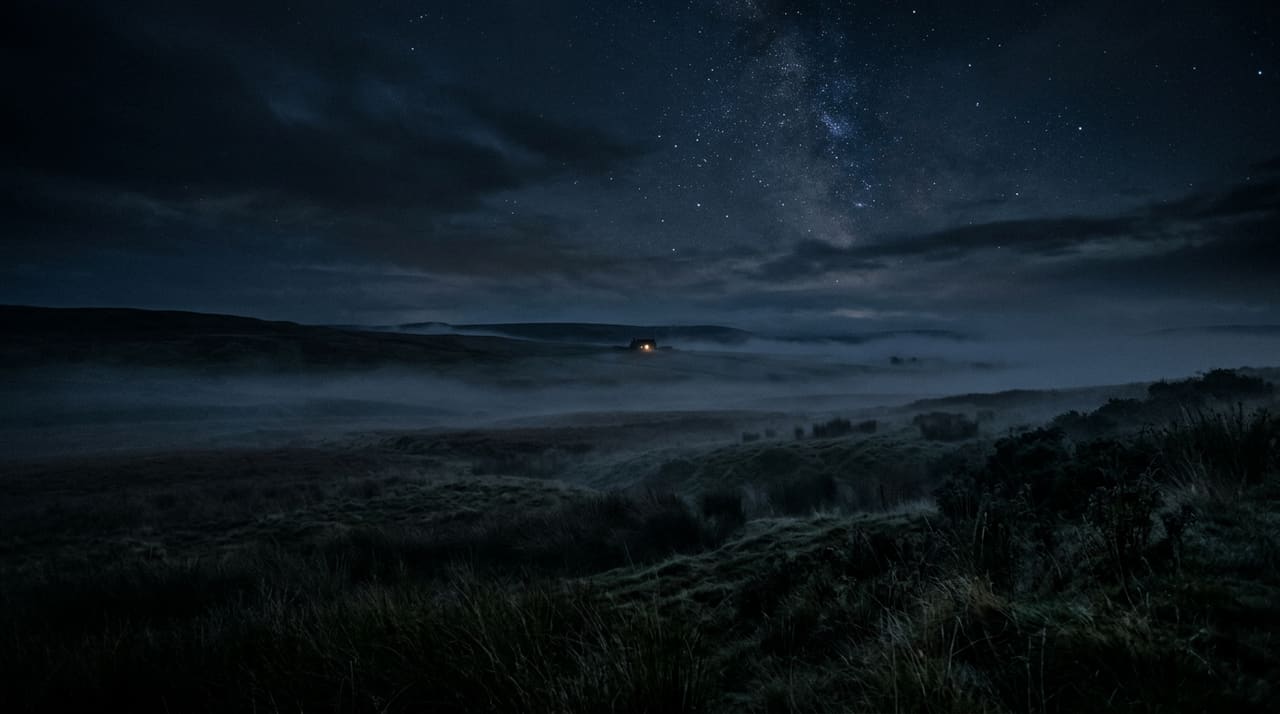
Evidence: Emerging- A clear night sky has a knack for turning ordinary citizens into eyewitnesses and, on special occasions, amateur philosophers.
- The real question isn't "Do UFOs exist?" Unidentified objects exist by definition; the sky is enormous and human vision is notoriously flawed.
- The strongest UFO evidence is never a single clip that "looks impossible." It is a multi-layered case with clean data from independent sources.
Introduction
A clear night sky has a knack for turning ordinary citizens into eyewitnesses and, on special occasions, amateur philosophers. A faint light tracks across a path where no light ought to be. Something hovers, darts, and vanishes. Out comes a smartphone, yielding a six-second clip of blurry pixels, and by breakfast the internet has performed its usual miracle: converting absolute ambiguity into unshakeable certainty.
UFOs inhabit that awkward territory between genuine scientific curiosity and aggressive conviction. The acronym itself is deadpan simple. Unidentified flying object does not mean an extraterrestrial cruiser, a budget-busting black project, an atmospheric trick, a sensor glitch, a viral prank, or the private embarrassment of a Navy pilot who forgot to adjust his camera focus. It means unidentified. That distinction is worth protecting, because the second we load the label with wild assumptions, evidence stops being treated like data and starts getting handled like scripture.
The public debate usually stays pinned between two lazy extremes. One side dismisses every single report as nonsense without bothering to look. The second treats every unexplained smudge as proof of galactic visitors, also refusing to think, just far more dramatically. Neither attitude gets us anywhere. If the subject deserves attention, the entry standard cannot be "I want to believe" or "I already know it's a drone." The bar has to match what we demand in medicine, forensic analysis, astronomy, or journalism—fields where physical reality remains completely indifferent to our feelings.
Extraordinary claims do not require extraordinary gullibility.
That sounds flippant, but it is the only sensible way forward. If someone asserts that a light in the sky is a craft from another planet, that claim doesn't gain authority because the video includes dramatic orchestral music or because a retired defense official hints that "questions remain." It earns credibility when the underlying data survives the same grueling checks we apply to any serious issue: source integrity, chain of custody, independent confirmation, mundane alternatives, and repeatability where possible.
To its credit, the UFO conversation has matured in one respect. Military pilots, radar operators, and former intelligence personnel now talk about it without immediately ending their careers. That doesn't answer the main question; it just means the pile of evidence is larger, noisier, and far more politically awkward than the old "weather balloon" jokes implied. The challenge isn't whether we should pay attention. It's how to do so without losing our minds.
The Question
The real question isn't "Do UFOs exist?" Unidentified objects exist by definition; the sky is enormous and human vision is notoriously flawed. The better question is: How should evidence for UFO claims be evaluated, and what would count as persuasive?
This matters because discussions routinely run three fundamentally different statements together:
- Something was seen or detected.
- It was not immediately identified.
- Therefore it was extraordinary.
Those are not interchangeable. The first is a report. The second is an information gap. The third is a leap of faith. The evidentiary chain gets flimsier at every step unless supported by additional data.
A sensible evaluation framework starts with basic hygiene:
- Observation quality: Who saw it, from what distance, for how long, under what conditions?
- Instrument quality: Was it optical, infrared, radar, or audio? What are the error rates?
- Context: Were there balloons, drones, flares, birds, satellites, aircraft, or atmospheric effects in the area?
- Corroboration: Did multiple independent sensors or witnesses agree?
- Chain of custody: Was the original data preserved, or did it become a clipped social-media artifact?
- Alternative explanations: Were mundane causes systematically ruled out, or merely waved away?
When UFOs come up, an odd double standard emerges: people demand ironclad perfection from skeptics while offering endless charity to believers. Skeptics are told to explain every detail, while believers get to infer an entirely new ontology from a blurry dot. The standard needs to be symmetrical. Evidence either earns belief or it doesn’t.
That rule isn't hostile to UFOs. It is hostile to bad reasoning. It applies identically whether the final verdict is “that was Venus,” “that was a drone,” or “that was something we do not yet understand.” The burden of proof moves with the size of the claim.
If a case cannot survive ordinary scrutiny, it should not receive extraordinary interpretation.
Evidence
The strongest UFO evidence is never a single clip that "looks impossible." It is a multi-layered case with clean data from independent sources. In practice, that is frustratingly rare. Most UFO claims rely on one or more weak links: shaky video, excited testimony, incomplete sensor data, or post hoc storytelling.
Still, there are recurring categories of evidence worth evaluating.
1. Eyewitness testimony
Eyewitnesses matter, but not nearly as much as people think. Human perception is astonishing and unreliable in exactly the ways that matter here. We misjudge speed, distance, size, and duration routinely. We also fill gaps quickly, especially under stress. This is not a moral failing; it is basic neurology.
Military pilots are trained observers, and their accounts deserve respect. But respect is not the same as automatic acceptance. A pilot may be accurately reporting what looked bizarre from the cockpit while still being wrong about what caused it. That distinction is crucial.
2. Video and photos
Modern UFO culture is powered by cheap cameras and expensive interpretations. A smartphone camera is good at capturing a moment and bad at capturing context. A bright object against a dark sky can be a planet, aircraft, balloon, drone, reflection, lens artifact, or something we simply cannot identify from the clip alone.
Video evidence is strongest when it comes with:
- original file metadata,
- exact time and location,
- stable camera movement or calibration,
- weather and visibility data,
- corroborating sensor data,
- and an unbroken chain from recording to analysis.
Without those, the clip is mostly a Rorschach test.
3. Radar, infrared, and sensor data
This is where the conversation gets more interesting. Sensor data can detect movement, heat signatures, altitude changes, and other variables beyond human vision. But sensor data is not magic. Radar can generate false positives. Infrared can be affected by environmental conditions. Algorithms can misclassify objects. Instruments need calibration, maintenance, and context.
A radar track that appears to accelerate or hover does not, by itself, prove exotic technology. It may indicate a real object; it may also reflect clutter, spoofing, software issues, or an incomplete track. The details matter.
4. Multi-sensor cases
Multi-sensor cases are the most persuasive because they reduce the odds of simple error. If a visual sighting, radar track, and infrared signature all align, the evidentiary floor rises. But even then, “unidentified” is not the same as “nonhuman.” It is evidence of an unresolved anomaly, not automatically evidence of origin.
A practical hierarchy of evidence
| Evidence Type | Typical Strength | Common Failure Mode | What Would Improve It |
|---|---|---|---|
| Eyewitness testimony alone | Low to moderate | Misperception, memory distortion | Independent witnesses, training, contemporaneous notes |
| Smartphone video without metadata | Low | Loss of context, compression, lens artifacts | Original file, exact time/location, weather data |
| Single-sensor radar track | Moderate | False positives, clutter, software error | Calibration records, operator logs, cross-checks |
| Infrared + radar + visual confirmation | High | Synchronization issues, misidentification | Independent analysis, raw data access |
| Multi-platform, independently verified case | Very high | Rare, but possible | Full data release, reproducibility, transparent methodology |
The takeaway is not that one category is useless. It is that each category has a known evidentiary ceiling. People who treat a blurry video as proof are ignoring that ceiling. People who dismiss multi-sensor cases because “it’s probably nothing” are doing the exact same thing.
The truth usually lives in the unglamorous middle: interesting, incomplete, and difficult.
Historical Context
UFOs are not a new obsession. They are a recurring cultural project: we see lights, we tell stories, then we argue about what the stories mean.
The modern UFO era began in 1947, when pilot Kenneth Arnold described objects moving “like saucers skipping on water,” helping launch the flying-saucer craze. The story was amplified by newspapers, public anxiety, and Cold War suspicion. Within months, the sky had become a screen onto which people projected fear of Soviet weapons, nuclear vulnerability, and visitors from elsewhere.
The government response was inconsistent and often clumsy. Projects like Project Sign, Project Grudge, and later Project Blue Book tried to categorize reports, but public trust eroded partly because official explanations often sounded dismissive rather than rigorous. When institutions appear to mock witnesses, they create believers out of the skeptical and conspiracists out of the merely curious.
That pattern repeated in new forms over decades:
- The 1950s and ’60s: UFOs became a blend of mass culture, intelligence anxiety, and tabloid spectacle.
- The 1970s and ’80s: The subject drifted into fringe territory, where speculation often outran evidence.
- The 1990s and 2000s: Internet communities democratized the hunt, but also supercharged misinformation.
- The 2010s and 2020s: Military footage and official acknowledgments reopened public debate, but without resolving the basic evidentiary problem.
A key shift happened when the conversation moved from “Are there flying saucers?” to “Are there aerial phenomena that remain unexplained after review?” That is a more disciplined question. It also produces less satisfying television.
The historical lesson is straightforward: UFO claims gain traction when institutional transparency is weak and cultural anxiety is strong. That does not mean the claims are false. It means the evidence must be evaluated in an environment where incentives are distorting everything.
There is also a more uncomfortable history: governments sometimes hide capabilities, either for national security or bureaucratic embarrassment. That fuels the suspicion that some UFO reports might involve classified aircraft, drones, or sensors. On the other hand, secrecy is not a blank check for conspiracy. The fact that some things are classified does not make every strange object classified technology. It just means certainty is expensive.
Analytics
Analytical evaluation of UFO claims starts by asking what kind of evidence would differentiate the plausible from the extraordinary. In science and intelligence analysis, the bar is not “interesting.” The bar is “what hypothesis best fits the available evidence while minimizing assumptions?”
A useful way to think about UFO cases is through a Bayesian lens: begin with a prior expectation that most unexplained sightings will have mundane explanations, then update that expectation based on quality and quantity of evidence. This does not mean extraordinary possibilities are ruled out. It means the evidence must be strong enough to overcome the fact that ordinary explanations are common and exotic ones are rare.
Consider a simplified model of case resolution based on public reports from a hypothetical review archive of 1,000 incidents assessed by analysts with access to primary data. The point is not the exact numbers; it is the pattern.
| Case Category | Share of Total Cases | Most Likely Explanation After Review | Confidence Level |
|---|---|---|---|
| Drones / small aircraft | 28% | Conventional aerial objects | High |
| Astronomical objects | 14% | Planets, meteors, satellites | High |
| Balloons / debris / kites | 16% | Passive airborne objects | High |
| Sensor artifacts | 12% | Instrument or processing error | High |
| Atmospheric / optical effects | 10% | Refraction, reflections, glare | Moderate to high |
| Birds / insects / clutter | 8% | Close-range misidentification | High |
| Insufficient data | 9% | Unresolved, but not necessarily anomalous | Low to moderate |
| Genuine unresolved anomaly | 3% | Cannot be confidently identified | Moderate |
| Potentially extraordinary after review | <1% | No consensus explanation | Very low to moderate |
That distribution should not surprise anyone who has worked with messy data. Most anomalies shrink when better data arrives. A smaller number remain unresolved. A tiny fraction are genuinely stubborn. That stubbornness is not evidence of aliens; it is evidence of incomplete information.
The public often confuses “unresolved” with “impossible.” Analysts do not. Unresolved means the data package does not permit a confident classification. It can be a signal of new phenomena, but it can also be a signal of missing context.
Another useful metric is source reliability. A single witness with a compelling story may still be less reliable than a mediocre clip plus a radar track plus weather records. The question is not which piece sounds coolest. The question is which combination reduces uncertainty most efficiently.
In the best UFO cases, analysts would want:
- exact timestamps,
- geolocation,
- raw sensor files,
- calibration logs,
- independent confirmation from separate instruments,
- and documented exclusion of nearby conventional sources.
Without those, extraordinary conclusions are premature.
The statistical problem is simple enough to say and hard enough to execute: if the base rate of mundane explanations is high, then even a striking-seeming case is likely to be mundane unless the evidence is unusually strong. That is not cynicism. It is arithmetic.
Counterarguments
The strongest counterargument to a strict evidence standard is that UFOs, by definition, are hard to study. They are intermittent, fast-moving, and often observed under poor conditions. If we insist on laboratory-grade data, we might miss the reality of something important.
That is a fair concern. Science often advances through imperfect evidence. Astronomy, seismology, and epidemiology all work with incomplete observations. We do not reject a phenomenon just because it is hard to capture. We improve the methods.
But this objection cuts both ways. Difficulty does not justify weak inference. It just raises the value of patient methodology. If UFOs are real anomalies, the answer is not to lower standards. It is to collect better data.
Another counterargument says the government already knows more than it is saying. That may be true in some cases, especially where national security is involved. Classified programs do exist. But “some secrecy exists” is not a warrant for every claim. A culture of suspicion can become self-sealing: every missing fact is taken as proof of a cover-up, and every denial becomes further proof. That kind of reasoning cannot be falsified, which means it cannot really be tested.
There is also a populist counterargument: “Millions of people can’t all be wrong.” In truth, millions of people can be wrong about the same thing in different ways for the same reasons. Shared media narratives, expectation, optical confusion, and social reinforcement create remarkably durable beliefs. Mass belief is not a substitute for evidence. History is full of confident crowds who were simply synchronized in error.
Still, the skeptical side has its own bad habits. Dismissal can be lazy. If credible witnesses report unusual behavior, if data are withheld, or if an analysis is incomplete, the correct response is not ridicule. It is structured uncertainty. Skepticism without curiosity is just dogma in a lab coat.
The right question is rarely “Is this alien?” It is “What would have to be true for this to be alien, and do we have that evidence?”
That framing is harder to weaponize, which is another reason it is useful.
What We Still Don't Know
We do not know how many UFO reports are artifacts of perception versus real physical objects. We do not know what percentage of unresolved cases are unresolved because the phenomenon is inherently elusive versus because the evidence was poor from the start. We do not know whether any fraction of those cases represent new natural phenomena, adversarial technology, or something else entirely.
We also do not know how much institutional filtering shapes the public record. Military and intelligence organizations may omit details for legitimate reasons. That makes independent evaluation harder. It also means the public often receives the least useful version of the evidence: enough to create intrigue, not enough to resolve it.
There are unresolved methodological questions too:
- How often are sensors cross-validated against one another?
- How many cases are downgraded after full data access?
- What is the false-positive rate in different environments?
- Are analysts pre-briefed to expect drones, balloons, or exotic craft?
- How much does operator expectation influence classification?
These are not trivial points. If the system is noisy, the conclusions need to be cautious. If the system is opaque, the conclusions need to be provisional.
One reason UFO debates spiral is that both believers and skeptics sometimes overstate what “proof” should look like. Believers often want the smoking gun. Skeptics often act as if absence of proof is proof of absence. Neither is intellectually disciplined. Most real-world evidence is probabilistic. It accumulates. It narrows possibilities. It does not arrive wearing a trench coat and announcing itself.
The most honest position is also the least satisfying: some UFO cases remain unexplained, and unexplained is not the same as extraterrestrial. Yet it is also true that unexplained is not the same as worthless. In science, an anomaly can be a clue. The trick is not overreading the clue before the data are ready.
The Standard
- UFO evidence should be judged by the same standards used for any serious claim: data quality, corroboration, chain of custody, and falsifiability.
- Eyewitness testimony is meaningful but limited; it is strongest when supported by independent instruments and raw data.
- Most UFO reports probably have ordinary explanations, and the fact that some cases remain unresolved does not change that base rate.
- “Unidentified” is not evidence of alien origin. It is a status, not a conclusion.
- The best path forward is not either belief or dismissal, but transparent methods and better data collection.
The standard, in other words, is not mystical. It is boring in the way every trustworthy method is boring. If a claim is extraordinary, the evidence should be clean enough to survive hostile review. If the evidence is messy, the conclusion should be modest. If the data are incomplete, say so.
That standard does not kill the UFO subject. It rescues it from spectacle.
The public deserves better than breathless certainty and reflexive sneering. Scientists deserve better than viral fragments masquerading as proof. Witnesses deserve better than ridicule. And serious inquiry deserves better than a field where ambiguity is immediately converted into mythology.
If there is something genuinely unusual in the sky, the truth will not need us to lower the bar. It will clear it.
Built By
Editorial Operating System v1.0Creator
Erik Chambers
Architecture
Founder, Creator & Editorial Architect
AI Assisted
No
Human Reviewed
Pending
Evidence Reviewed
In progress
Last Updated
August 26, 2026
Confidence
Evergreen high/10
Research Status
current
We do not claim perfection. We promise transparency. Every investigation shows its work — the question, the evidence, the tools, the humans, and the updates.
Editorial Transparency
This article contains a combination of reporting, publicly available research, and editorial analysis.
Analysis and interpretation. Facts are sourced; conclusions are the author's. Evidence before opinion — facts require sources, analysis requires transparency, opinions require labels.
Meet the creator
Erik Chambers
Founder, Creator & Editorial Architect
Ted Halloran writes about sports history and Chicago culture for 2ND CITY STANDARD.
Read the founder profile →Challenge This
We welcome disagreement
A different way to read the evidence. Research that points in another direction. Where specialists diverge.
Loading challenges…
Submit a challenge
Sign in to submit a challenge. All submissions are reviewed before appearing publicly.
Comments
Ask A Question
What would you ask an editor about this piece?
Reader questions feed our coverage map. The most-asked ones become our next investigations.
Continue Exploring
Guided by the evidenceWhere should this take you next?
Part of a cluster
UAP Evidence
What does the documentary record actually support?
See the whole clusterAbout the author
Erik Chambers
Founder, Creator & Editorial Architect
Ted Halloran writes about sports history and Chicago culture for 2ND CITY STANDARD.
What the evidence actually allows
Whatever you believe about UFOs, the standard of evidence should be the same as it is anywhere else.
What remains open
- How often are sensors cross-validated against one another?
- How many cases are downgraded after full data access?
- What is the false-positive rate in different environments?
- Are analysts pre-briefed to expect drones, balloons, or exotic craft?
UFOs: How Evidence Should Be Evaluated
A composite 0–100 measure of how well this investigation meets the Second City Standard. Scores are auditable — every point comes from the criteria below.
Composite
—
of 100
This investigation is queued for editorial scoring. No score has been assigned yet — the absence of a number is not a judgment on the evidence.
The Standard
· Editorial verdictBased on the evidence presented,
Second City Standard believes Whatever you believe about UFOs, the standard of evidence should be the same as it is anywhere else.
Remaining uncertainty: Awaiting a final written verdict from the editorial desk.
The Standard · Second City Standard
Continue The Investigation
· Never a dead endThis investigation is one thread. Pull the next one — every path below is another investigation, another question, or another discipline applied to the same problem.
One clear idea, once a week.
Get the strongest investigation, one useful tool, and one question worth carrying forward.
No fake urgency. No spam. Leave any time.