Creating the Rocky Balboa Culture
The White Sox can slug their way off the ropes. Now baseball’s most surprising Chicago revival has to learn how to stop taking punches.
By Erik Chambers
Founder, Creator & Editorial Architect
The Standard take
The White Sox can slug their way off the ropes. Now baseball’s most surprising Chicago revival has to learn how to stop taking punches.
Key Findings
- If we're going to compare this team to Rocky Balboa, July 29 gives us the fight tape.
- This is where the story stops being a cute comeback narrative and starts becoming something measurable.
- Now comes the part every White Sox fan knew was coming, because apparently we're not allowed to enjoy anything without reading the fine print.
Something weird is happening on the South Side.
And if you're a White Sox fan, you already know the first rule when something weird and optimistic starts happening around this franchise: do not get comfortable. We've been trained better than that. The White Sox have spent enough years teaching us that optimism is usually just the opening act before somebody gets hurt, somebody stops hitting, or we find ourselves studying minor-league box scores in July because apparently that's where hope went to hide.
But 2026 has been different. The White Sox keep getting punched, and somehow they keep getting back up. Nobody entered this season expecting them to become the second chapter of what Chicago experienced with the Bears—a young team suddenly turning games back into events and making fans care about the standings for reasons other than draft position. Yet here we are in August, above .500, scoring more runs than we're allowing, and experiencing the slightly disorienting feeling of meaningful White Sox baseball.
That's what makes this team interesting. They're not simply collecting lucky wins because baseball occasionally gets drunk and decides six hits should beat nine. They can actually hurt people. They have young hitters capable of erasing three bad innings with two swings, and they've developed an identity that feels almost embarrassingly appropriate for Chicago: hit us, knock us down, make the game ugly, and we'll see if you're still standing when we're finished.
That's the Rocky Balboa culture. And if you're from Chicago, you understand the comparison immediately. We don't really identify with the guy who wins 12 rounds without getting touched. We identify with the guy whose face looks like hamburger but is somehow still walking forward.
The problem is obvious. Rocky may be entertaining, but eventually somebody has to teach him how to block.
If we're going to compare this team to Rocky Balboa, July 29 gives us the fight tape. The Yankees walked into the South Side and put four runs on the board in the first inning. Yankees 4, White Sox 0. For a longtime Sox fan, this is normally the moment when you look at the television and think, Yep, there they are. You check your phone, answer an email and convince yourself you'll watch one more inning before finding something healthier to do with your evening.
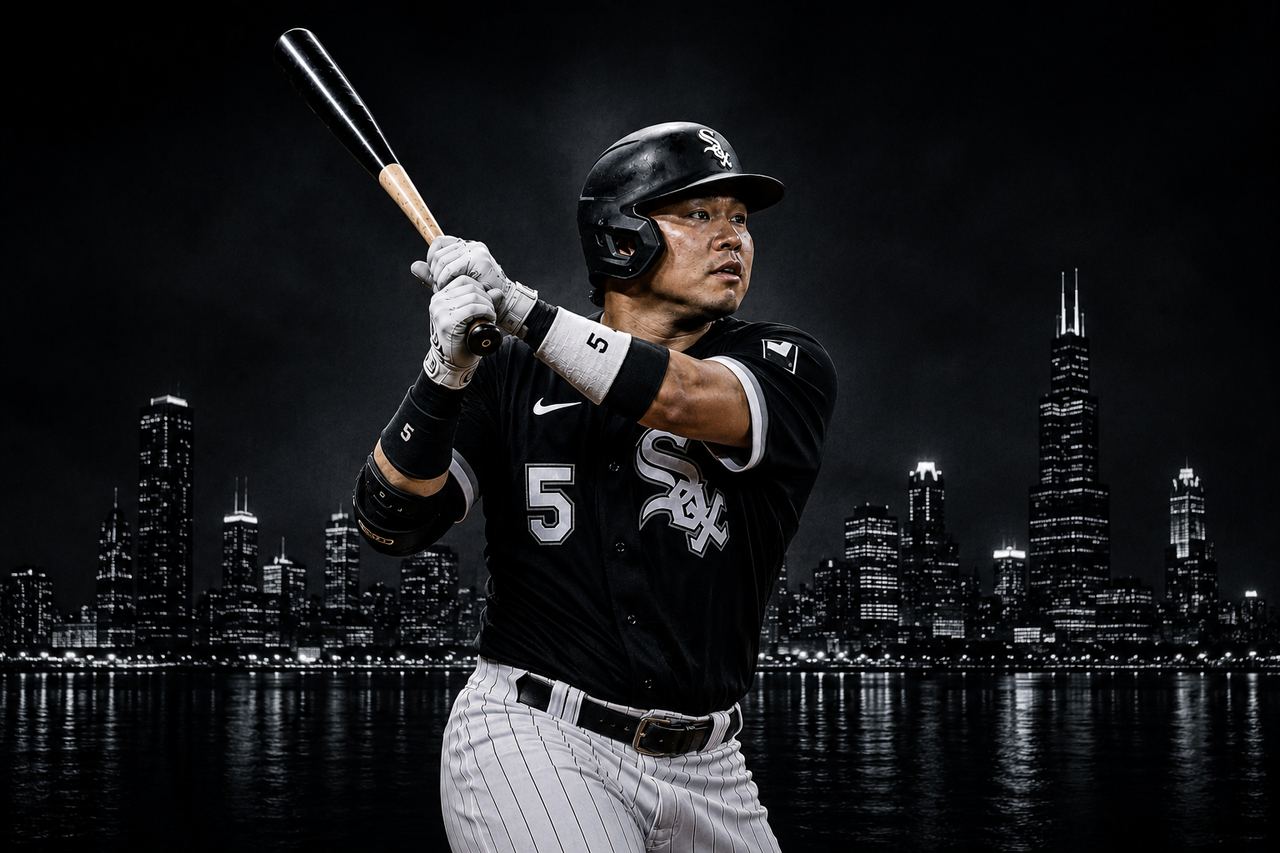
The White Sox apparently didn't receive the memo. They finally scratched out a run in the seventh, and then the entire game changed in the eighth. Sam Antonacci went deep. Munetaka Murakami followed him with another home run. Suddenly a game that had looked dead for most of the night was tied, and everybody who had emotionally checked out three innings earlier was sitting back down.
New York scored again in the 11th. Chicago answered. Then Edgar Quero ended it in the 12th, sending the White Sox home with a 6–5 victory despite being outhit 9–6 and spending most of the evening playing from behind. The Yankees had the bigger name, the better start, more hits and multiple opportunities to finish a young team that should have been finished already.
They couldn't do it. And that may be the most interesting characteristic of these White Sox right now: they are becoming exceptionally annoying to kill.
Right now, the answer might be a little of both. For a young organization trying to crawl out of baseball purgatory, that's a pretty good place to start.
This is where the story stops being a cute comeback narrative and starts becoming something measurable. The White Sox can hit. Not “they're better than expected” hit. They can actually hurt you, and they've discovered one of the most valuable currencies in modern baseball: damage.
Baseball has spent the last decade turning hitting into advanced trigonometry with batting gloves. We now have launch angle, barrel rate, expected slugging, bat speed, attack angle and enough Statcast terminology to make your grandfather think somebody changed the sport while he was asleep. Somewhere Hawk Harrelson is probably yelling, “Just hit the damn ball.” In fairness, the White Sox are doing exactly that.
Home-run power changes the mathematics of losing. A singles-dependent offense may need four or five successful events to erase a three-run deficit. A power lineup may need one pitcher to make one stupid mistake. Hanging slider, bad location, one violent swing—and the ball is sitting in the bleachers while the entire game has changed.
At Second City Standard, that's what we're calling deficit compression.
Rocky Gets Hit Way Too Much
Now comes the part every White Sox fan knew was coming, because apparently we're not allowed to enjoy anything without reading the fine print. The offense has discovered the punch. The defense still gets hit too damn much.
This isn't about effort, hustle or one of those radio arguments where somebody says a player needs to “bear down” and suddenly we've solved defensive efficiency. This is measurable. Championship baseball isn't simply about creating runs. It is about suppressing them.
Defense turns balls in play into outs. Outs prevent extended innings. Shorter innings reduce pitches. Fewer pitches preserve starters and bullpens. Better pitching availability improves late-game run prevention. None of this is particularly glamorous, but neither is replacing brake pads. You still need them if you plan on going anywhere.
That's where this White Sox team remains unfinished.
The Slug Matrix measures how much scoreboard damage you create. The Defensive Matrix measures how much unnecessary damage you allow the other team to create.
A fighter with enormous punching power and mediocre defense is entertaining. A fighter with enormous punching power and elite defense is terrifying. That's the difference between a fun summer and an actual championship window.
This is where the first overall pick becomes more interesting than simply saying the White Sox landed one of the best players available. Chicago already has young power coming. It already has hitters capable of sending baseballs 430 feet and making us briefly forget whatever happened in the previous inning. What the organization desperately needs is somebody who can make that previous inning less annoying in the first place.
That's why Cholowsky matters. Shortstop isn't merely another square on the lineup card. It is the traffic cop in the middle of the defensive operation. Range at short changes what the third baseman can do, what the second baseman can do and how confidently pitchers can challenge hitters knowing a ground ball has a better chance of becoming an actual out instead of the opening scene of another three-run inning.
MORE OUTS → FEWER EXTENDED INNINGS
FEWER EXTENDED INNINGS → FEWER PITCHES
FEWER PITCHES → HEALTHIER BULLPEN
HEALTHIER BULLPEN → BETTER LATE-GAME RUN PREVENTION
BETTER RUN PREVENTION → MORE CLOSE GAMES CONVERTED
Defense isn't decoration. It's infrastructure. And Cholowsky represents the possibility that the White Sox understand where the next phase of this rebuild has to go.
This may actually be the strangest development of all. For years, White Sox organizational depth felt like opening the refrigerator and discovering half a jar of mustard. Technically there was something in there, but nobody was making dinner.
Now look below Chicago. Charlotte. Birmingham. Winston-Salem. Kannapolis. There are legitimate players, actual competition and real pressure moving upward through the organization. AAA is beginning to resemble what AAA is supposed to be: not simply an emergency warehouse for the major league club, but a level where somebody should be actively trying to take somebody else's job.
That's how healthy systems function. If somebody gets hurt, another player is ready. If somebody stops producing, somebody else is pushing. If a prospect forces the issue, the front office has to make room. Internal competition is uncomfortable, which is exactly why good organizations need it.
For perhaps the first time in a very long time, the White Sox are starting to look like they have more answers than holes.
The Rope-a-Dope Problem
Muhammad Ali's rope-a-dope gives us the other obvious boxing comparison. Absorb pressure. Let the opponent expend energy. Survive. Wait. Counter. The White Sox occasionally look like they're playing a baseball version of it.
There is, however, one minor technical difference.
The White Sox probably didn't mean to boot the ground ball.
That's the problem. You cannot build a championship strategy around surrendering extra outs and then hoping Murakami hits the next baseball halfway to Indiana. It's enormously entertaining when it works. It is considerably less charming when October pitching gets better, margins get thinner and one defensive mistake sends you home.
The White Sox have demonstrated they can survive this way. The next question is whether they can evolve beyond simply surviving.
Maybe that's why I've enjoyed watching this team so much. Chicago has been starving for something to believe in—not another rebuild presentation, not another five-year timeline and not another press conference explaining why losing is technically progress. Actual belief.
The Bears gave the city a taste of it. Young talent arrived. Expectations changed. Games became events again instead of group therapy. Now the White Sox are producing their own version, and because apparently Chicago decided subtlety was overrated, we also got a Chicago-born pope.
Pope Leo XIV did not improve Colson Montgomery's launch angle. He did not scout Roch Cholowsky. There is no known Vatican metric for Defensive Runs Saved—at least not yet. But sports are allowed to be irrational. That's half the fun.
Maybe Chicago sports is simply having a moment. Maybe we've finally suffered enough. If that's the explanation, I'd like it officially documented before somebody changes their mind.
STILL MISSING A GUARD.
Chicago has developed the punch, the young talent, organizational depth and increasingly the belief. The next step is simple to describe and considerably harder to build: stop giving the other guy free shots.
So what are the 2026 Chicago White Sox? They're not a championship team yet. I'm not insane, and I've watched this franchise far too long to start planning a parade because we're over .500 in August.
But they are something far more interesting than what most of us expected. They're learning how to become dangerous. They have power. They have young players. They have actual organizational depth. They have an identity. And for the first time in a while, they have something White Sox fans almost forgot what to do with.
Hope.
Now fix the defense.
Go back one more time to July 29. Yankees 4, White Sox 0 in the first inning. Every Sox fan watching understood exactly what we were supposed to do: roll our eyes, complain about the organization, maybe send somebody an unnecessarily dramatic text and accept that tonight wasn't the night.
Except the team didn't. Chicago scratched out one run in the seventh. Then Antonacci went deep in the eighth. Murakami followed him.
MURAKAMI — BANG.
Tie game. New York scored in the 11th. Chicago answered. Edgar Quero ended it in the 12th, and suddenly a night that started with all the familiar symptoms of a White Sox loss became one of the clearest examples of what this team is becoming.
The Yankees landed punches all night. They had Chicago down. They had more hits. They had the game exactly where a good team is supposed to finish it.
They didn't.
Maybe that's the best description of these White Sox. You can expose them. You can score on them. You can absolutely make their defense look like it needs adult supervision. But if you're going to beat them, you'd better finish the job.
Because they can punch back.
Built By
Editorial Operating System v1.0Creator
Erik Chambers
Architecture
Founder, Creator & Editorial Architect
AI Assisted
No
Human Reviewed
Pending
Evidence Reviewed
In progress
Last Updated
September 27, 2026
Confidence
Evergreen medium/10
Research Status
Living investigation
We do not claim perfection. We promise transparency. Every investigation shows its work — the question, the evidence, the tools, the humans, and the updates.
Editorial Transparency
This article contains a combination of reporting, publicly available research, and editorial analysis.
Analysis and interpretation. Facts are sourced; conclusions are the author's. Evidence before opinion — facts require sources, analysis requires transparency, opinions require labels.
Meet the creator
Erik Chambers
Founder, Creator & Editorial Architect
Erik originated the central idea, directed the investigation, reviewed the evidence, and approved the final published work.
Read the founder profile →Challenge This
We welcome disagreement
A different way to read the evidence. Research that points in another direction. Where specialists diverge.
Loading challenges…
Submit a challenge
Sign in to submit a challenge. All submissions are reviewed before appearing publicly.
Comments
Ask A Question
What would you ask an editor about this piece?
Reader questions feed our coverage map. The most-asked ones become our next investigations.
Continue Exploring
Guided by the evidenceWhere should this take you next?
Part of a cluster
Baseball Value
What is a baseball player actually worth, and who decides?
See the whole clusterCreating the Rocky Balboa Culture
A composite 0–100 measure of how well this investigation meets the Second City Standard. Scores are auditable — every point comes from the criteria below.
Composite
—
of 100
This investigation is queued for editorial scoring. No score has been assigned yet — the absence of a number is not a judgment on the evidence.
The Standard
· Editorial verdictBased on the evidence presented,
Second City Standard believes The White Sox can slug their way off the ropes. Now baseball’s most surprising Chicago revival has to learn how to stop taking punches.
Remaining uncertainty: Awaiting a final written verdict from the editorial desk.
The Standard · Second City Standard
Continue The Investigation
· Never a dead endThis investigation is one thread. Pull the next one — every path below is another investigation, another question, or another discipline applied to the same problem.
One clear idea, once a week.
Get the strongest investigation, one useful tool, and one question worth carrying forward.
No fake urgency. No spam. Leave any time.